


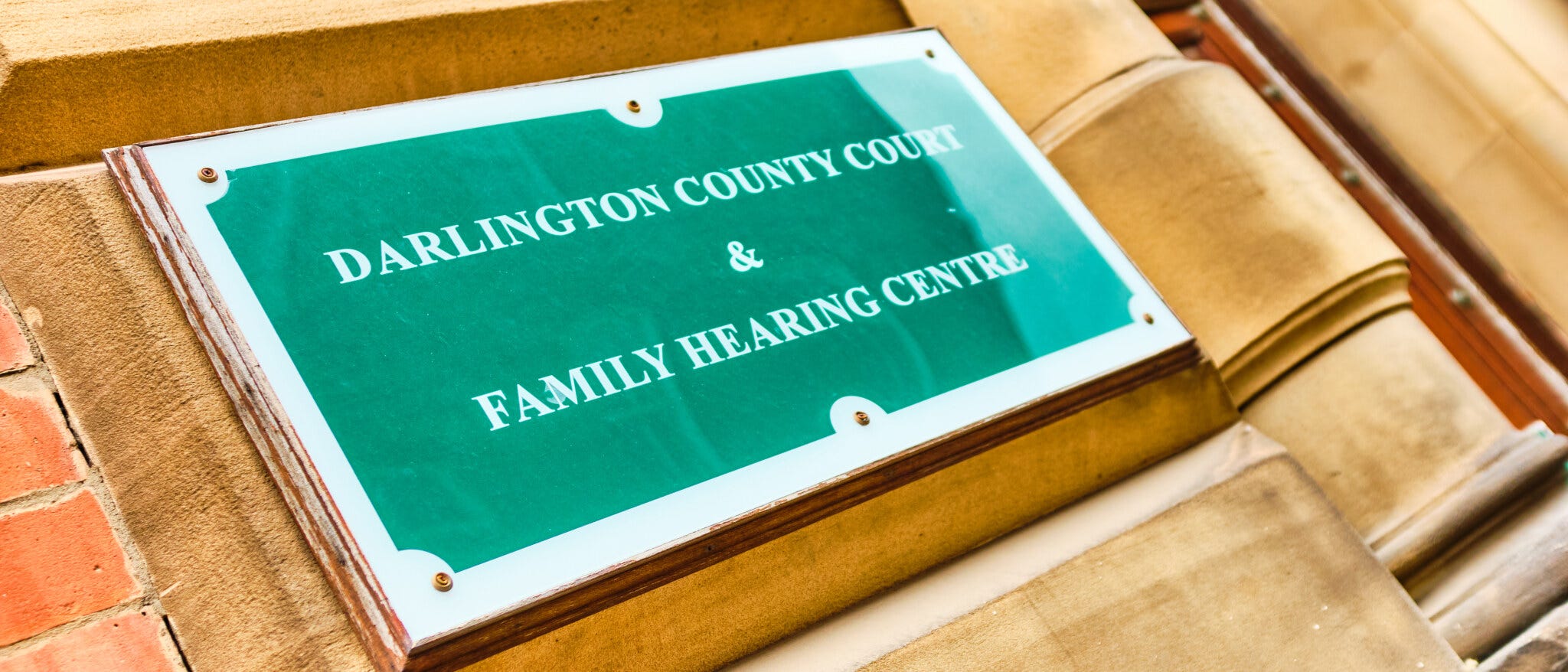
On Monday afternoon I found myself outside Darlington County Court, staring at discarded gum poked into the gaps around the pillars of the legal edifice. I would have gone in with my friend Andrew Stephenson, who was there to collect a sealed claim form ready to serve on Northern Powergrid.
But posh cameras and court security don’t mix well, so I waited outside.
I wouldn’t normally take half a day out, equipped with professional-grade imaging hardware, just to witness a legal document being served in person — after all, you can email or post them with the same effect. This is an exception, because the story is just so exquisite that there’s a newly made-up German word for it:
Wahrheitsruhe — the calm that comes when truth asserts itself.
The human-interest side of this story is that Andrew has now been on emergency diesel generators (now totalling four) for over three years, unable to get Northern Powergrid to reconnect him to the electricity network, as per their statutory duty to supply. They are insisting he pay a stiff fee as if it were a new connection.
This is part of a pattern of enthusiastic disconnection and profiteering, repeated at many properties, I am told, that in this case shades just a little too close to extortion. Taken more broadly, it begins to resemble something closer to racketeering — at least in how it comes across to a bystanding member of the public — rather than a series of isolated commercial decisions.
So this resistance is not just a personal clash of wills; there is a deeper structural problem surfacing. On this basis, Andrew has spent tens of thousands of pounds on fuel, now rising sharply in cost, as he refuses to be steamrollered into paying tribute for their wrongdoing. The reconnection matter is now being taken up by his MP — as the regulator, Ofgem, has refused to intervene, seemingly captive to industry interests.
What follows is a “twist in the tail” kind of story that you would normally only expect to see in a Hitchcock-style thriller. A regulated monopoly, responsible for a safety-of-life service, seems to have allowed emotions to override both logic and duty.
In doing so, it has overreached, and what was a somewhat tragic situation has been transformed into a special kind of “funny” — like when someone spins off the road into a bush and a passerby quips, “you can’t park your car there, mate!” — but here the errant driver is an overconfident and somewhat aggressive corporation.
For background on the matter, I refer readers to my February article summarising the terminal phase of a legal battle Andrew initiated to force the utility company to reconnect his home to the power grid. Andrew’s cable was severed for having the temerity to switch to a green micro-supplier — one not required to register with the national database or hold a licence.
The contemporaneous records of Northern Powergrid state that he was disconnected on their own initiative, based on their long history with him — he had previously pressured them to reduce overcharges (of many thousands of pounds) to his commercial clients. There was no safety issue, like with an abandoned house that teenagers might break into and cause harm to themselves or the property.
But Northern Powergrid’s statements in court said they were acting only as an agent for the previous billing company — a materially different justification that denies any personal motive or vendetta. On that basis, they succeeded in having Andrew’s case procedurally dismissed, and a futile effort at pushback has left him with a costs bill now approaching £70k.

Meanwhile, during those proceedings, Northern Powergrid trespassed on Andrew’s land while installing cables to supply nearby homes and a mobile phone mast. So the same company that disconnected him from the grid tried to use his land, without permission or compensation, to supply everyone else — not just unjust, but structurally contradictory.
Now, this is where it gets really good, so I hope you are sitting down, and ready for a grin. We all love a story where an overbearing authority gets its comeuppance, right?
Andrew lives up a private lane in a house split off from a farm in the distant past. He and the farmer co-own the lane alongside their respective properties. A decade or so ago, the farmer allowed a wind turbine to be installed on his land, along with a substation that feeds the grid. Now, can you guess who owns the substation and the 11kV cable that connects to the main grid?
You guessed it: Northern Powergrid!
Astute readers will have already twigged where this is going. Can you also guess where the cable goes, and which side of the middle of the lane? You see, the farmer signed a lease to the turbine operator and the power utility granting them such rights to his land as he could legally offer.
But you cannot grant rights to someone else’s land… and Andrew owns half the lane where it adjoins his property. The legal principle of ad medium filum viae says that the midpoint is the boundary in the absence of deeds or agreements to the contrary.
And the cable goes under Andrew’s side, according to a professional survey.
Oops.
So not only have Northern Powergrid, on the face of it, illegally disconnected a grandfather from the grid for three years in apparent retaliation for his successful efforts to save businesses money…
And not only have they misrepresented that position to a court in order to gain advantage and attempt to ruin Andrew financially…
And not only have they already trespassed on his land to conduct above-ground commercial construction activity…
But they have also been running an industrial grid cable under Andrew’s land, without any wayleave or payment, for over a decade.
It gets better! (I told you it was grin-worthy, no?) Both the utility company and the turbine operator have been sending construction and maintenance traffic up and down the lane, hundreds of lorries, leaving it with potholes — without ever seeking Andrew’s permission to use his half. Even though it is his shared cost to repair.
Is it just me, or is this not a good look for a regulated monopoly utility supplier?
To put it another way, if Andrew decided to dig a drain at the edge of his property — something entirely reasonable — and anything happened to that 11kV cable because it snaked too close, or created a safety hazard, then Andrew would be liable. And now Northern Powergrid are pressuring him to pay those earlier costs via High Court enforcement, while at the same time encumbering his property with unresolved title and access problems.
Set aside for now any possible claim for the hardship Andrew has endured: three winters of alternators, lubricant, and fumes in a cold shed at all hours; getting electric shocks in the shower because Northern Powergrid severed his earth cable irresponsibly; the fuel and hardware costs; and the reality of virtual house arrest, unable to go away because the fridge and freezer need constant supply. Put all that aside for now.
Let’s just say that the cost of rights of way, access, disturbance, and mesne profits — the substitute the law offers when your negotiation rights are taken away — far exceeds the costs Northern Powergrid are claiming from Andrew (based on a false representation to the court). So Andrew has filed a new claim — not (yet) for damages, but for a simple ruling that establishes what his land rights are, and whether Northern Powergrid are infringing them.

The approach of Northern Powergrid so far has been to ignore all pre-action correspondence. Then to pretend this is all settled under the existing claim for Andrew’s domestic supply (which is unrelated). Then to pretend they already have a wayleave based on a utility pole (also unrelated). Then to pretend they have rights under the property register of the neighbour’s land (again, unrelated).
One starts to suspect they don’t have a legal leg to stand on.
To ensure some balance, what both the turbine operator and the grid company likely do is a “best effort” title deed and Land Registry search, knowing that not all rights and properties are fully recorded (with appropriate disclaimers shown by the registry). The residual risk is then (or can be) insured. So what they are doing can be seen as a commercial and rational decision — life goes on, and sometimes property rights are infringed. That is what courts and compensation are there for.
While the domestic grid disconnection is disturbing, this kind of industrial encroachment onto private land is, in itself, relatively ordinary.
It is also alleged that Northern Powergrid built the substation on the neighbouring farm with a footprint around 20 times larger than the rental agreement allows. That, too, is an ordinary commercial dispute, which can be resolved in the ordinary way. In this case, Andrew acts as land agent for his neighbour, with whom he has very cordial relations, so there is no prospect of the utility company dividing and conquering them.

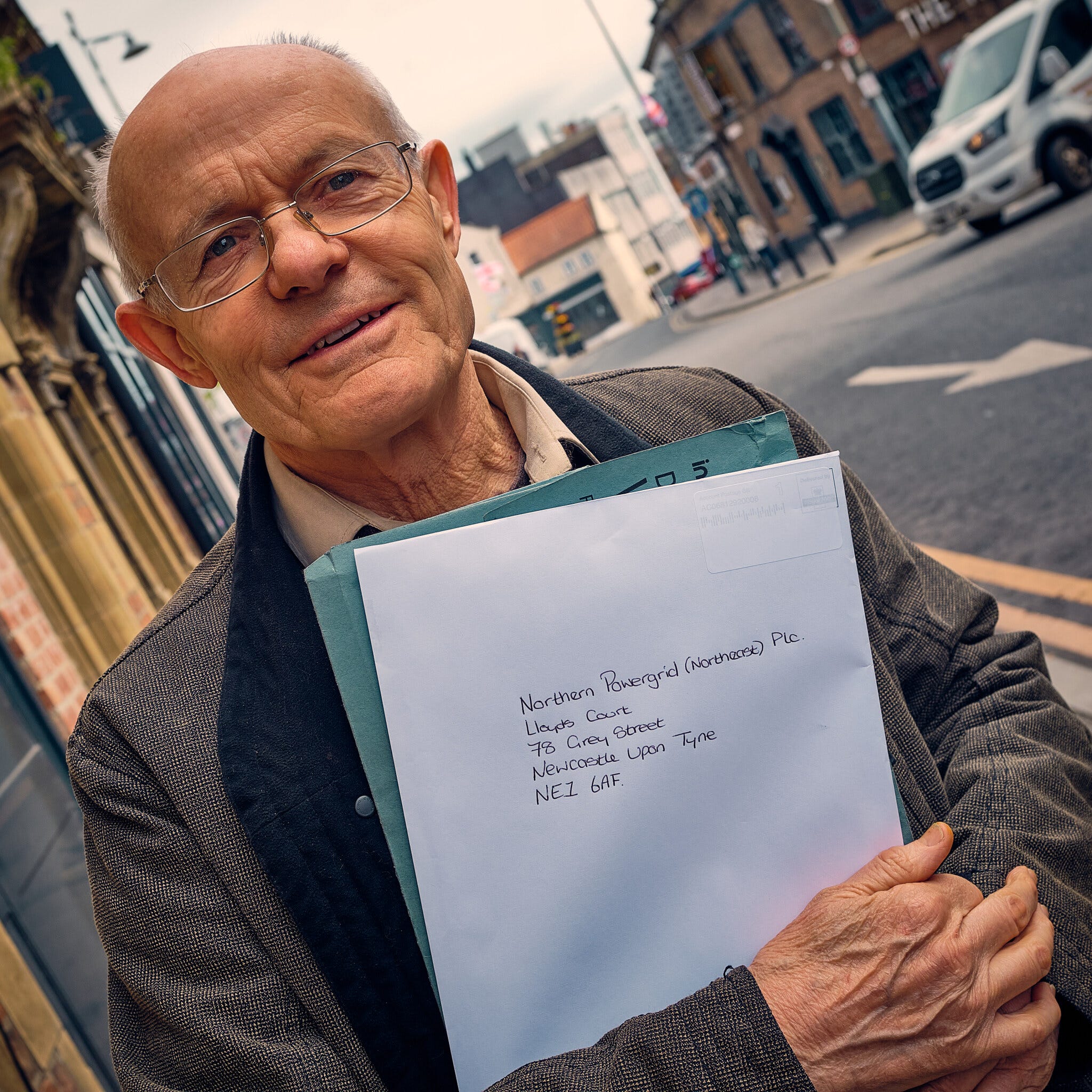
On Monday I joined Andrew to serve the Part 8 claim in person — because we all seek a little cheer and entertainment in our lives. I don’t often find myself in hysterics on the phone, but watching Northern Powergrid squirm and evade after all they have done has brought much-needed amusement. There comes a point when the greed and inhumanity of it all flips and becomes fodder for mirth, not despair.
It’s so good to watch that only invented German words can describe it.
Now, it is possible that Northern Powergrid will find some obscure rule that gives them rights to build industrial infrastructure feet away from a residential property, through land they don’t own, without permission or compensation. But that sounds a little too close to the corporate equivalent of belief in the tooth fairy, so I don’t anticipate it materialising.

It is not acceptable to bluff and stonewall when you’ve made a mistake like this — particularly for a regulated monopoly entrusted with a safety-of-life service, and accountable to the public it serves. It is not the mistake that is the problem, but how you treat people once it has been pointed out. That is what becomes shameful — and, ultimately, grist for mockery.
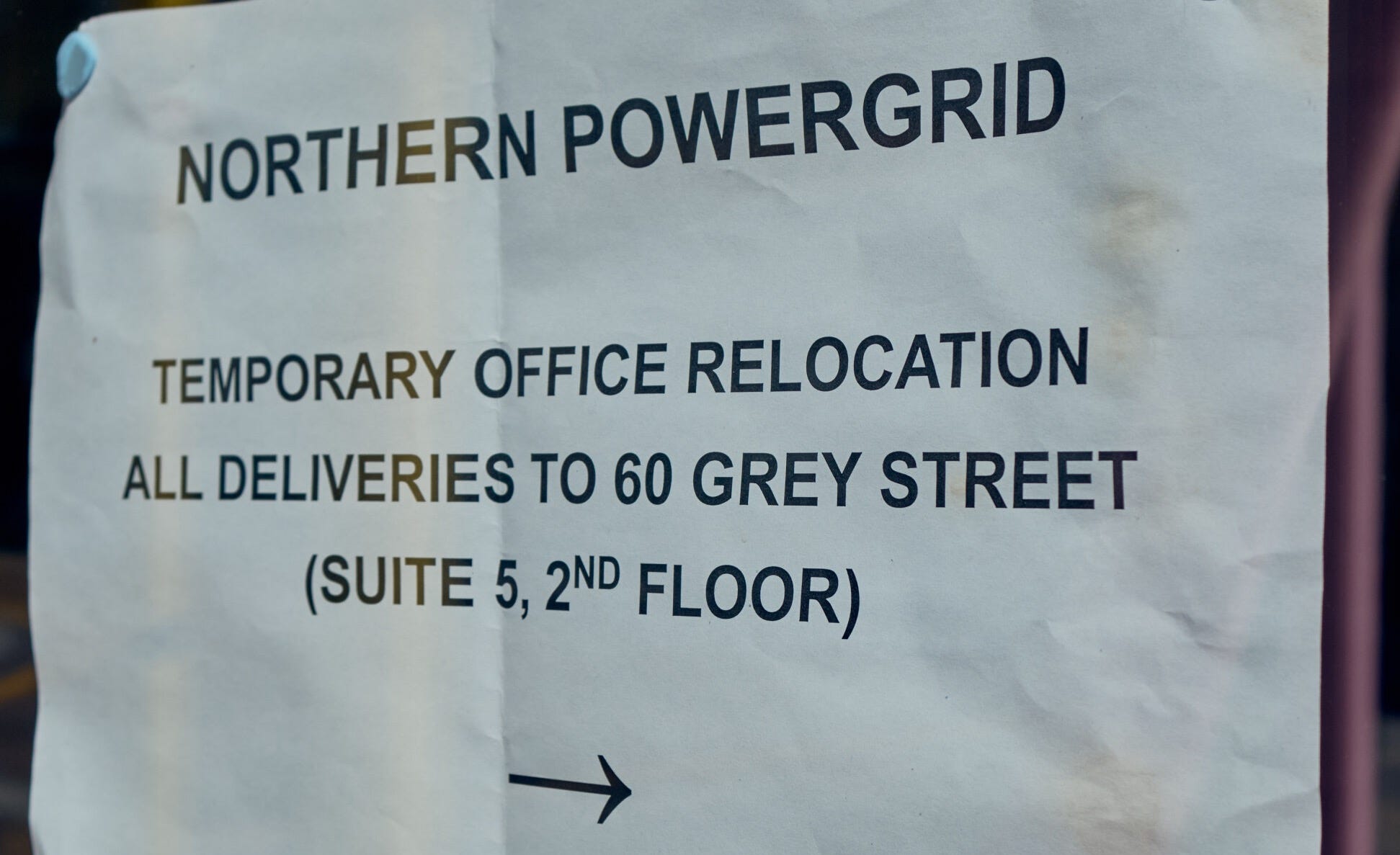
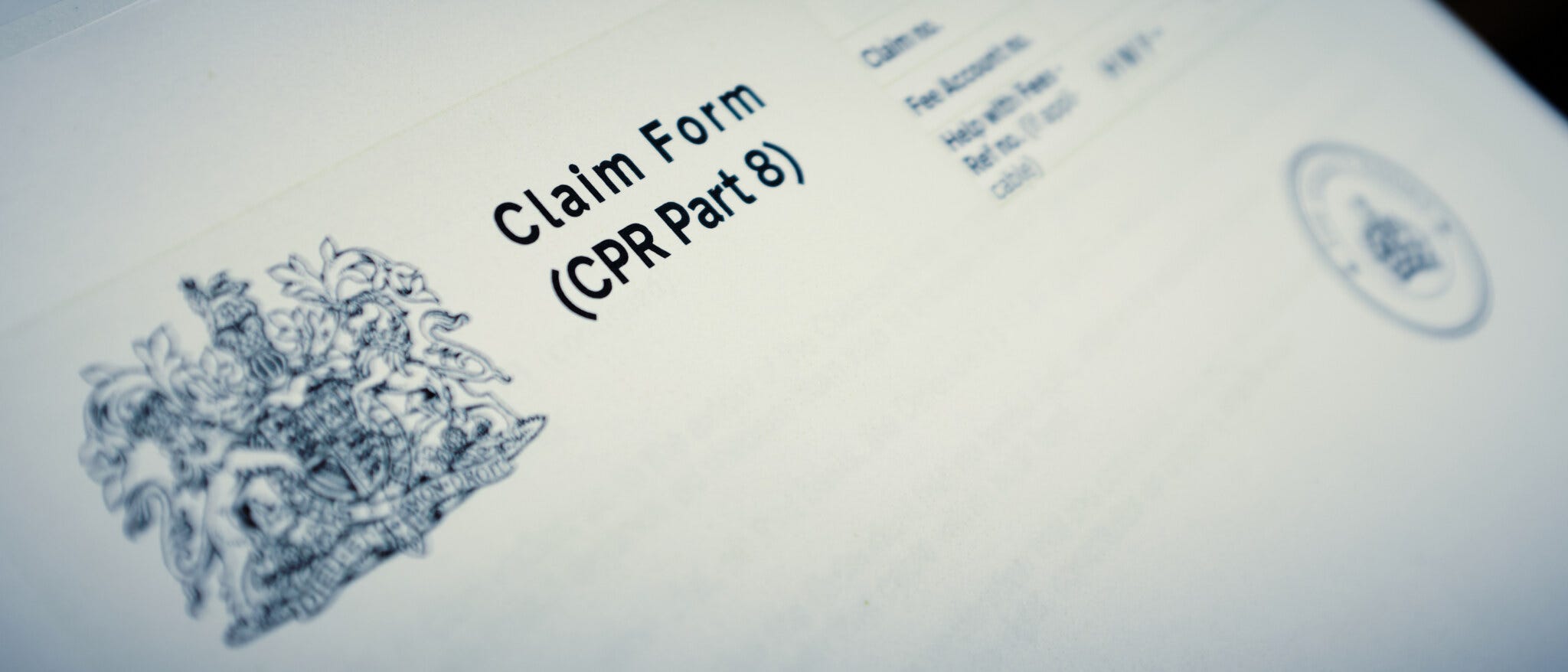
An hour’s trip up the road from Darlington, and we both arrived in Newcastle, where Northern Powergrid corporate HQ is located.
Because some legal documents need service in person, for spiritual and rhetorical reasons — not legal necessity.

And we handed over the sealed claim.
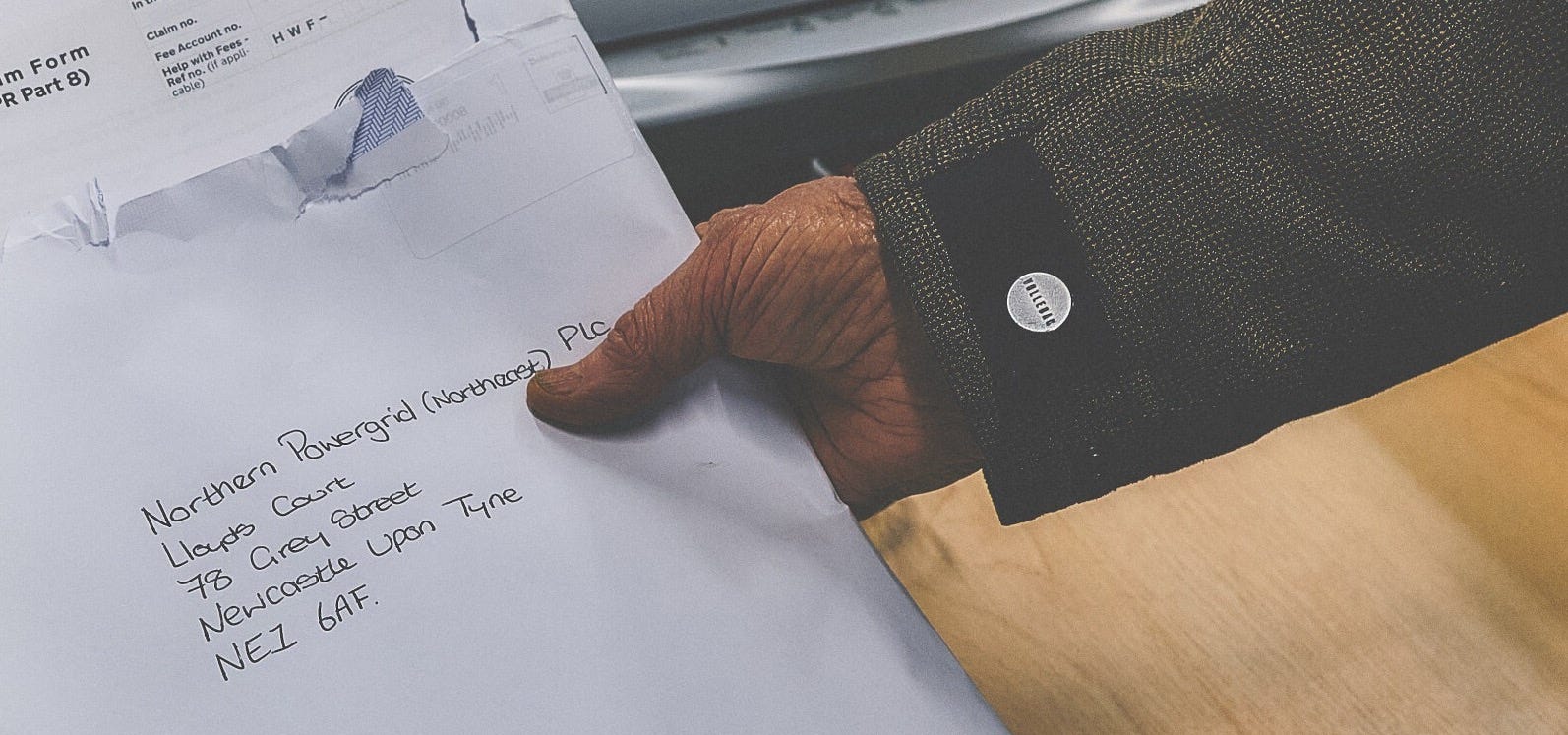
A lovely lady at Northern Powergrid’s office was very helpful, I have to say.
Then we went for a celebratory drink — of hot chocolate — to recognise the Wahrheitsruhe moment.

There comes a point where the real pressure is not legal or regulatory, but reputational — when an organisation starts to look faintly ridiculous, and knows it. It’s not just the court that’s gummed up.
“You can’t park your cable there, mate!”
My hope is that someone at Northern Powergrid has the internal fortitude and leadership judgment to step up, recognise that a foobar has occurred, and commit to fixing this mess in its totality.
Because we could all do with a bit of:
Ordnungsfreude — joy in the restoration of order
And who knows, if Northern Powergrid do the right thing, it could even become:
Gleichgewichtslust — pleasure in the return of equilibrium
I’ll let you know how it progresses.
Natürlich.
Nice work. I’ve followed this one since the beginning.
Thank you Martin...made me giggle lots and I love the photo of him laughing.