

I was going to write an article today about a useful AI tool that readers could apply to their own clashes with authority, bureaucracy, or outright predators. But you’ve all had enough of an intellectual kicking lately. I am acutely aware that much of my current output is dense, abstract, and not especially relational or easy reading.
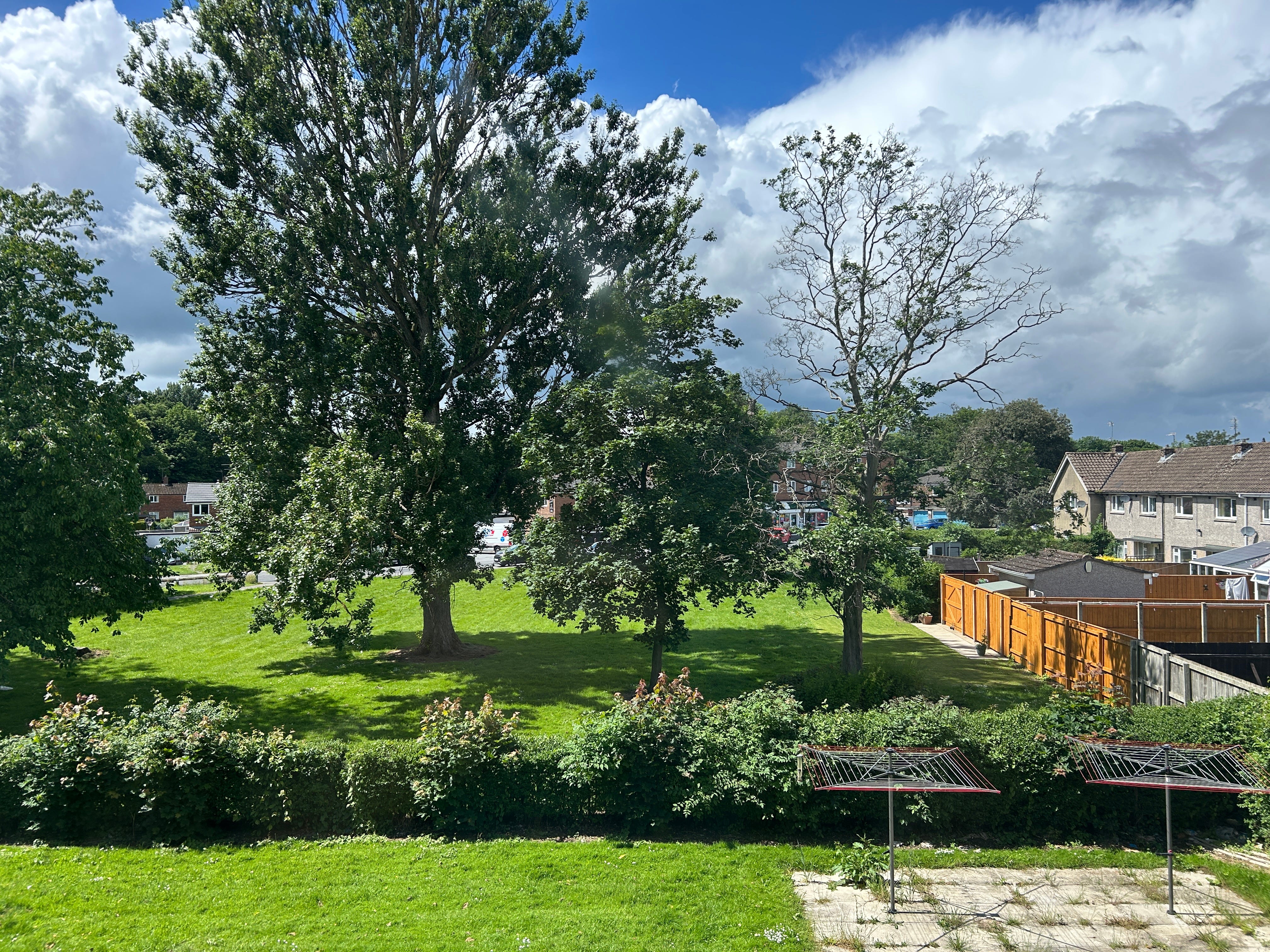
So instead of another excursion into leadership fields, reality gradients, and the architecture of narrative warfare, I find myself staring out of the window here in County Durham at the gathering tempest.
Not literally. This is not a meteorology report.
OK, well somewhat literally. The wind is up. White clouds tower. Heavy showers sweep by.
But stormy weather is also a fitting metaphor.
This is a field report from the front lines of what I increasingly think of as World War Weird.
In the last few days the anniversary of D-Day passed, and social media carried reminders of the nightmares of bygone years.
Those who died in the live-fire rehearsal for the Normandy landings. The disaster of the temporary port swept away in heavy seas. The tanks that immediately sank to the bottom of the sea, drowning their occupants rather than reaching the beaches. The gliders that smashed the bones of airmen as much as any enemy.
And perhaps worst of all, the “knowing grief” that comes with the growing awareness that the story of WW2 is not quite what we were told.
The losses seem more engineered, and less emergent, than standard histories present. Indeed, perhaps WW2 never really ended. The Nazis regrouped in North America through Operation Paperclip, South America through the Argentine ratlines, and Antarctica remains a place of rumour, secrecy, and strange stories.
The more one looks, the less settled the past appears.
When I read these stories of bravery, my own problems seem somewhat pathetic. On the surface, being able to afford to shop at Marks and Spencer rather than Aldi seems absurd as a hardship.
But that is to mistake the material surface of hardship for the deeper conflict beneath it.
The shopping basket is not really the issue. Nor is the bank balance. Those are merely the visible manifestations of a struggle over resources, autonomy, truth, and ultimately reality itself.
What disturbs me as I stare out of the window is not whether I can afford slightly nicer groceries. It is the growing sense that humanity is engaged in a fight for its soul, and for its attachment to reality.
Everything that isn’t real is, by implication, somewhat weird.
Hence a war of, and on, weirdness.
Weirdly.
In the last year or two, a number of my old and professionally successful friends have retired in their 50s. Two university professors. A City lawyer. A headmistress. A health technology entrepreneur. Meanwhile, I have grown somewhat estranged from them, dear as they remain to me, as my own world has become increasingly illegible to those still operating within the system.
I have only paid into a pension for one year out of the last twenty. I own no property. I am both a Council Tax refusnik and lack the resources to satisfy their demands. For the first time in a decade I carry credit card debt. The penalty charge notices keep arriving. Enforcement agents ring the doorbell.
I stepped “out of line” to warn and protect, and now the deferred bills are due.
In recent weeks another costs order landed on the virtual mat: nearly £4,000 arising from my Part 8 claim. It is perfectly legitimate, and I will find a way to pay it. Yet it is another material demand in a long sequence of them. It feels somewhat unfair given that I was never offered a practical route to appeal my motoring conviction and test the law on “ghost courts” through conventional means.
Yet I would not swap places with any of my associates who have paid-off mortgages and assured investment incomes.
I have never done more meaningful work in my life.
I am taking ideas I first encountered thirty-five years ago at university about precision of thought, and combining them with practical toolkits acquired in the technology industry, to develop frameworks for diagnosing drift in governance systems and repairing what I can only describe as a symbolic civilisation.
It is beyond rewarding.
This comes after years of doing my utmost to provide clarity in confusing times, particularly around the Q backchannel that complements MAGA as the public-facing element of a military-civilian alliance — one seeking to retake the world from psychopathic actors.
The psychological and neurological war is real. I can feel my own injuries from it.
That battlefield is no less genuine for being invisible. Omaha and Utah beaches were tangible. The “World War Weird” battlefield I inhabit is not. Yet both involve contests over territory, resources, communication, morale, and the future.
One is easy to photograph.
The other is happening inside human minds, often bearing grievous scars.
It feels we are at the cusp of the next phase change in an already bizarre narrative journey. I am not a soothsayer, so exactly which financial, media, justice, governance, and military dislocations are coming, or when, is beyond what I aim to address.
All I know is that there are forcing functions coming up soon, especially around the America 250 celebrations. If there was ever a time to release the people of the world from debt slavery, this is it.
There is a legacy world that has invested itself in the idea that there is no legitimacy shift in progress, no “flip of the switch” reveal, no wealth reallocation, no takedown of corruption, no reckoning for complicity in crimes.
That conventional world lives in fear of its assumptions unravelling and of being exposed as an enabler of horrors beyond imagination. That fear is not necessarily conscious. The allegations of trafficking, torture, and treason are widely known.
Attaching oneself to the wrong side of history has consequences.
Meanwhile, awaiting justice, every day, week, and month is a renewed faith journey. The resolve I need returns, even if it fluctuates. The resources have a habit of arriving just in time — my car needs new front bearings on Monday, and it’ll be funded somehow. I just about stagger through my rent payment and breathe a sigh of relief when I am “safe” for another 31 days.
I intuitively know it is all temporary, and the reward is spiritual before material.
I have seen and known the family war, the financial war, the legal war, the medical war, the educational war, the media war. That we have been at war, and remain so, against an enemy we can barely define or discern is my lived reality of many years.
There will never be a day when I am suddenly shocked to officially discover that we face wartime conditions. It is my ordinary, if not my normal. The surprise is the end of hostilities, not the continuance.
Despite that, I struggle with self-doubt to this day. What if I once accidentally amplified an enemy message, or carelessly stepped over some line of accountability? Where are my past and present endeavours taking me, and is it somewhere I have the nervous system resilience left to reach? Can I cope with the extremes of infamy, obscurity, or ignominy once the reveal is done?
I am not constitutionally disposed to military life; too much of a misfit. I have only admiration for those who labour unseen facing death and maiming, confronting those motivated by a diabolical and depraved ethos of evil. Yet somehow I am no longer a civilian in the everyday sense.
My frame of reference has shifted permanently.
“How would military intelligence see this issue?” is a new default.
I may or may not have accurately taken on their doctrines via osmosis, but I am no longer the man I was five or ten years ago.
I have seen combat, albeit weird rather than worldly.
My old friends may not understand me any longer, but at least I have some sense of how military operators feel dislocated outside of a disciplined and adversarial environment.
The recent drag on my wellbeing has been a quiet resentment toward the relative comfort of those who made no sacrifices, went along to get along, or actively exploited the opportunities created by the weakening of those who dissented. It is a slightly ugly sentiment, and not one I am proud of. Yet it is there, and I can acknowledge it as part of my shadow.
All I know for certain is that our world can, if it so wishes, change overnight. Financial systems freeze. Emergency broadcasts launch. Communications networks go dead. Travel plans are cancelled. Changes in governance are announced. It is hardly the stuff of fantasy, as such possibilities have been actively signalled for years.
Nothing happens, until everything happens.
In the meantime, I stare out of my window, and wonder what is coming.
I am wealthy in conceptual capital, rich in spiritual growth, and endowed with homely care. The bailiffs can take my vehicles, but they cannot repossess my education, experience, reputation, works, or spirit. There is something almost comical in knowing that, in adversity, I can always turn to my readers and audience.
Because this is less of a blog, and more of a church.
I know you have struggled, suffered, and sacrificed.
And you know I have, too.
In essence, the fight has not changed one iota since Roman times, if not before. Are we ruled by a holy spirit, or by man’s symbols? Pick one. There is no third option.
You do not need me to interpret the struggle for you, nor any other contemporary intercessor. The mediator and saviour role is already taken!
Just stare out of your window.
The answer is in front of you.
Even if it is a bit weird.
Thank you for your honesty. I needed this today.
I heart you soooooo much......a tear or two as I stare out of my window....good to have you here brother.