

Around a year ago I drove to Newcastle to photograph a protest rally. I parked near the civic centre and walked toward the crowd, only to realise this wasn’t “my rally” at all. It was a pro-Palestine march, not a generic freedom gathering. Nobody there felt like “my crowd”. It wasn’t even “my issue”.
The atmosphere felt antagonistic, politicised, tribal. For the first time in dozens of events I’ve attended with a camera, I turned around and went home without taking photographs. There simply wasn’t enough “Martin” in it to justify the effort — even if it meant a wasted journey.
While I feel compelled to document modern protest culture, I nearly bailed out yesterday at the “Unite the Kingdom” rally in London before I even reached the gathering point — for almost the mirror-opposite reason to Newcastle.
I have no desire to march beneath Israel flags any more than Palestine ones, or Ukraine ones for that matter. I am not really a “flag person” of any kind. The Union Jack itself represents a political union — one with a complicated and often ugly history. The individual nations resonate more deeply, but I am made up of English, Welsh, and Scottish ancestry, so no single national banner fully fits either.
That said, I am glad I spent my rent money on a train fare to London and back, and pushed on until I felt I had “got the story”. There are real and serious issues underneath all this — rising sexual violence, deepening cultural fragmentation, native resentment at rapid demographic change — but this particular crowd are not, I suggest, meaningfully “taking their country back”.
Too many seemed drunk, dislocated, and fundamentally confused — to the point where I would have been impressed if some of them could reliably navigate the bus journey home, let alone lead a national renewal.
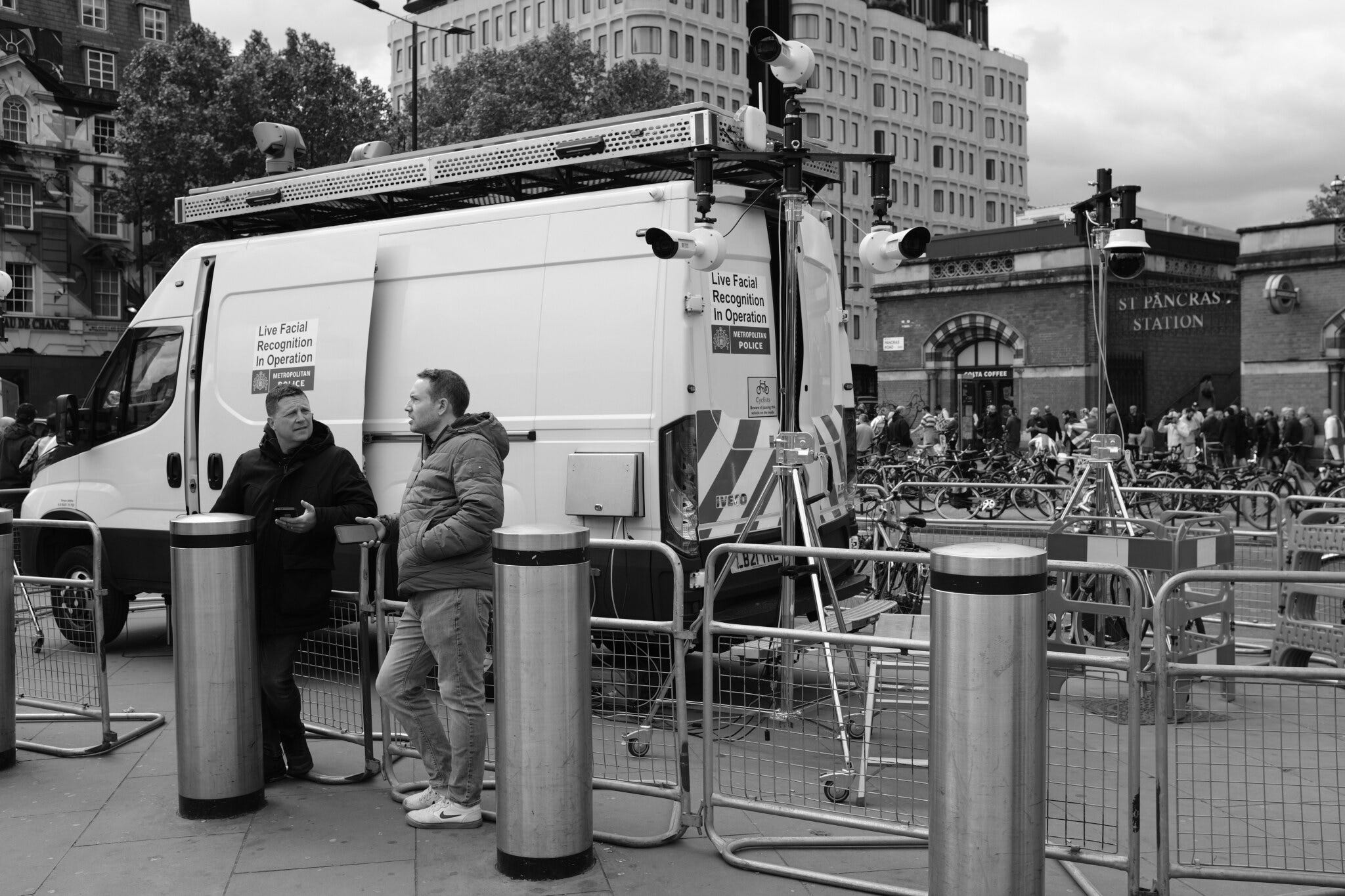
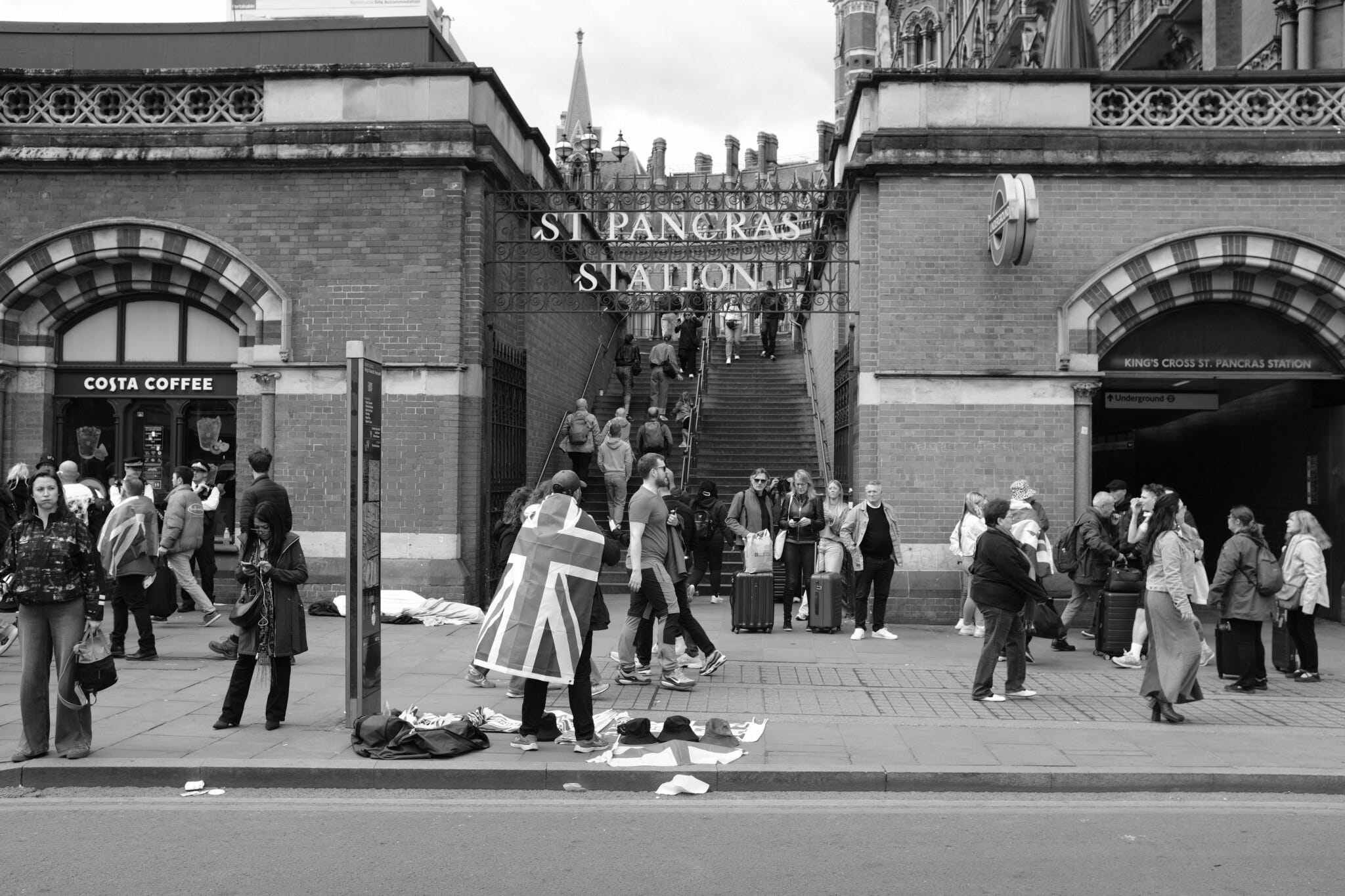
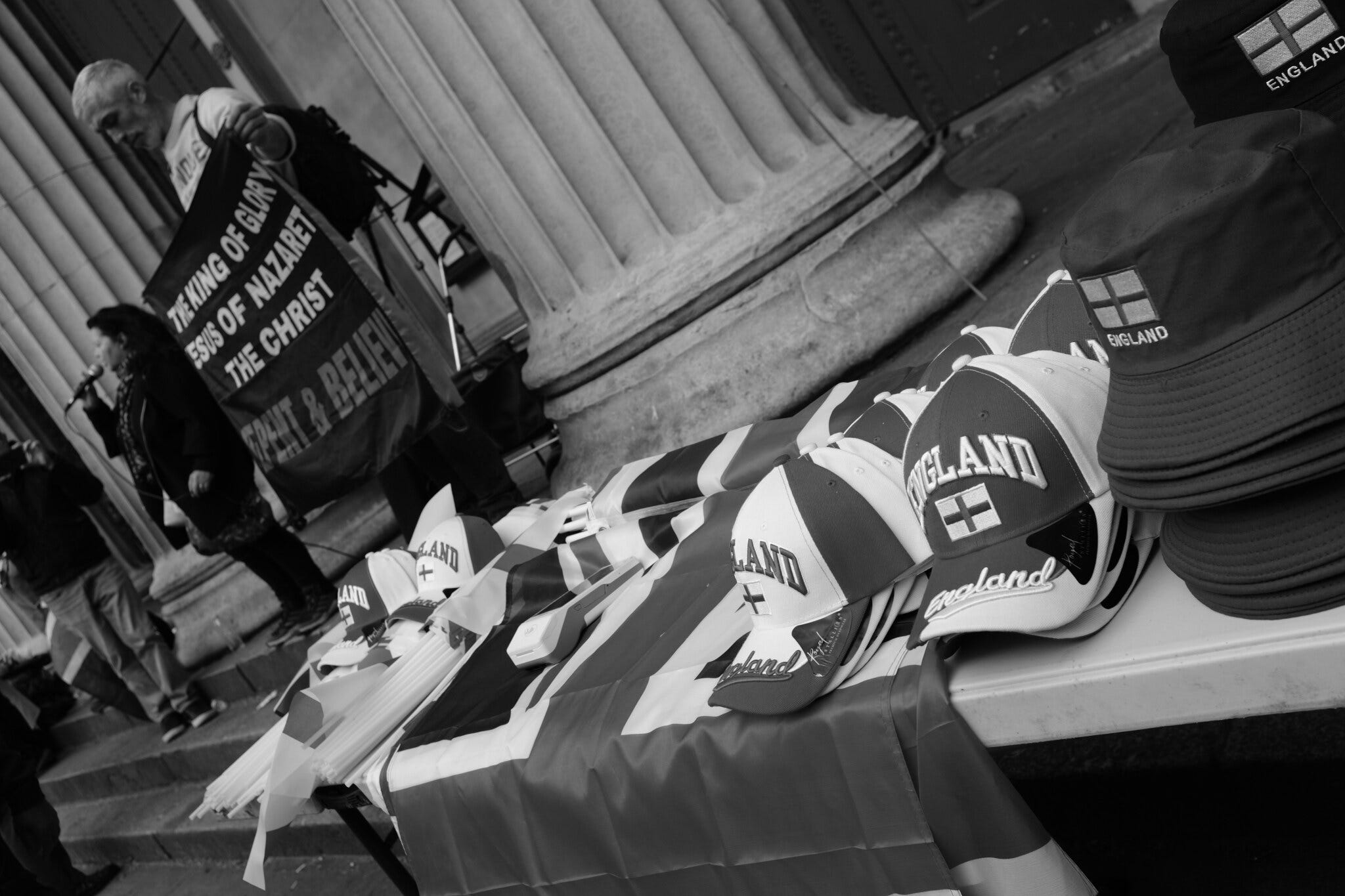
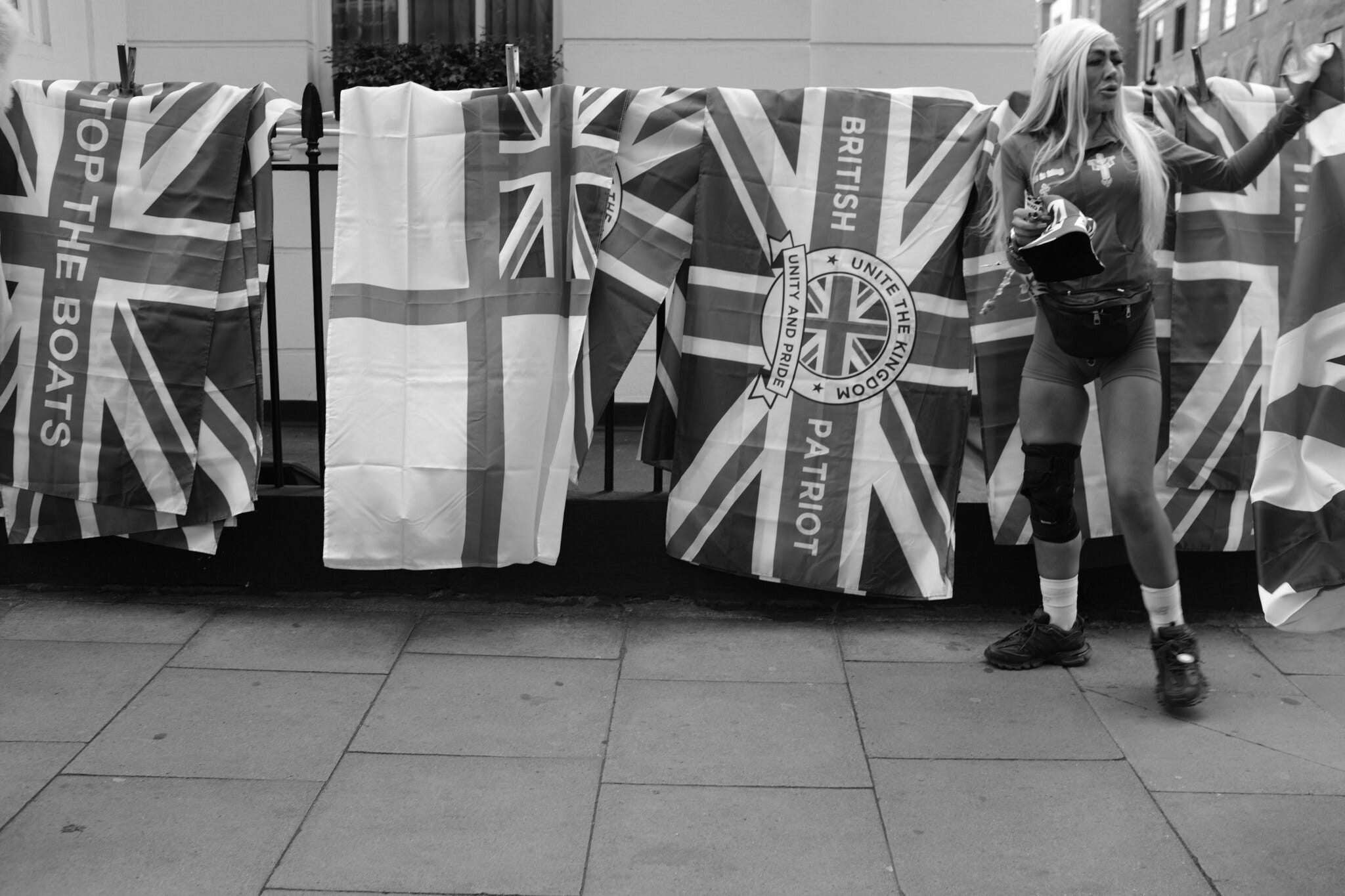
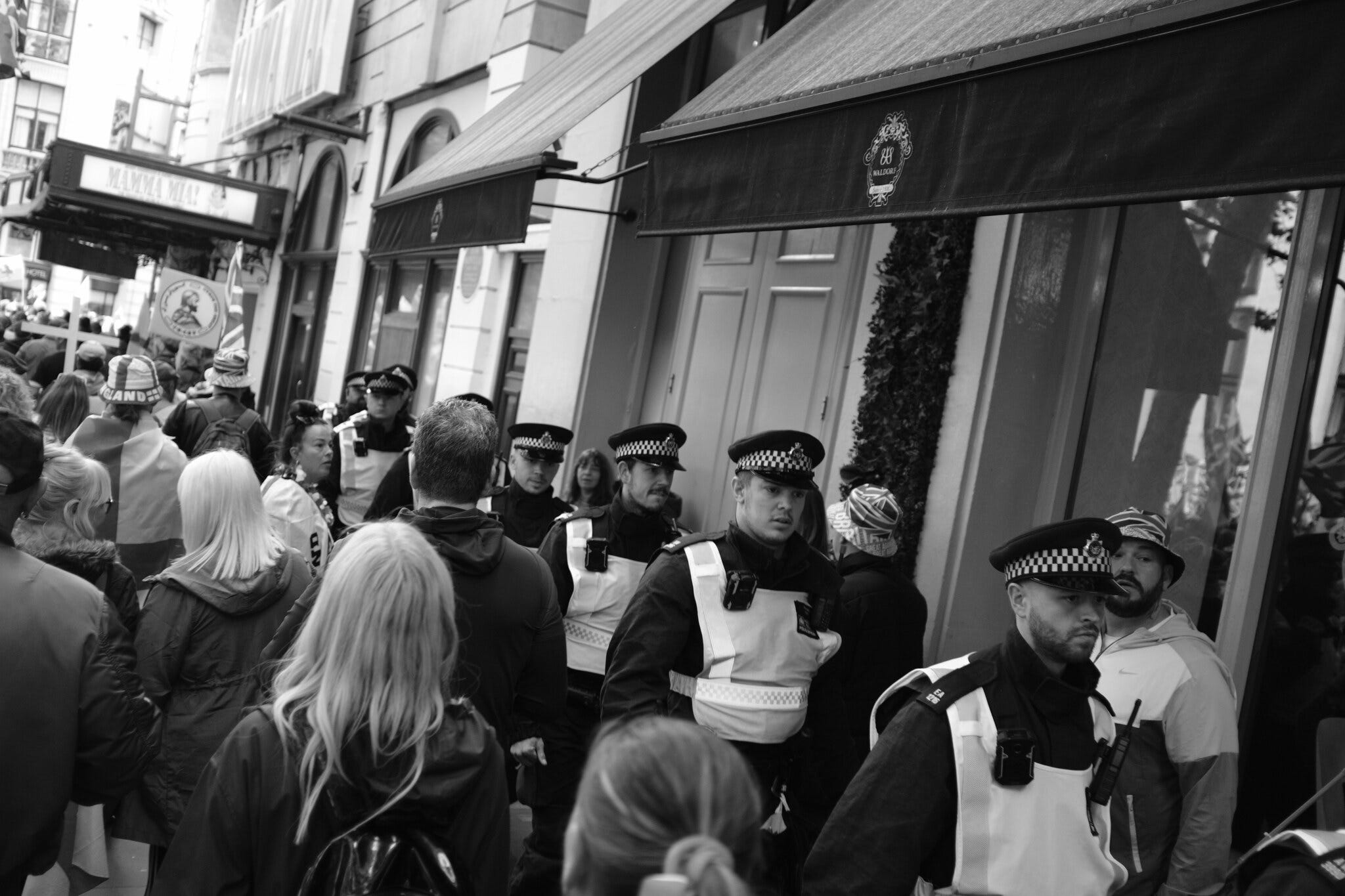
Arrival into King’s Cross meant an immediate confrontation with a heavy police presence, mixed in with opportunistic merchants selling flags, hats, and patriotic tat. “Card and cash accepted” is not the chant that usually accompanies the kinds of civil rights events I am accustomed to.
Before 2020 I had never attended a public political gathering in my life. I started going to protests in August of that year because I do not believe my bodily integrity rights evaporate just because the television, my neighbours, or a receptionist decide they do. Many of us were isolated, traumatised, frightened, and under immense social pressure.
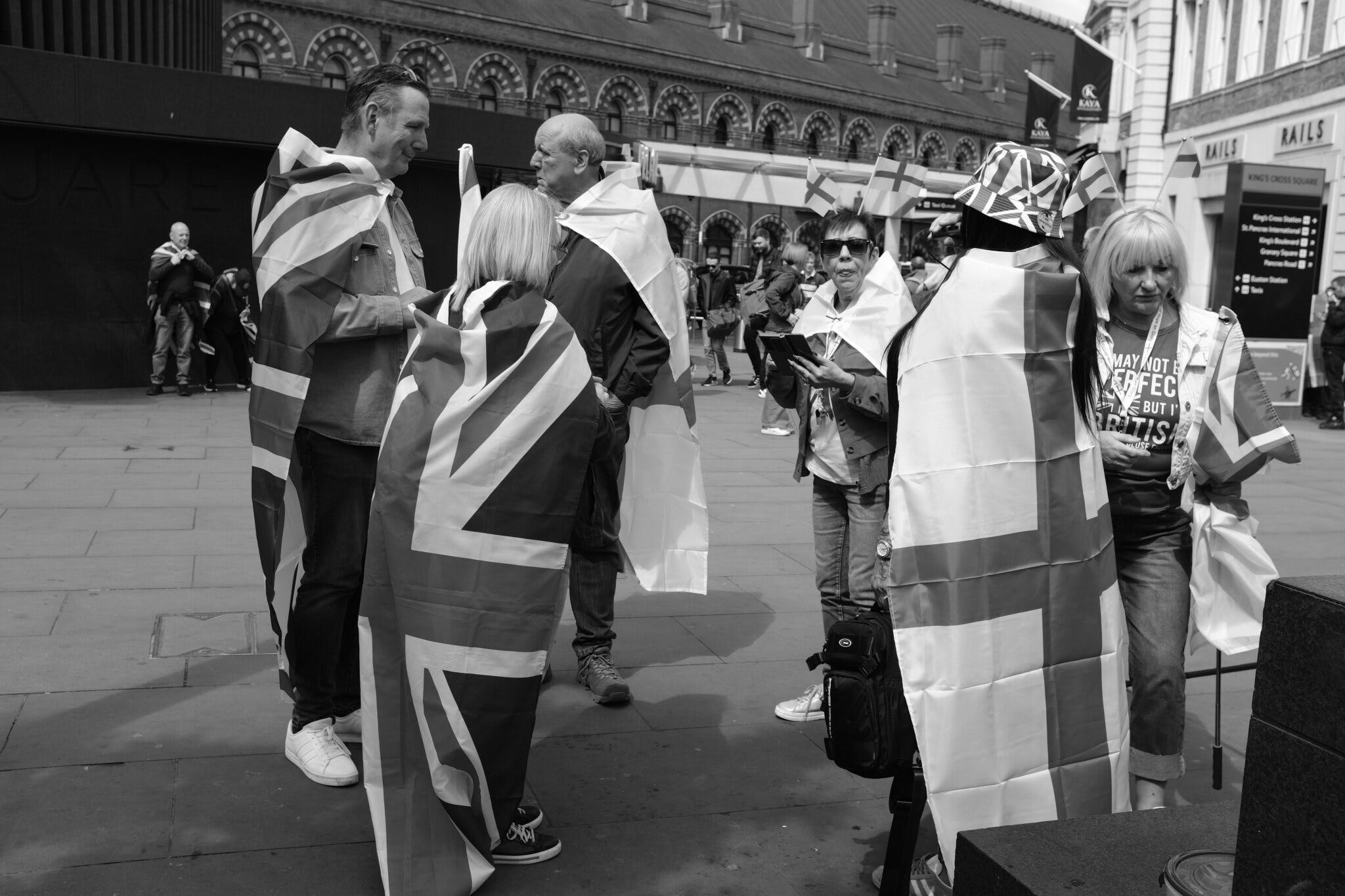
I have been given clothing with Union Jacks on before, but I do not generally walk around draped in British symbolism. For many people it carries a profound emotional weight — something my American readers may recognise more instinctively, where national myth often binds more strongly than ethnic origin.
So this was an unusual outing for me. I had avoided previous events organised by the same people, as the atmosphere and framing held little appeal. This time I made an exception, going at least as much as a photojournalist and documentarian as out of any commitment to the cause itself.
The atmosphere before the politics
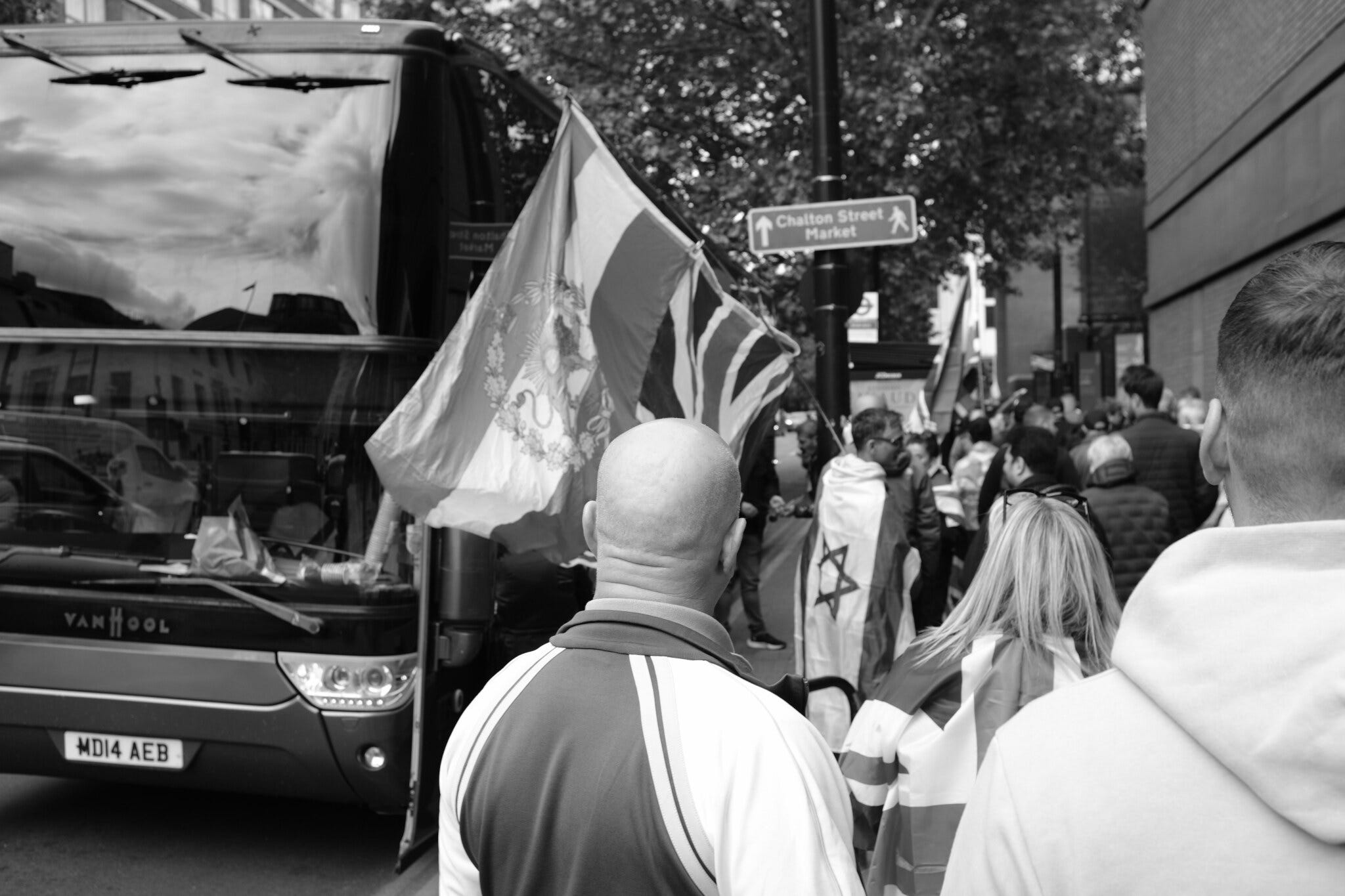
What immediately struck me walking down the Euston Road was the strange fusion of “beer and footie” culture with overt political Zionism. The main speaker at the event — Stephen Yaxley-Lennon, better known by the public pseudonym “Tommy Robinson” — is not someone I have ever met personally, although I once unexpectedly encountered one of his former schoolmates in an entirely unrelated context, so he exists for me as more than a media construct.
He is openly pro-Zionist. I am not especially invested in that question myself, and have no strong public position on it. It simply isn’t my area.
Not riots — just entropy
Which lets me skip forward to the ending. After waiting a long time for the march to begin, I eventually decided to duck out altogether, having realised that my usual photographic subjects — people carrying placards with personal testimony to injustice — were largely absent. There are only so many nylon flags you can meaningfully turn into grey pixels. I am grateful that I shoot all my historical and documentary material in black and white, as it strips away the glare of the bunting.
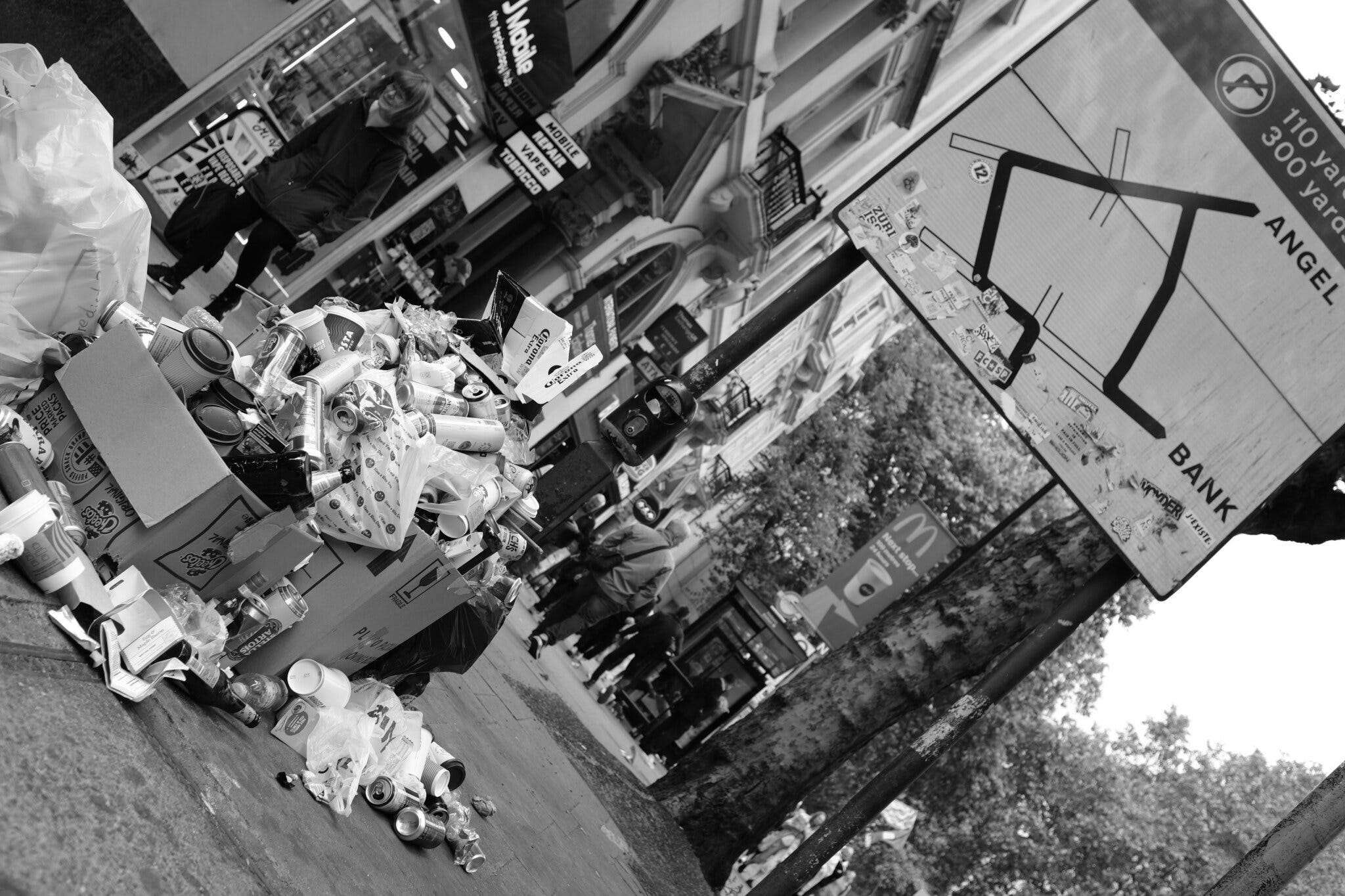
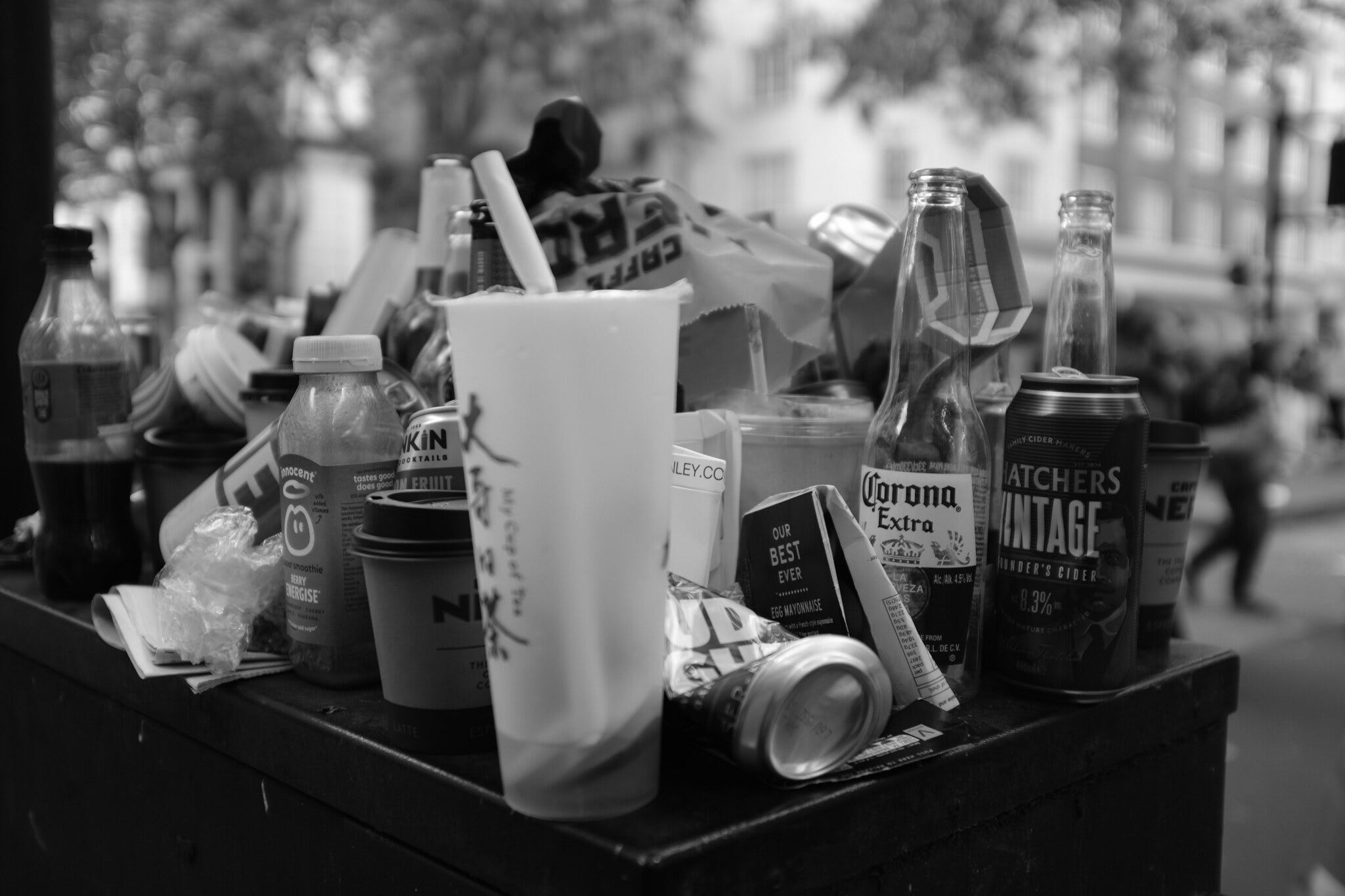
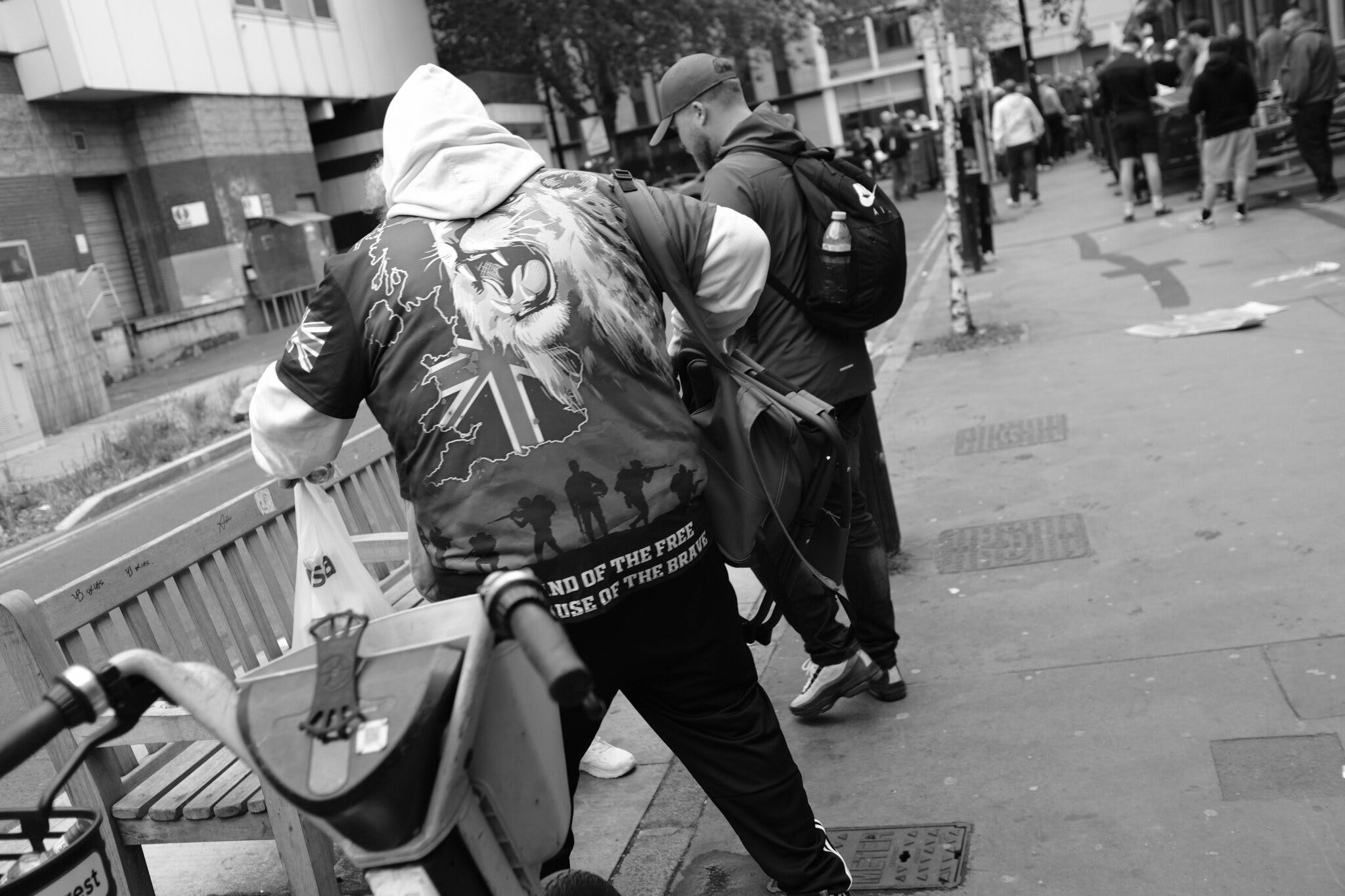
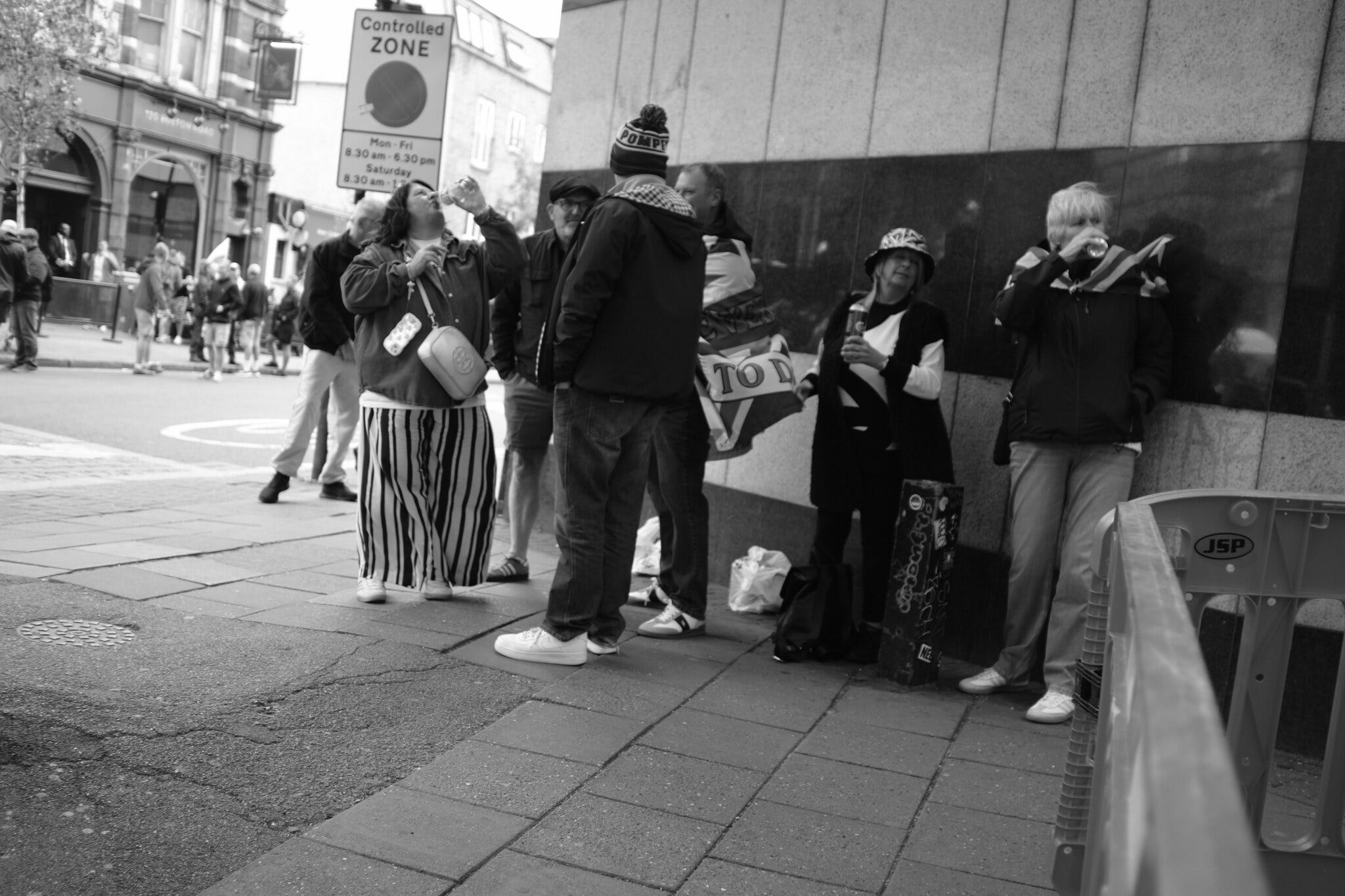
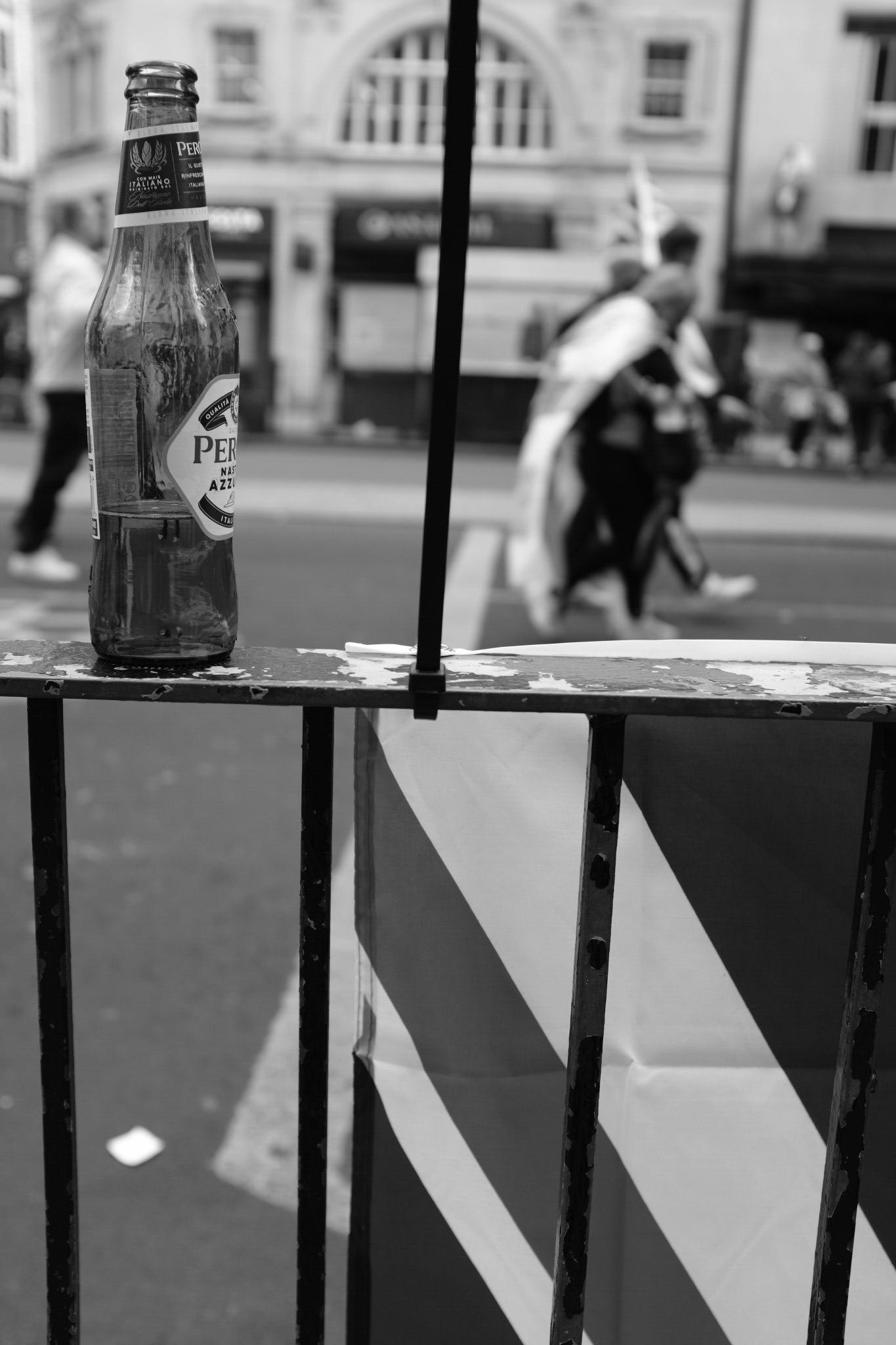
The real story was the energy of the crowd. Not especially hostile, angry, or riotous. Just, in the English vernacular, utterly bladdered. Metaphorically and literally. Men who had been drinking since morning were relieving themselves into doorways all along Kingsway. Empty bottles everywhere. And hanging over it all was a strange atmosphere of dulled consciousness and low-grade despair.
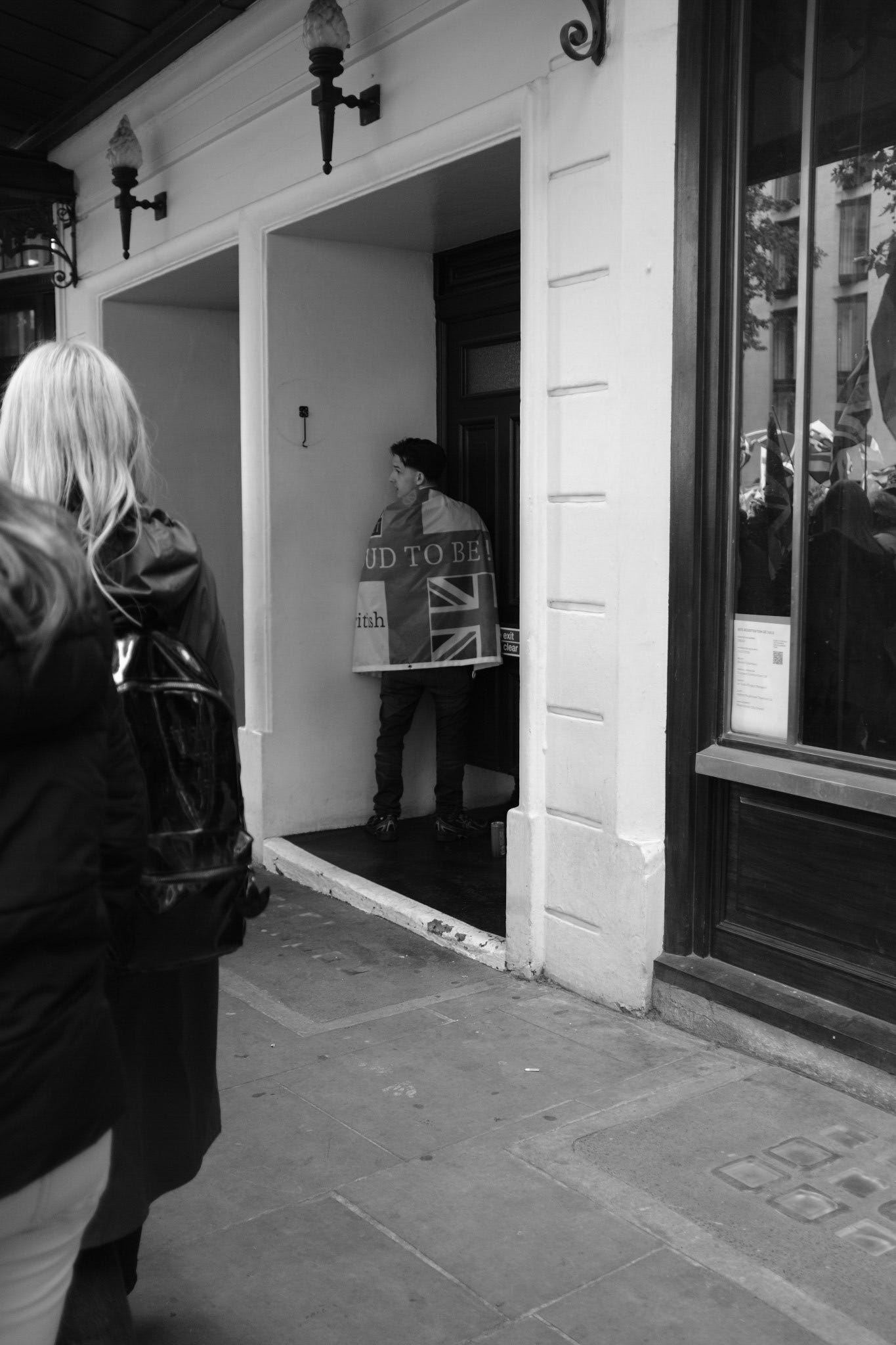
It is a kind of cosplay patriotism, but meant without judgement or superior airs. I am sure many present have, at some point in their lives, sacrificed for righteousness, family, or the common good, so I accuse nobody of lacking courage or sincere intent.
But you cannot spend the morning shouting “Who the f*ck is Allah?” and warning of a “Muslim invasion” while the culture you claim to oppose is visibly outmanoeuvring you through sobriety and self-restraint.
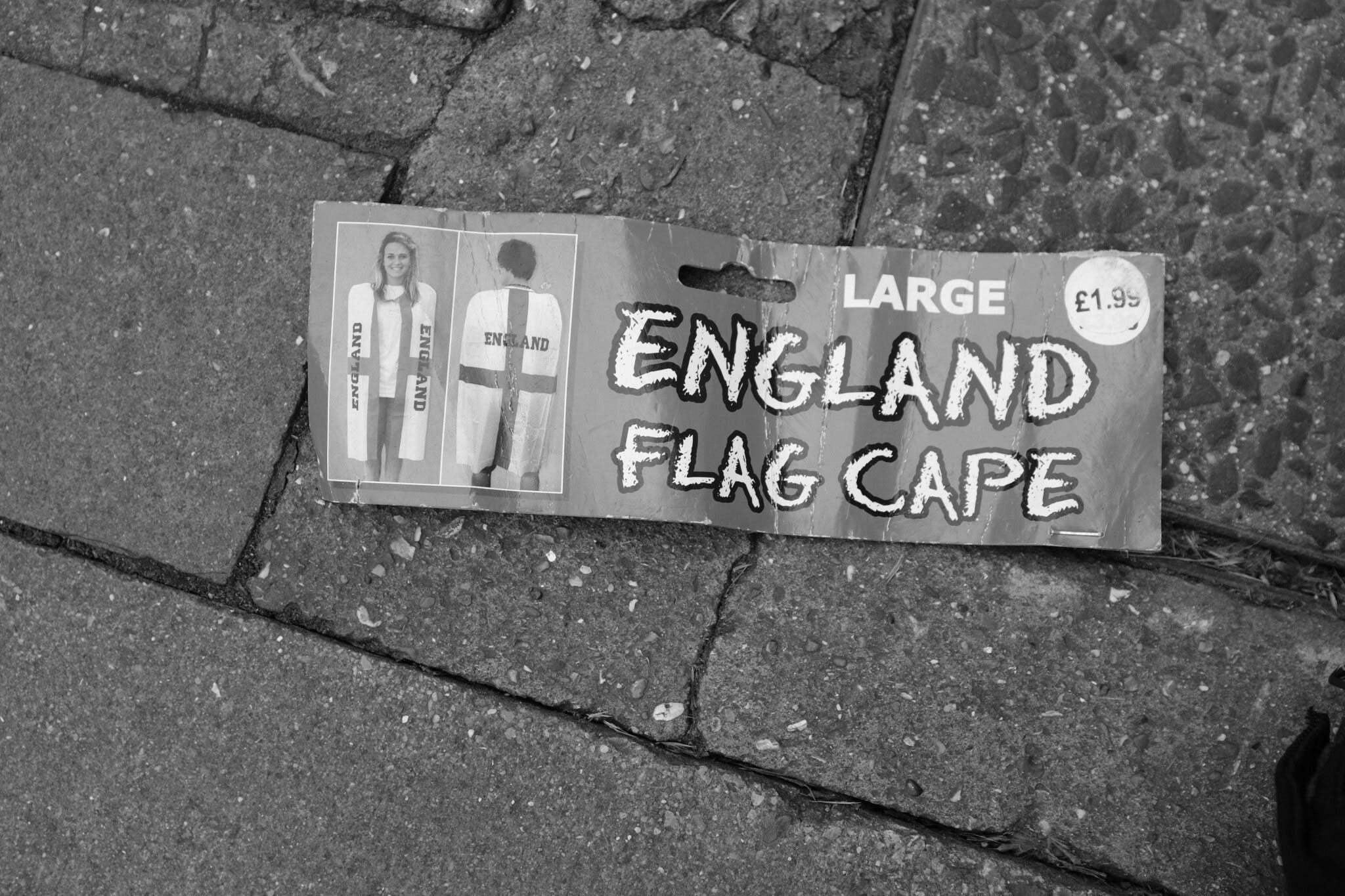
This is not heroic nationalism. It is retail nationalism — part political rally, part football away-day, part street carnival. And viewed from the outside, it comes across as slightly ridiculous.
Mashed Britannia
I did, however, get stopped by one lovely lady who recognised me and thanked me for my work, rewarding me with a delightful kiss on the cheek and a dual selfie. She felt the atmosphere was relatively warm and relaxed — and it was certainly not threatening in any way.
If this is the “far-right” then they aren’t the “far wrong” being portrayed. It’s all surprisingly ordinary and subdued.
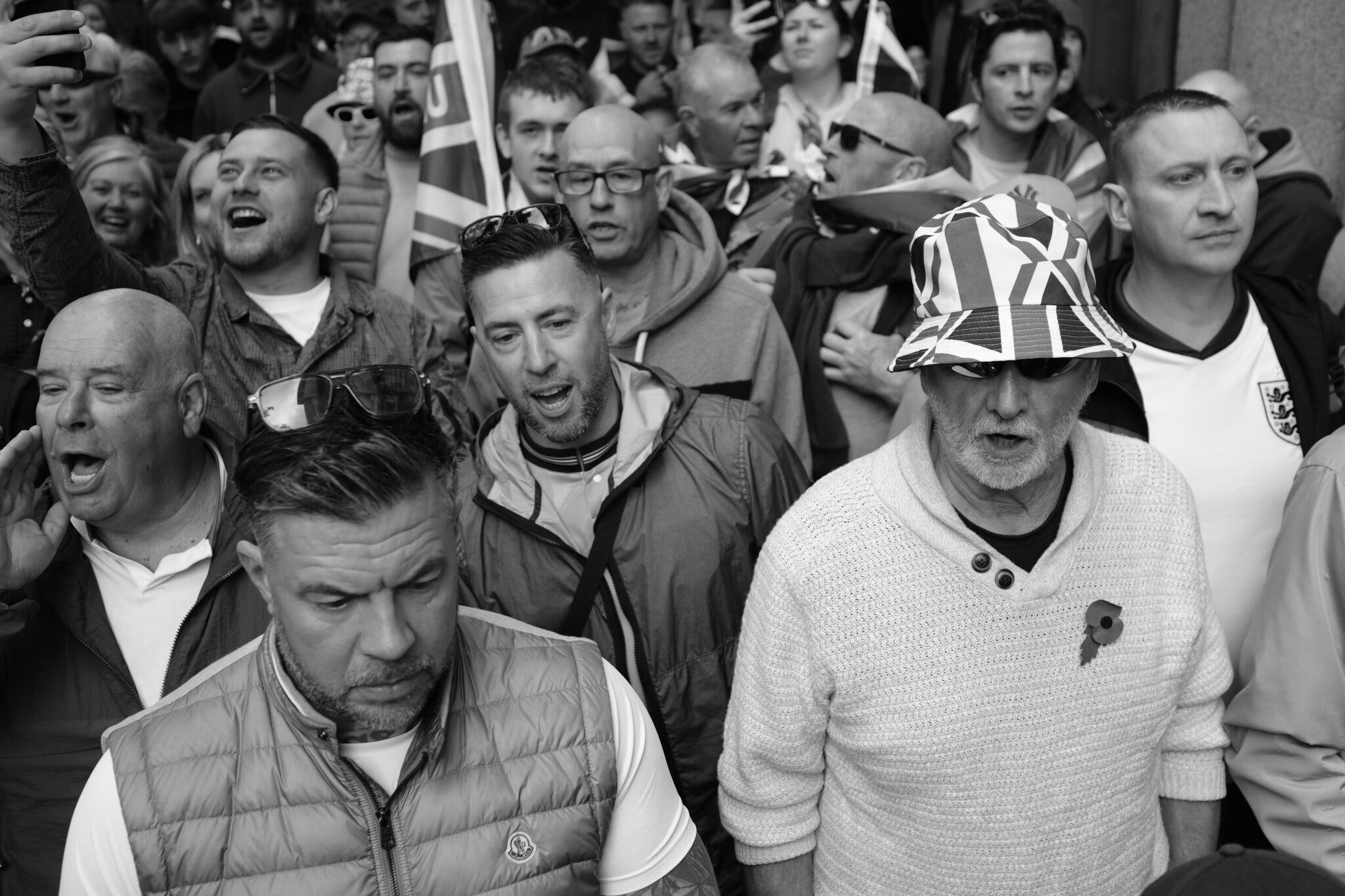
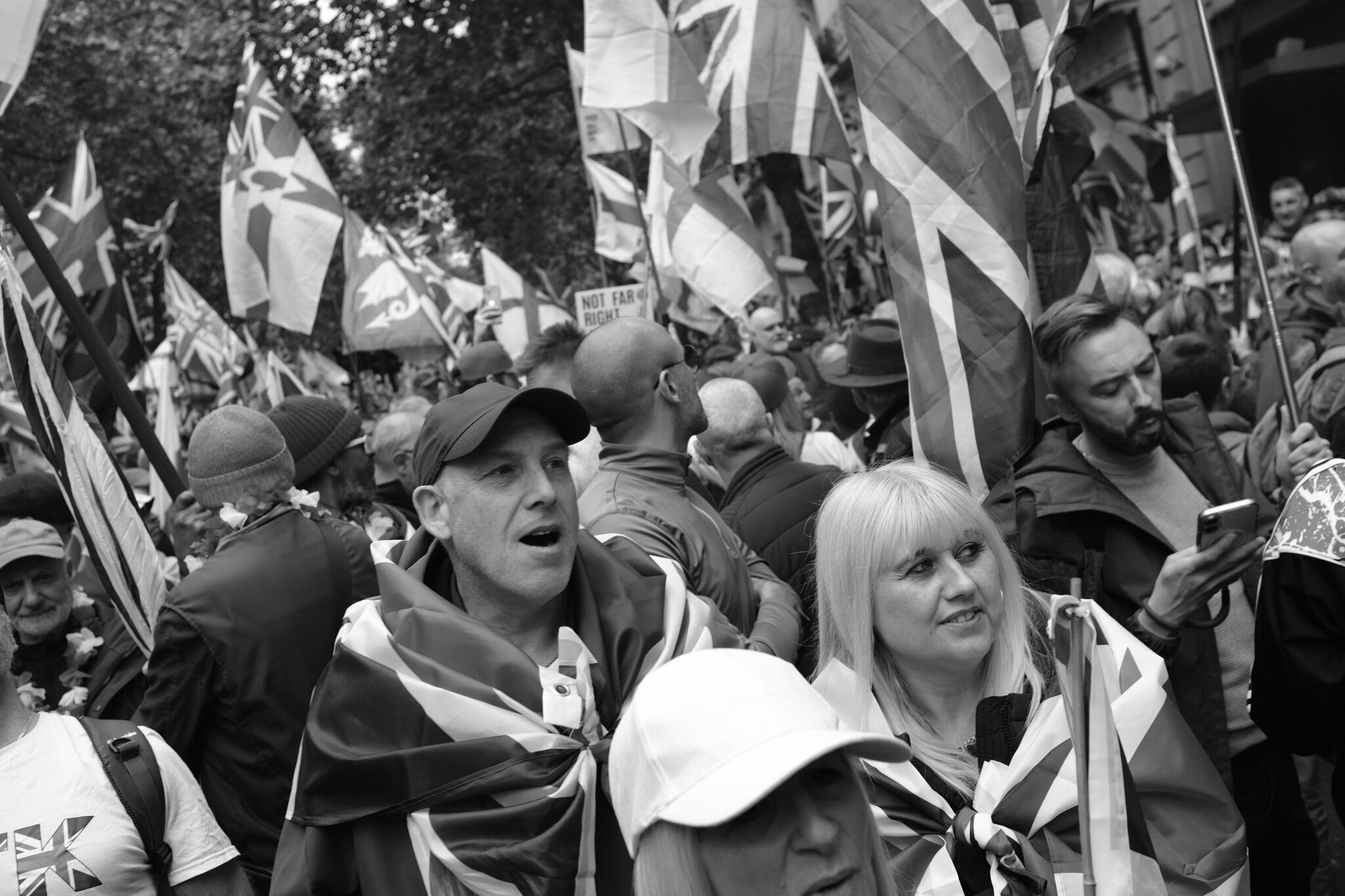
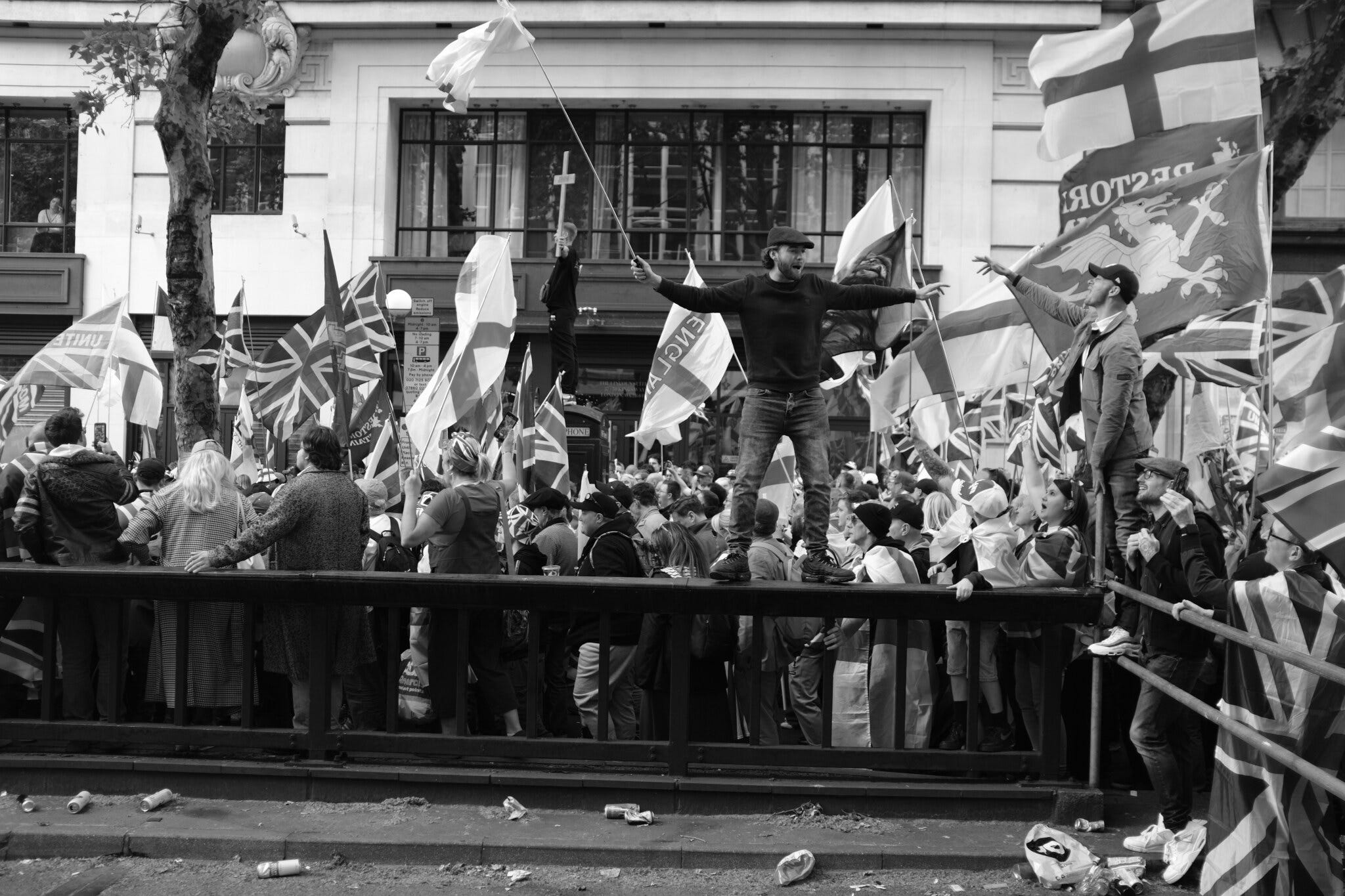
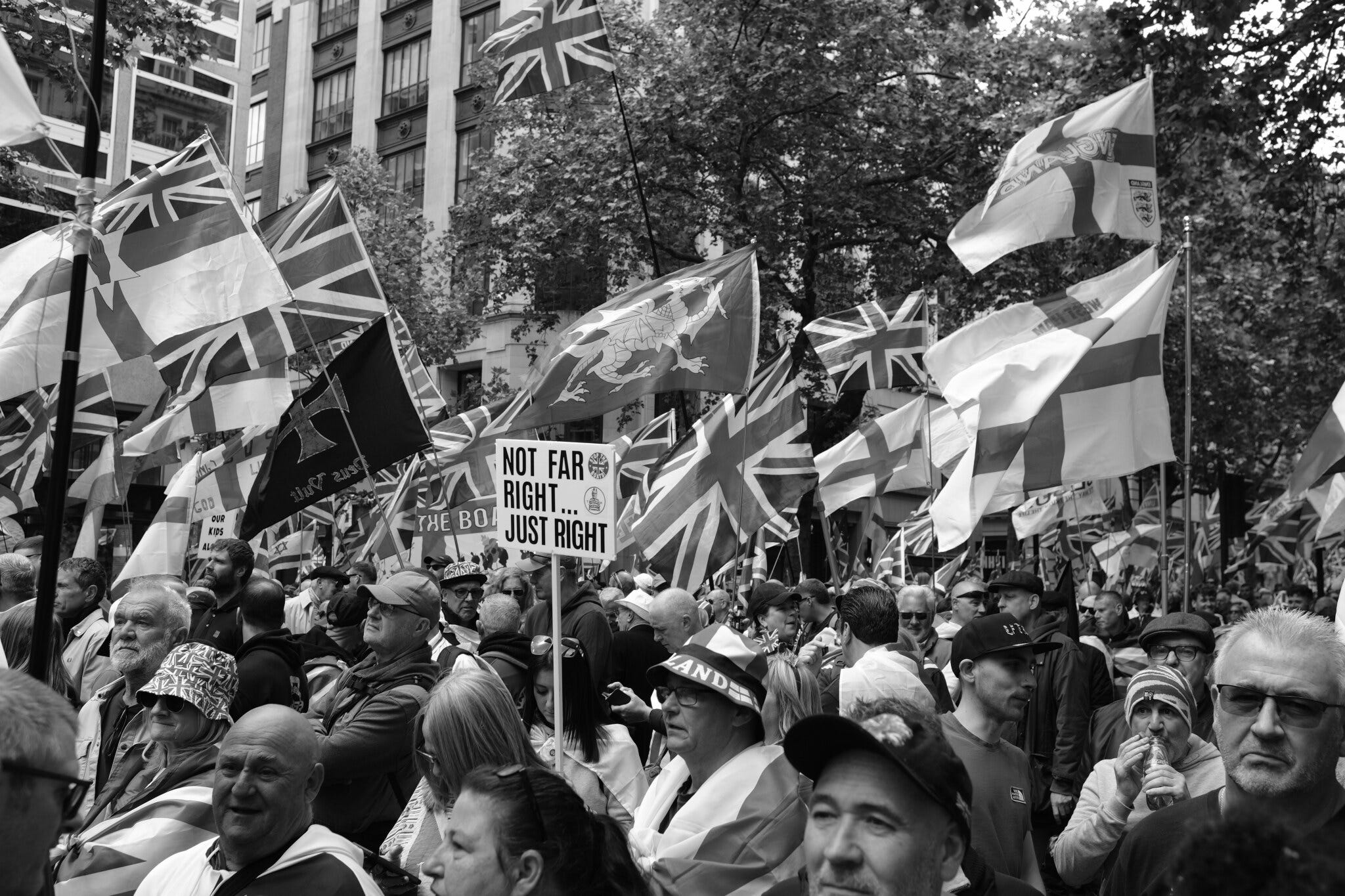
My own progress forward eventually stalled outside the London School of Economics — one of the great institutional temples of managerial globalism and progressive orthodoxy. If forced to choose, I would still feel far less affinity with that world than with the ordinary people gathered nearby protesting cultural dislocation, demographic change, and estrangement from the Establishment.
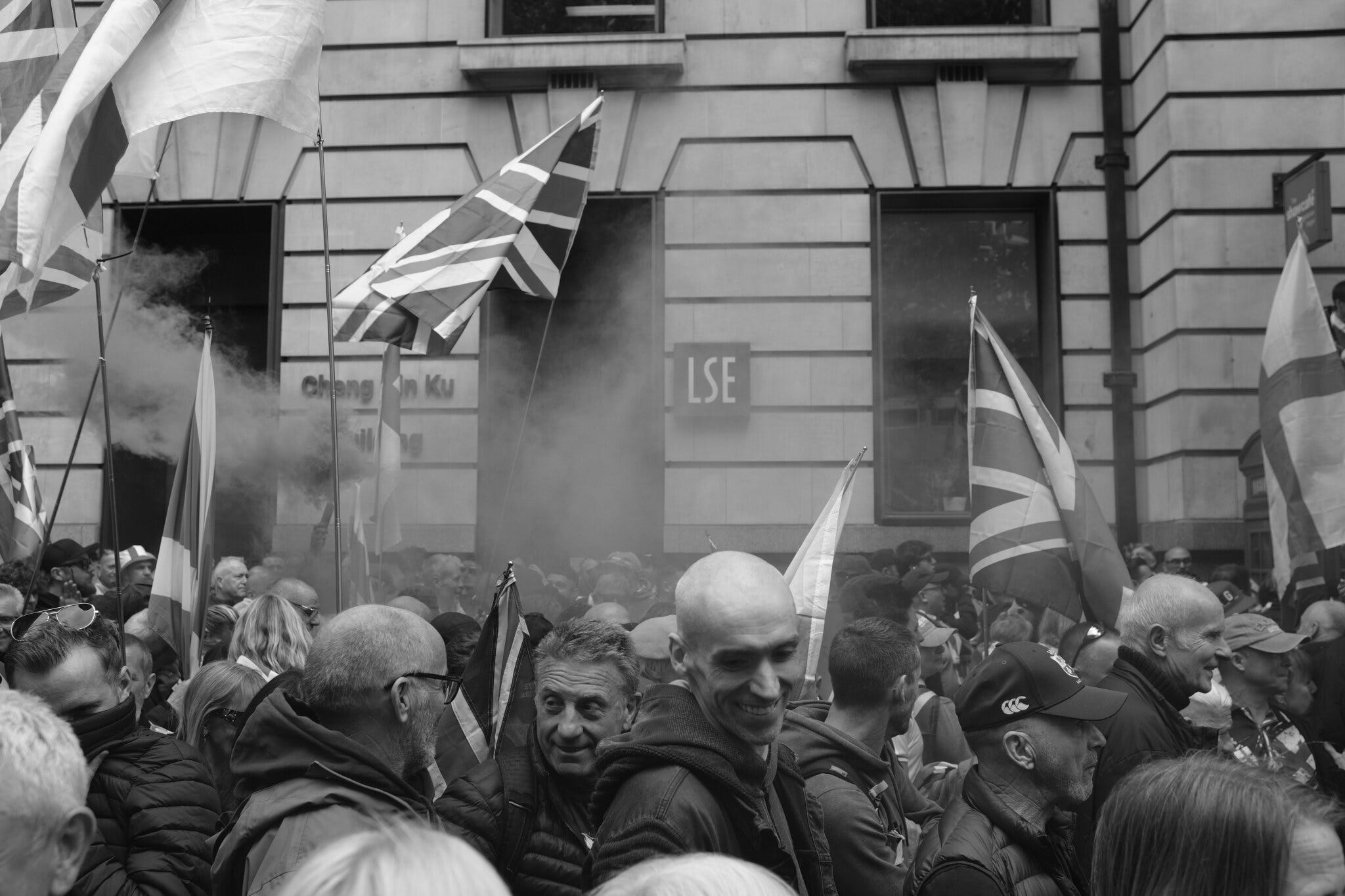
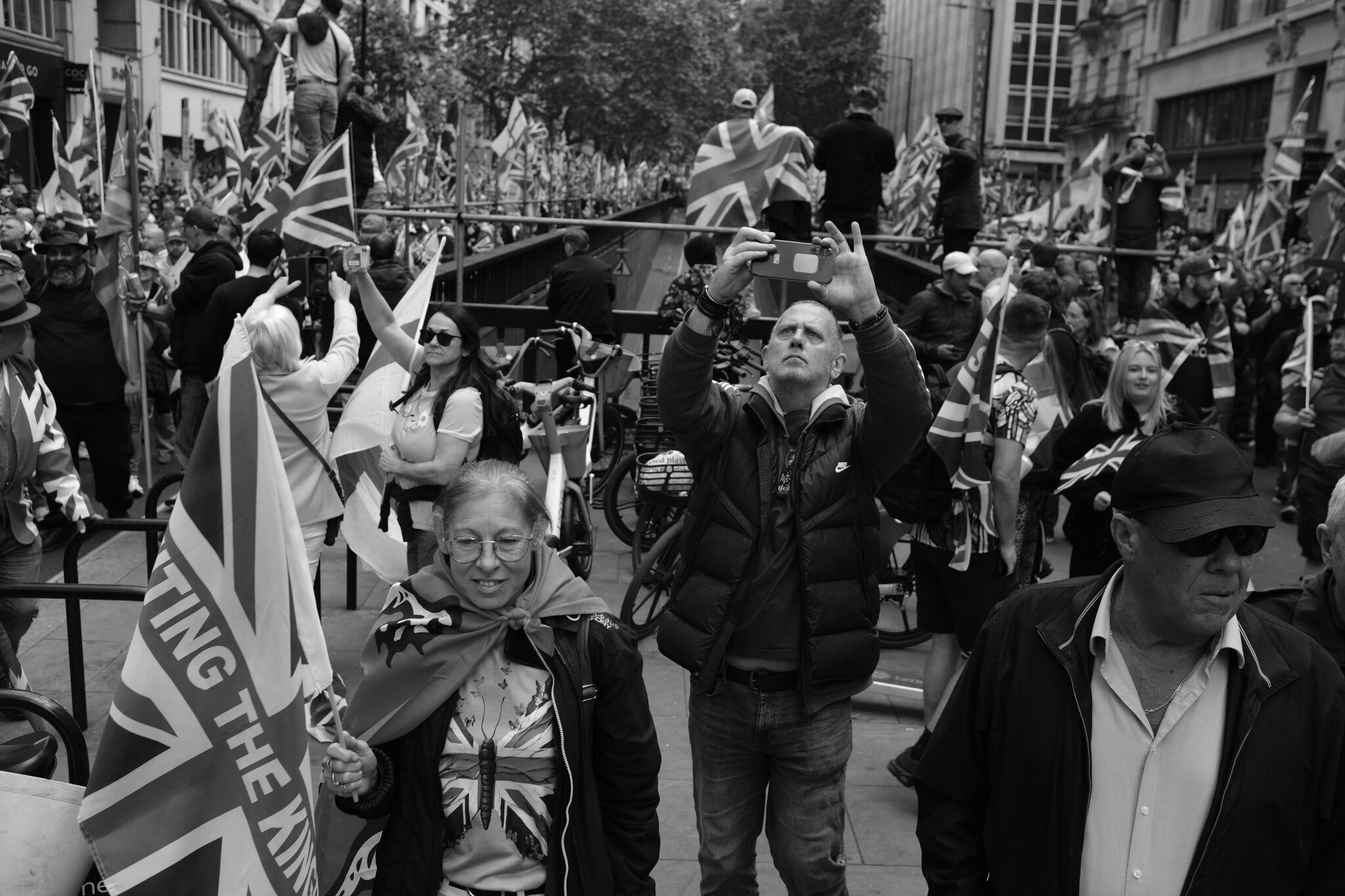
Imported conflicts
What really struck me about the day was how little coherent ideological focus the movement seemed to possess, leaving flags and nationalist symbolism to fill the vacuum. I have an Israeli family member whom I love dearly, and a Jewish former partner, so the idea that I fit some cartoon stereotype of an anti-semite is absurd. Equally, the label “right wing” sits awkwardly on me, given that back when I still participated in electoral politics I never once voted for a party of the traditional right.
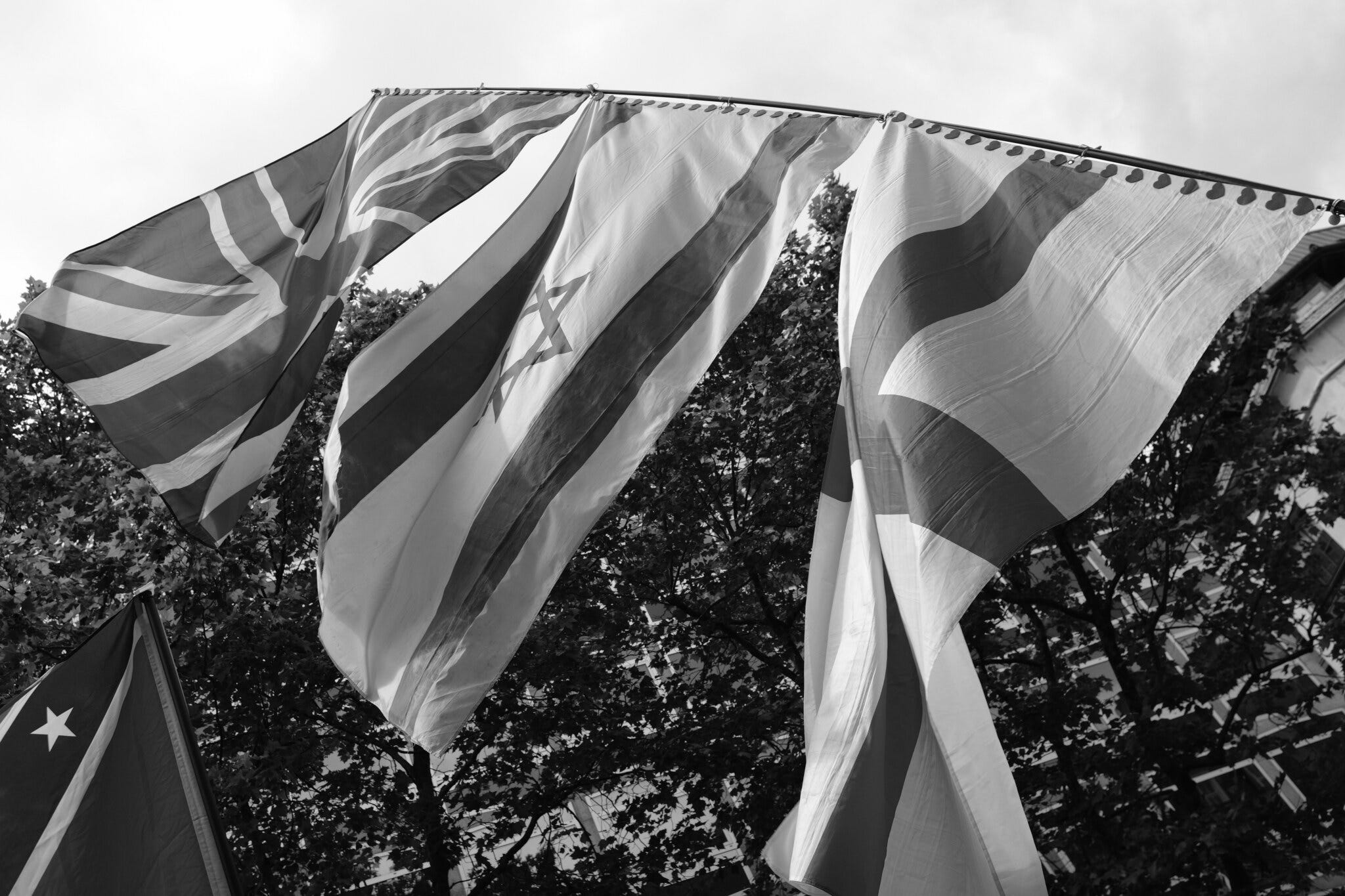
The gentleman holding the next placard complained of it having been attacked and damaged.
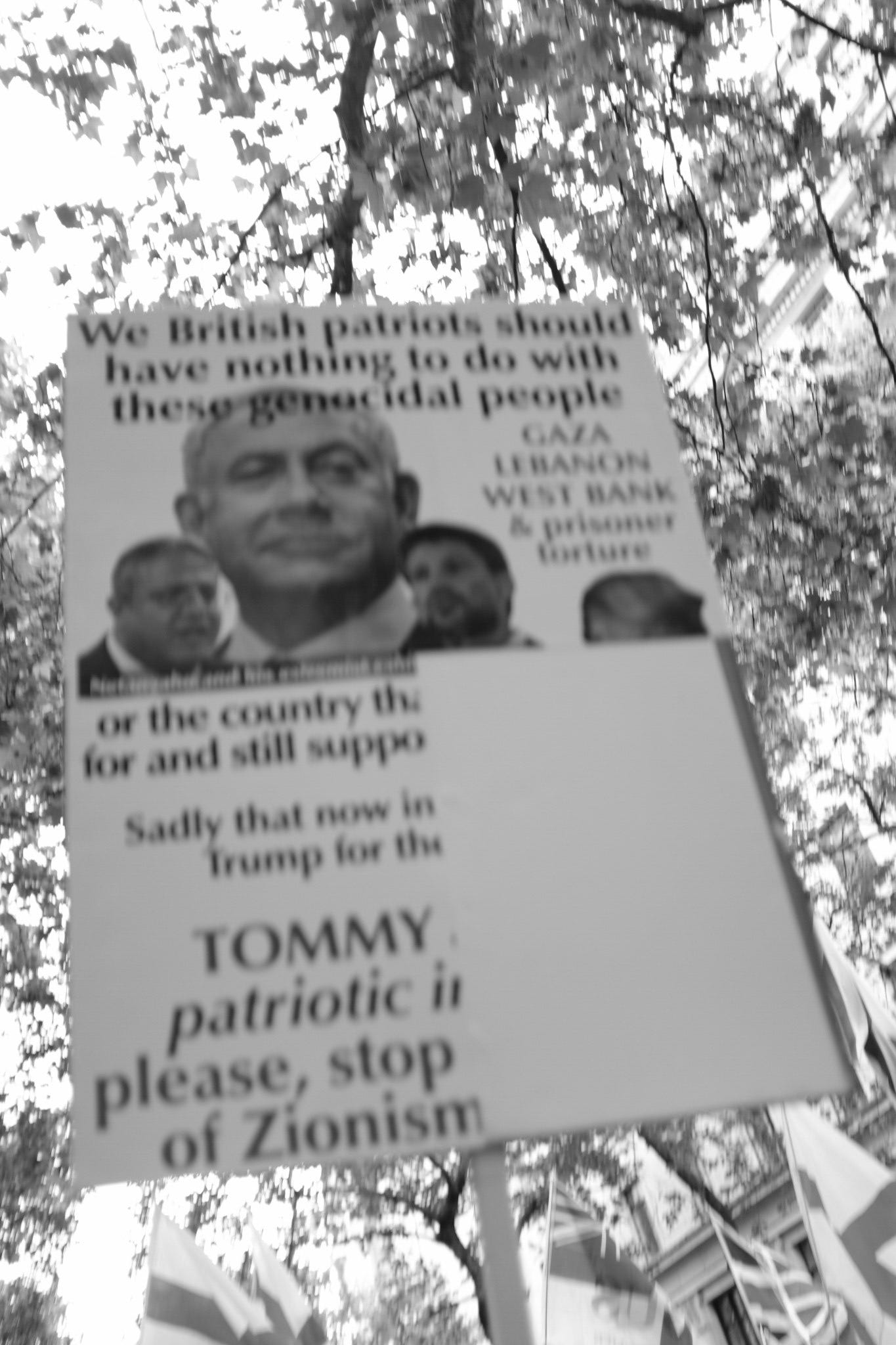
Meanwhile, the anti-Zionists were also in attendance.
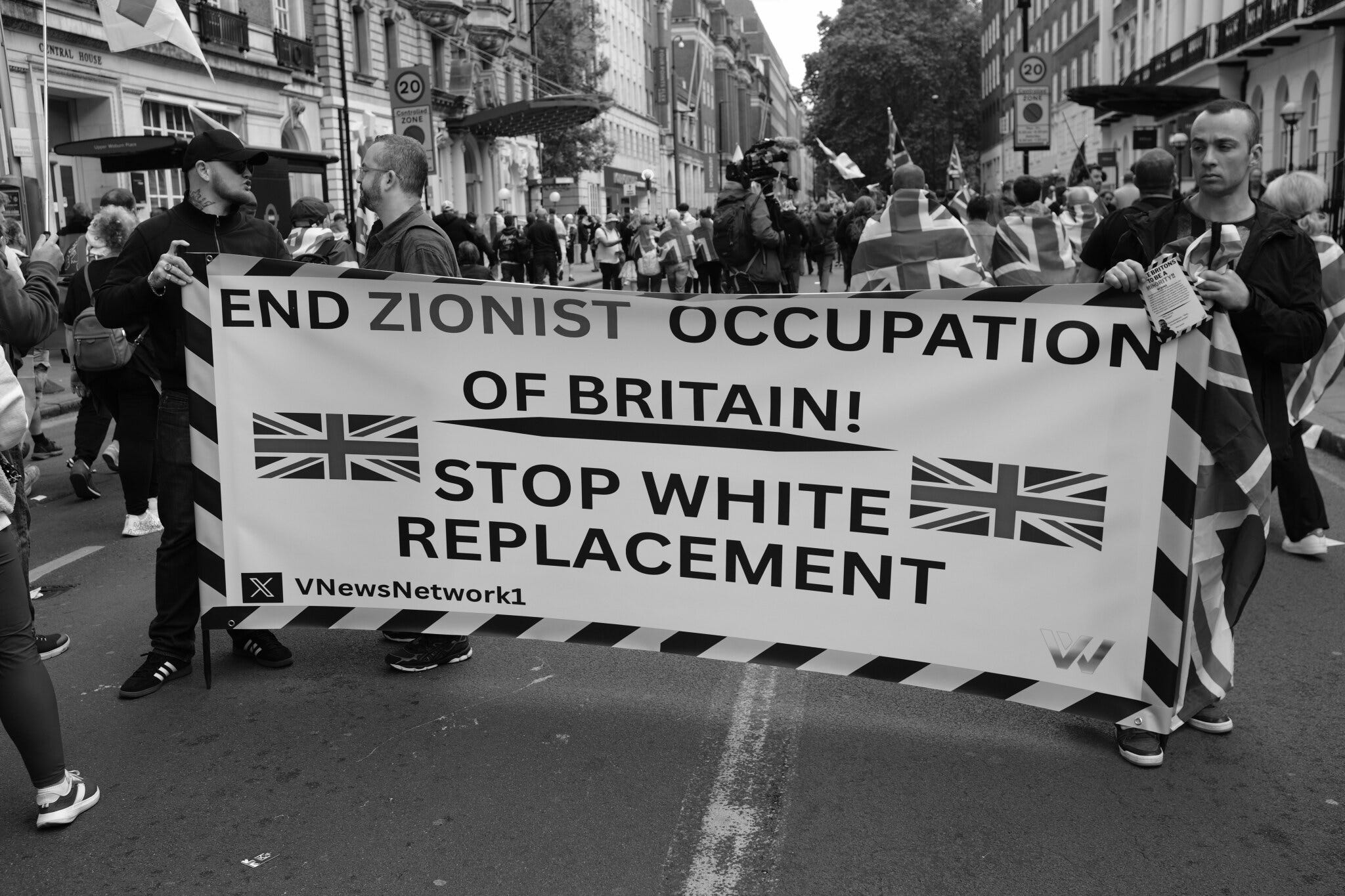
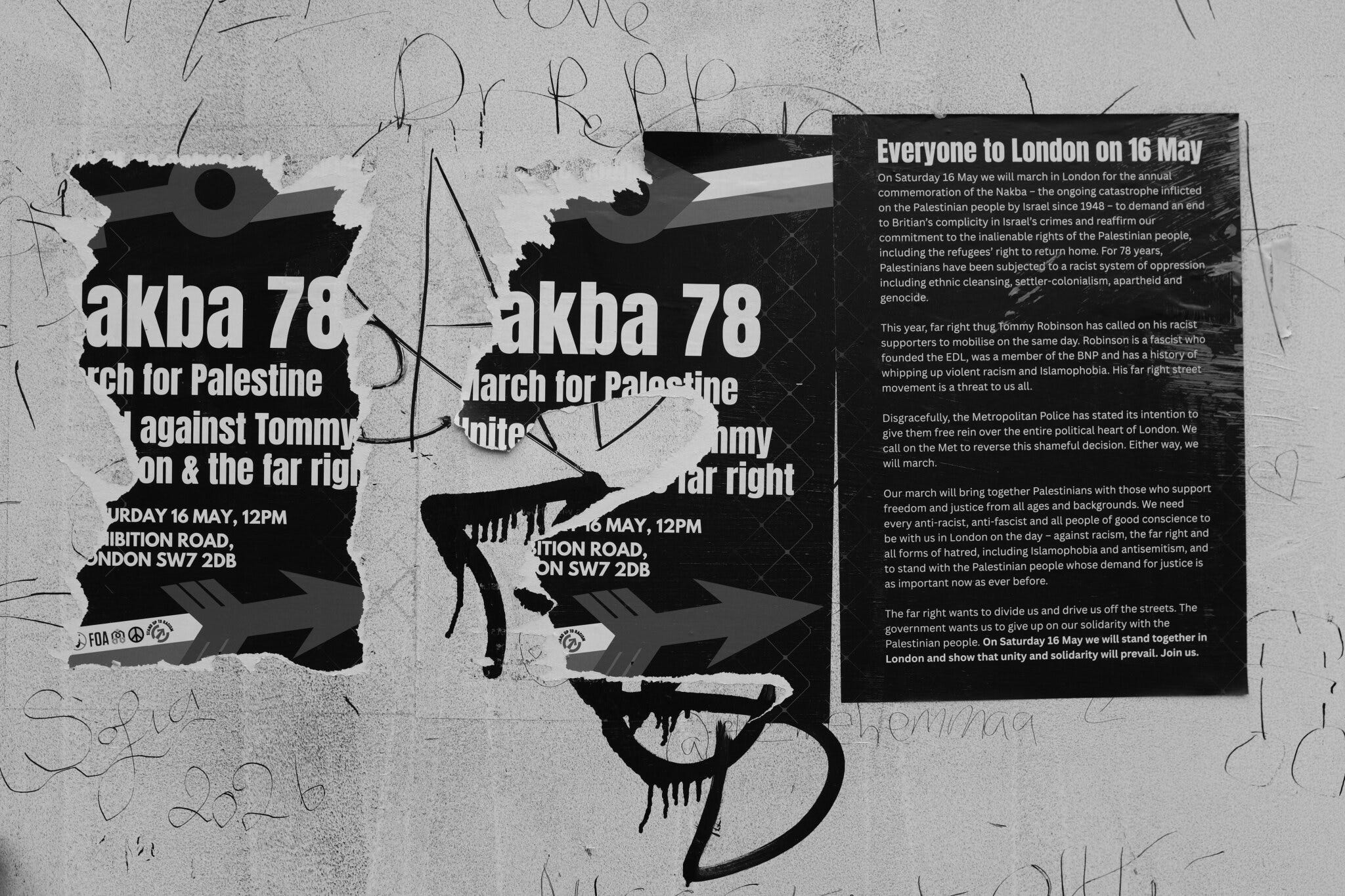
Along with the pro-Palestine movement being the anti-Tommy Robinson rally, held at the same time.
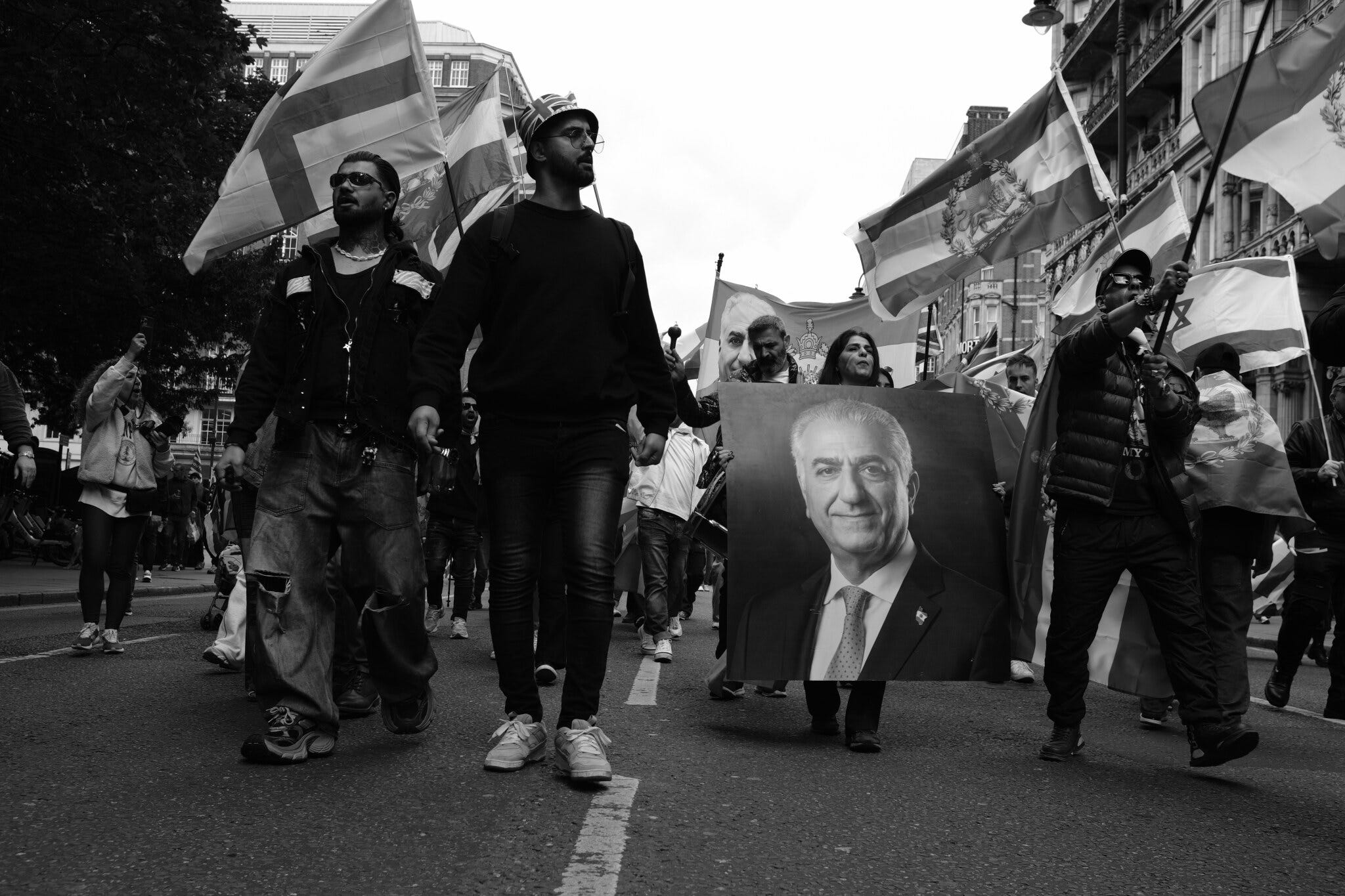
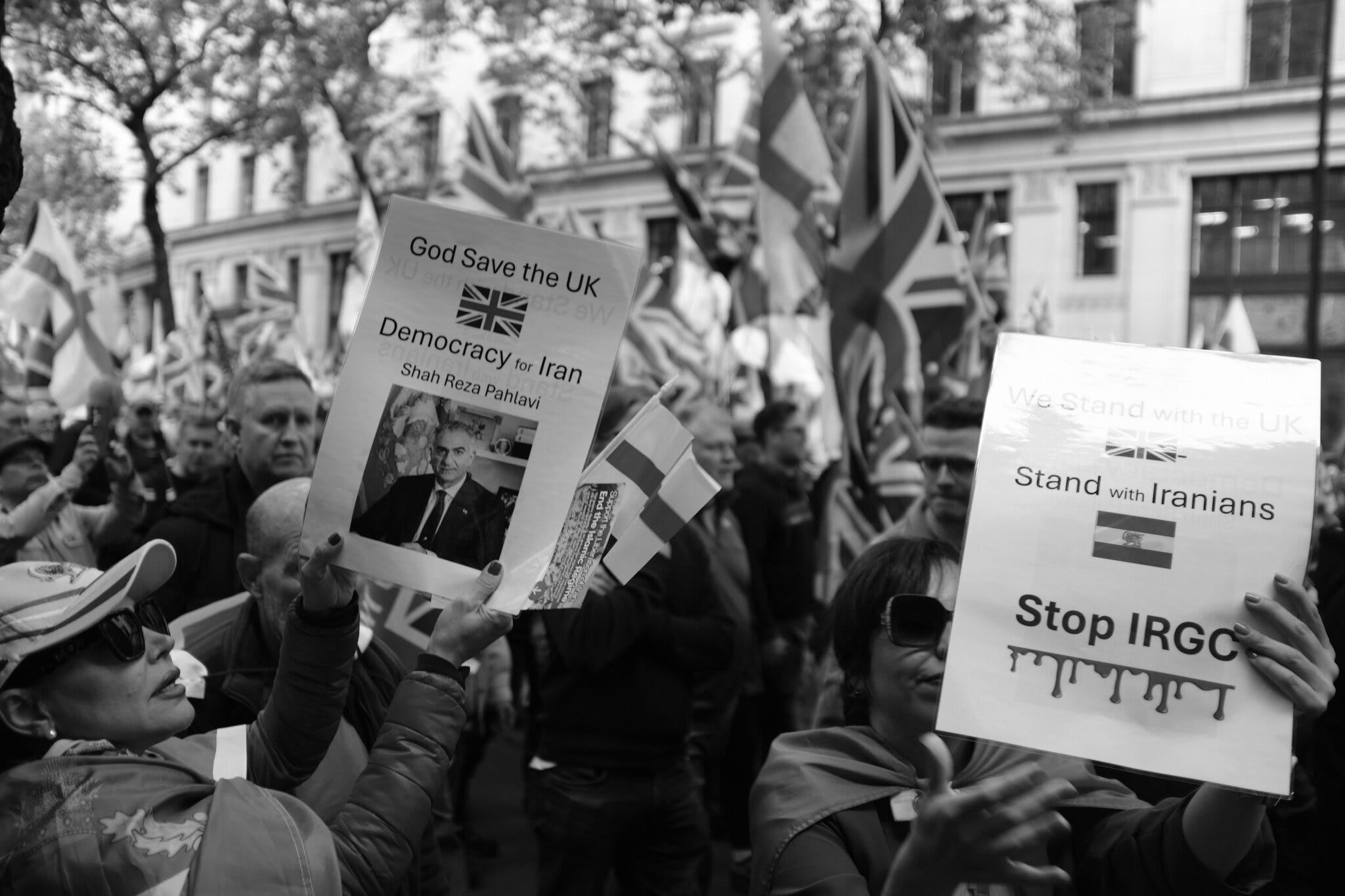
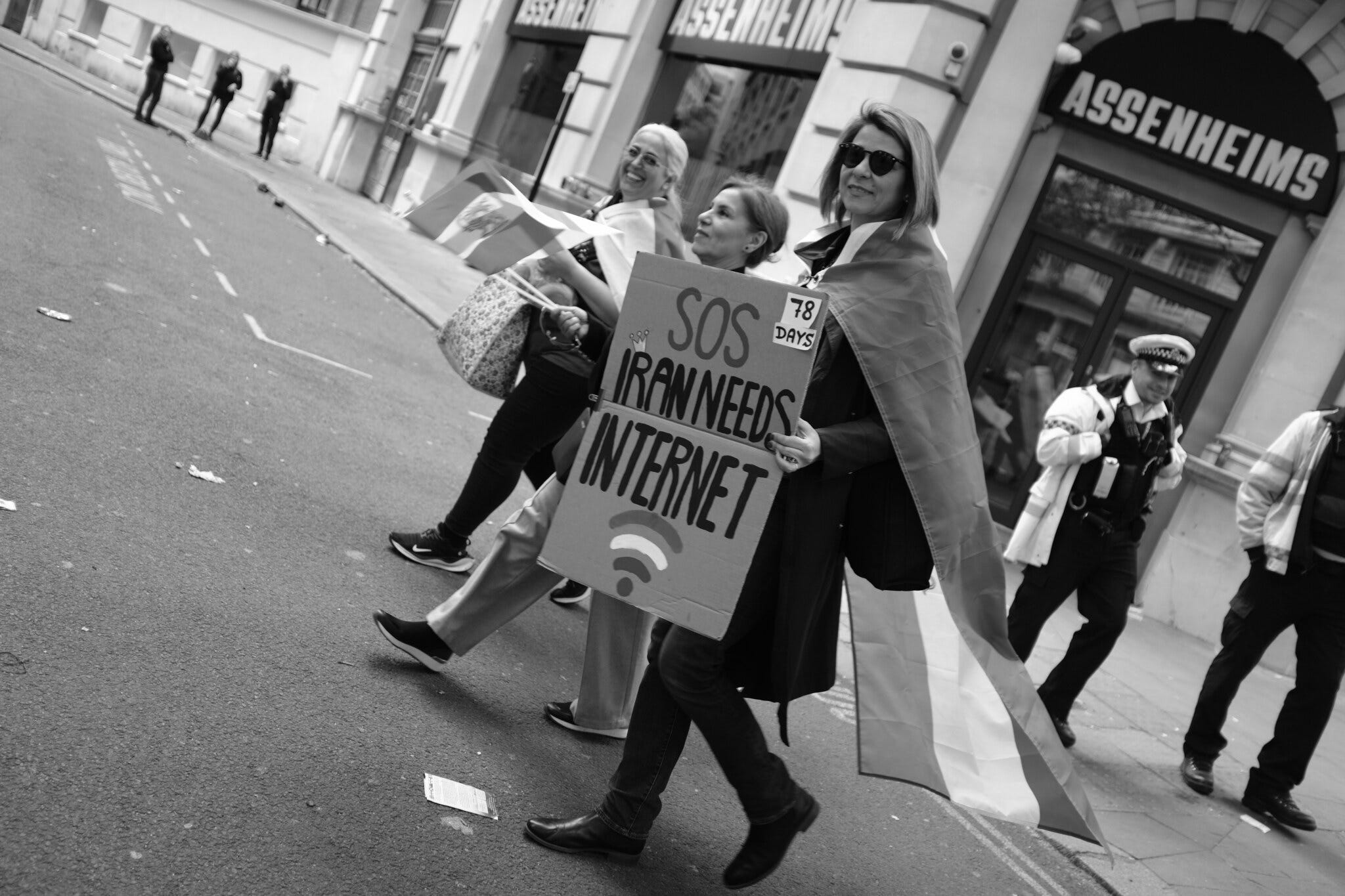
While the Iranians seemed to be allied to the zionists in wanting the Shah to come back. I wasn’t quite sure — the English of the guy holding the loud hailer wasn’t so great. But at least London clearly has some form of meaningful freedom of speech.
Then again, we have the mainstream Jewish community in attendance…
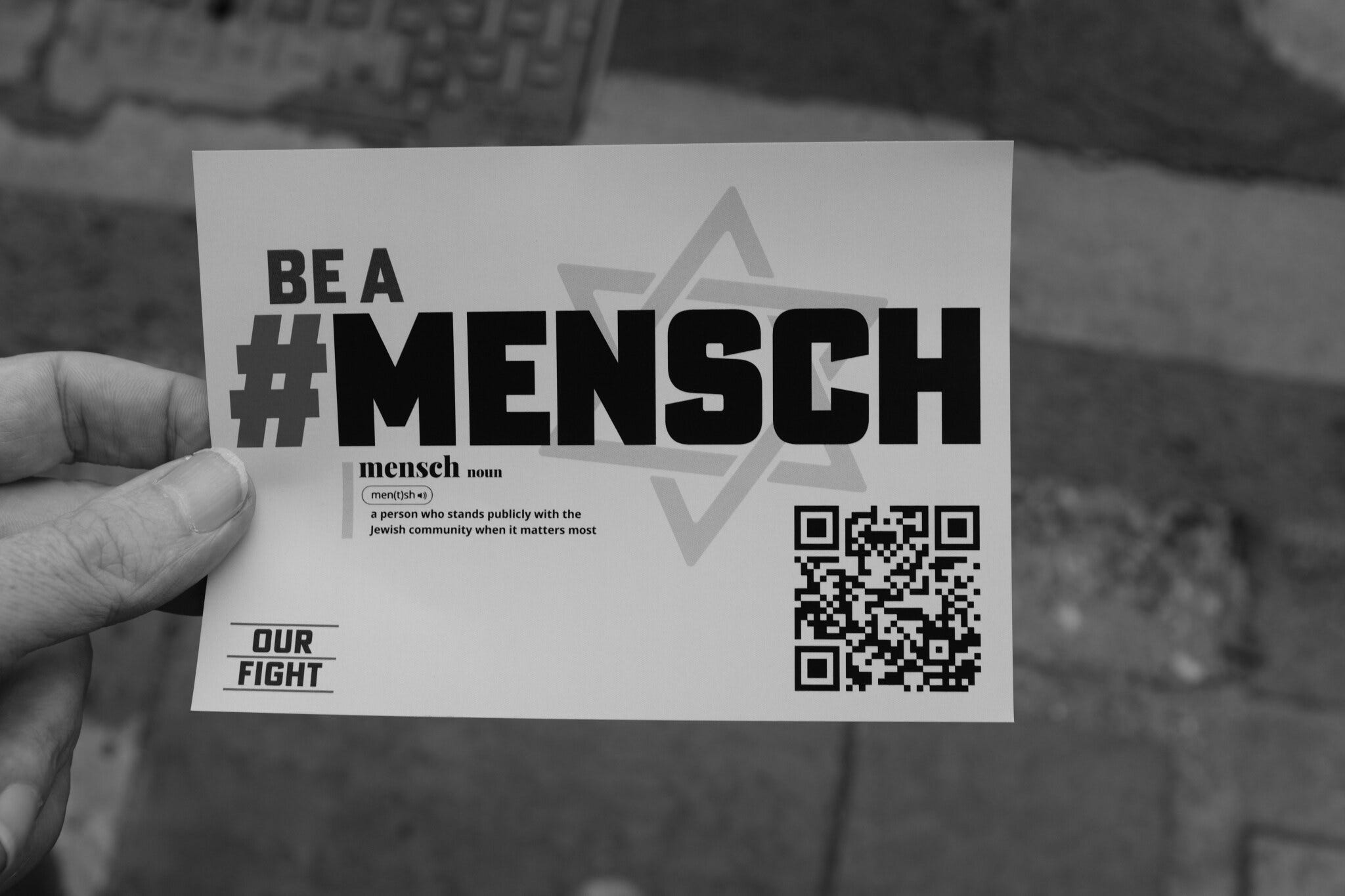
You probably would not pick up this deeper fragmentation from television news coverage or social media commentary. Those mediums tend to flatten everything into moral binaries and partisan caricature, losing the ambiguity and nuance of what is actually happening on the ground.
As an aside, I brought my older Fujifilm X-100F — a small rangefinder-style camera with a fixed lens and fake brown leather trim. It does not look intimidating or overtly “professional”, which means I can photograph people naturally without immediately putting them on edge. Nobody runs away from it. The usual question I get is: “Is it digital?” As you can probably tell from these images, it certainly is.
Muscular Christianity
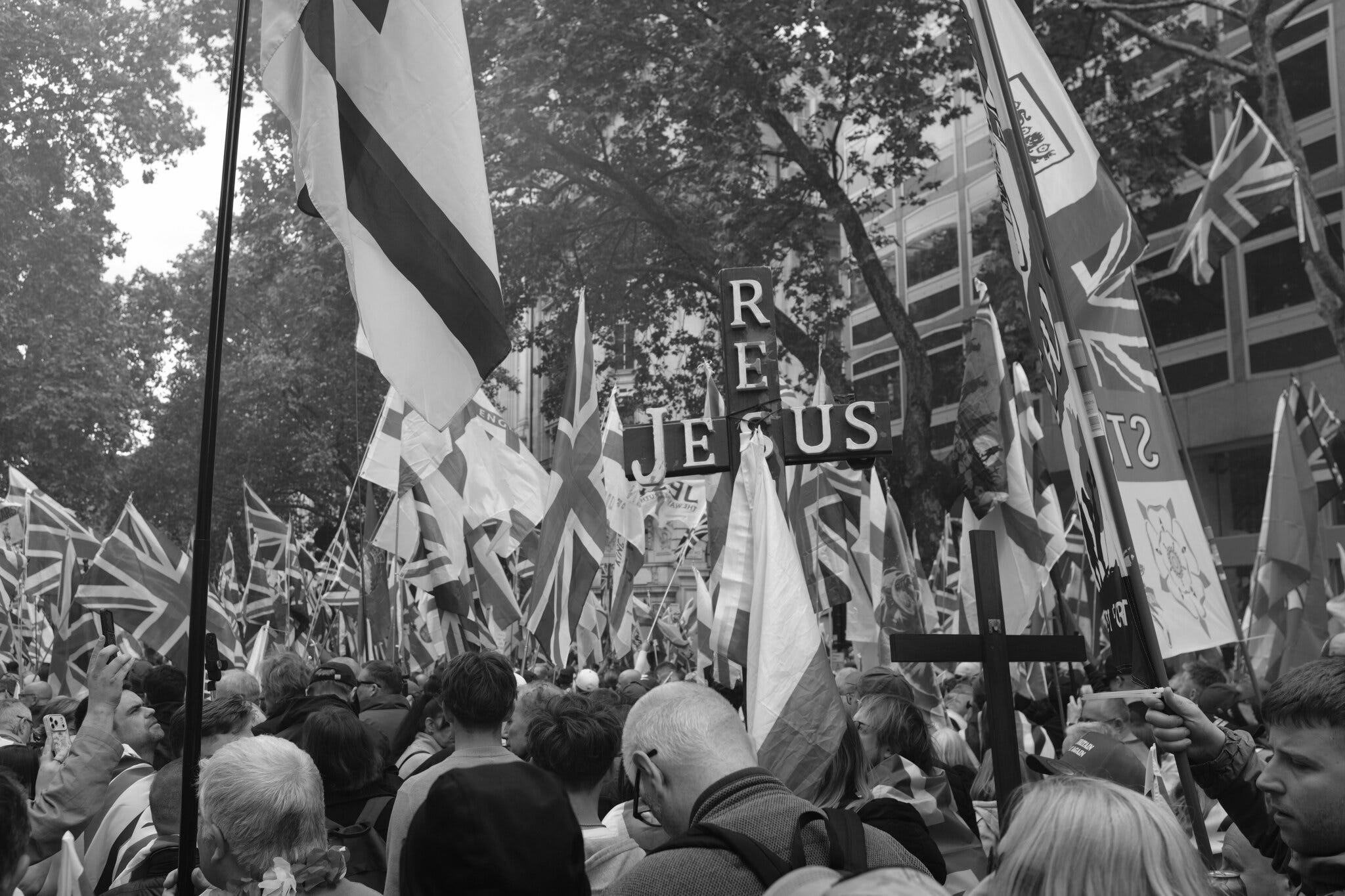
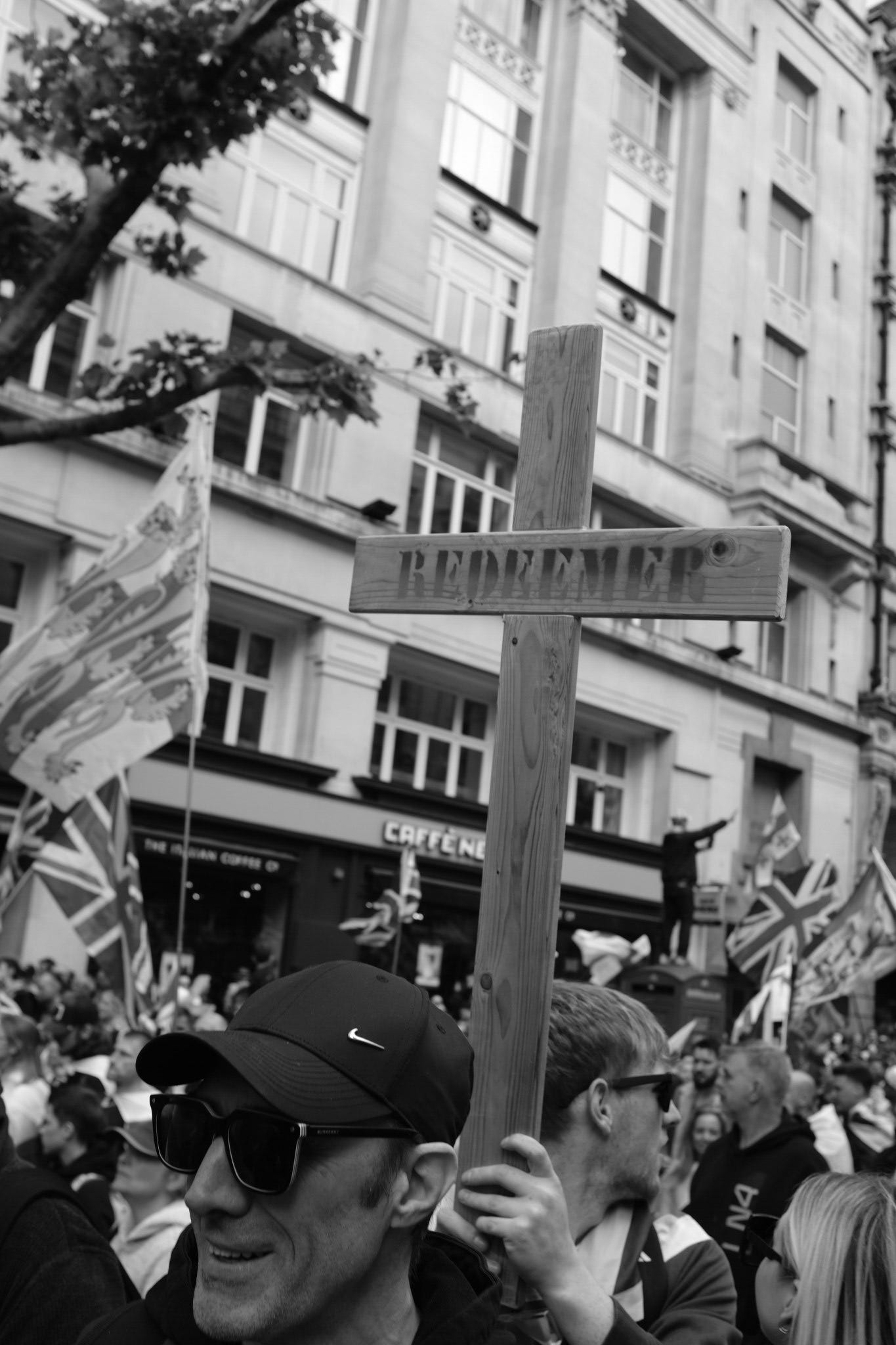
Perhaps the most noteworthy aspect of the day is assertive Christian messaging and symbolism.
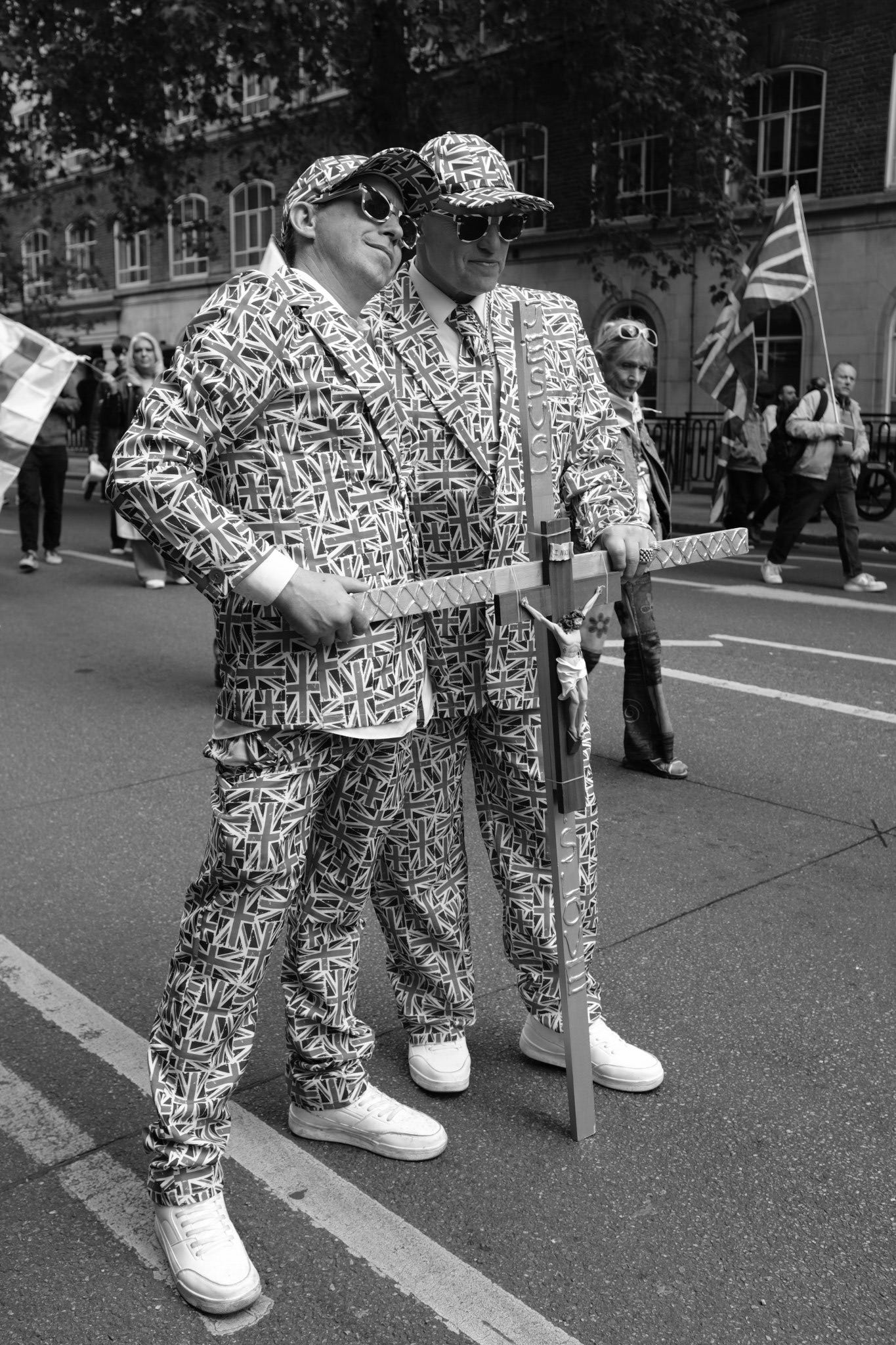
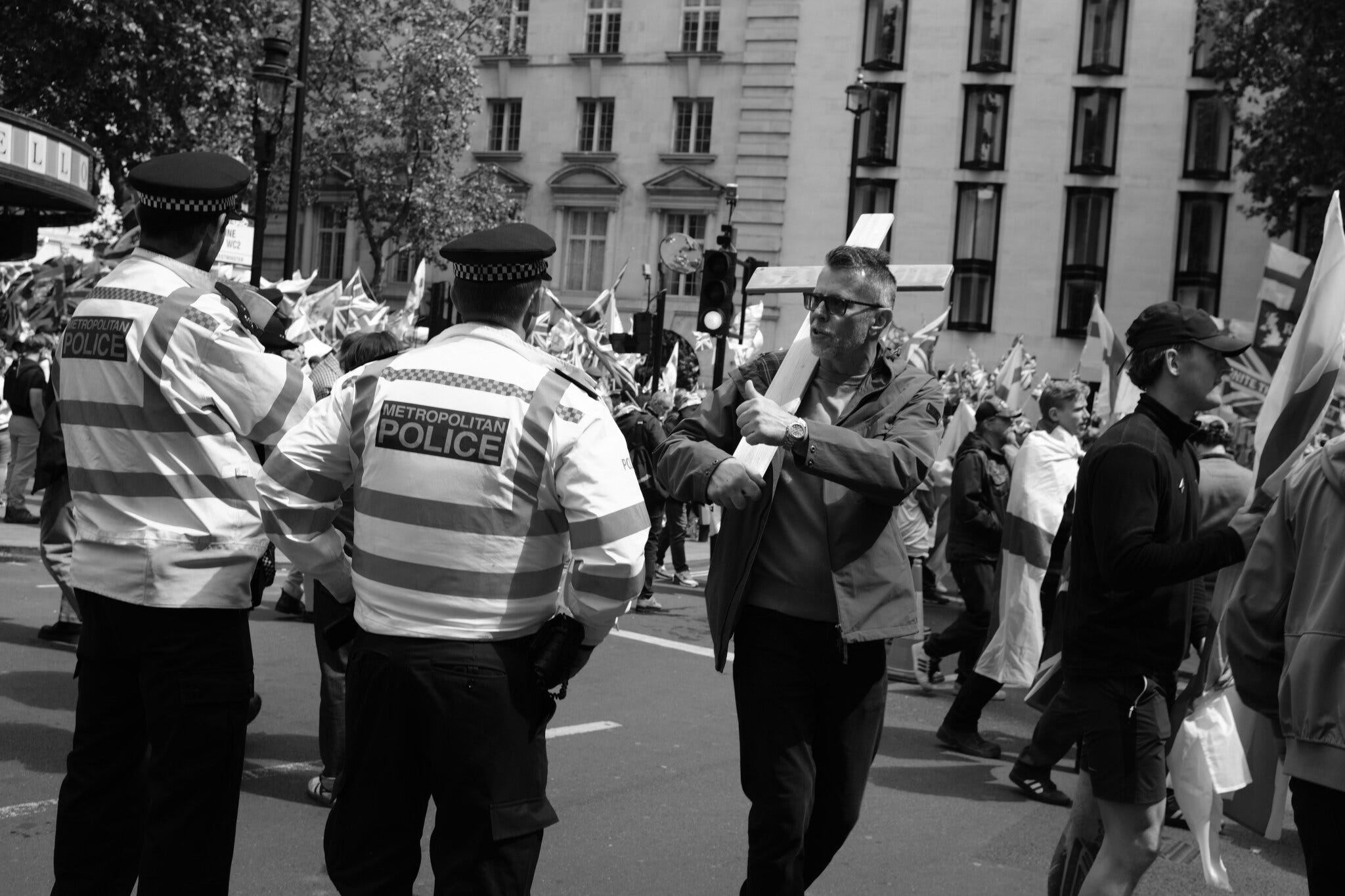
I had the camera on full autofocus. Honest. So am not responsible for where its attentions alighted.
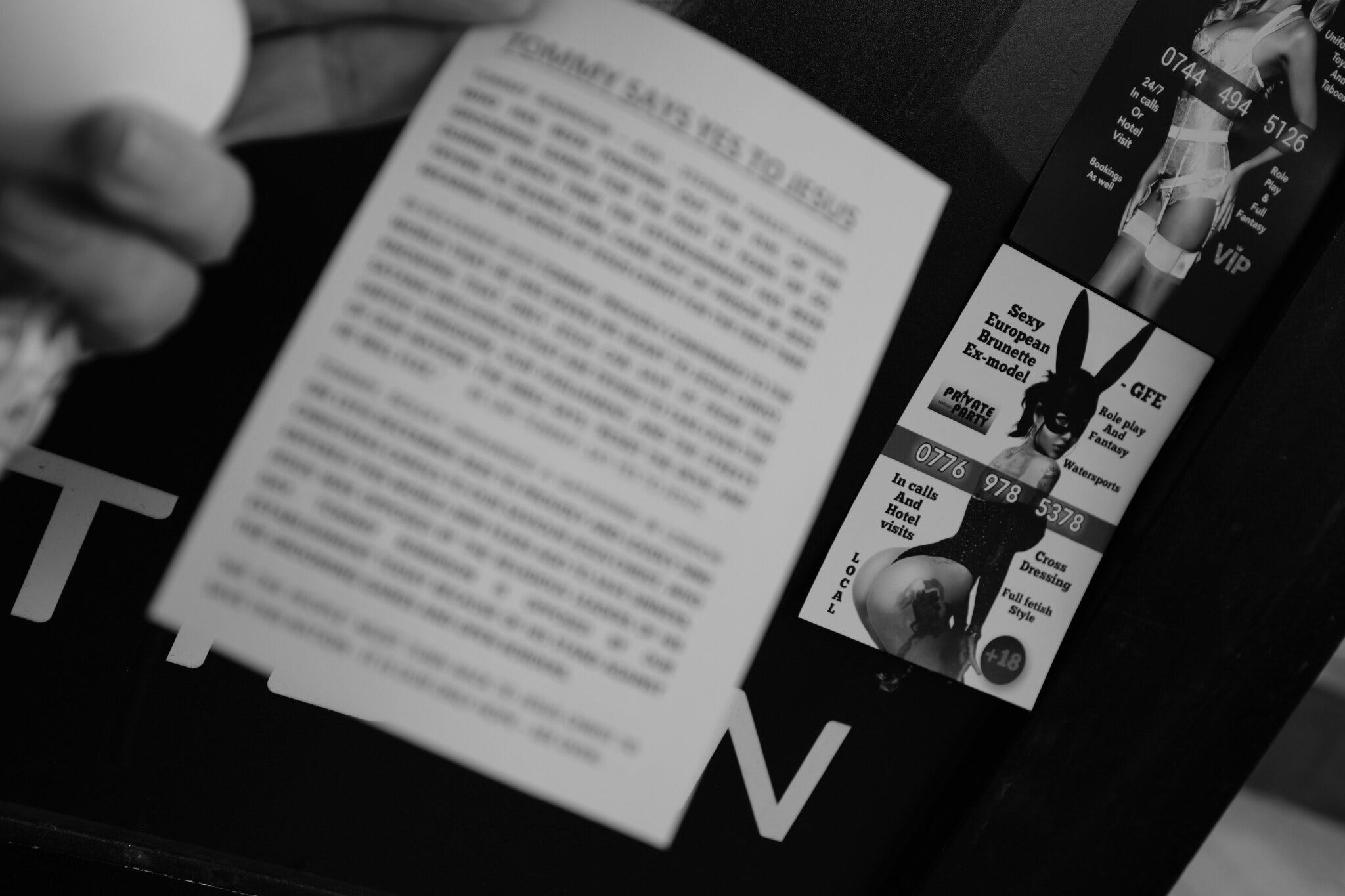
It was this next sign that persuaded me I had to attend on an anthropological basis, if nothing else.
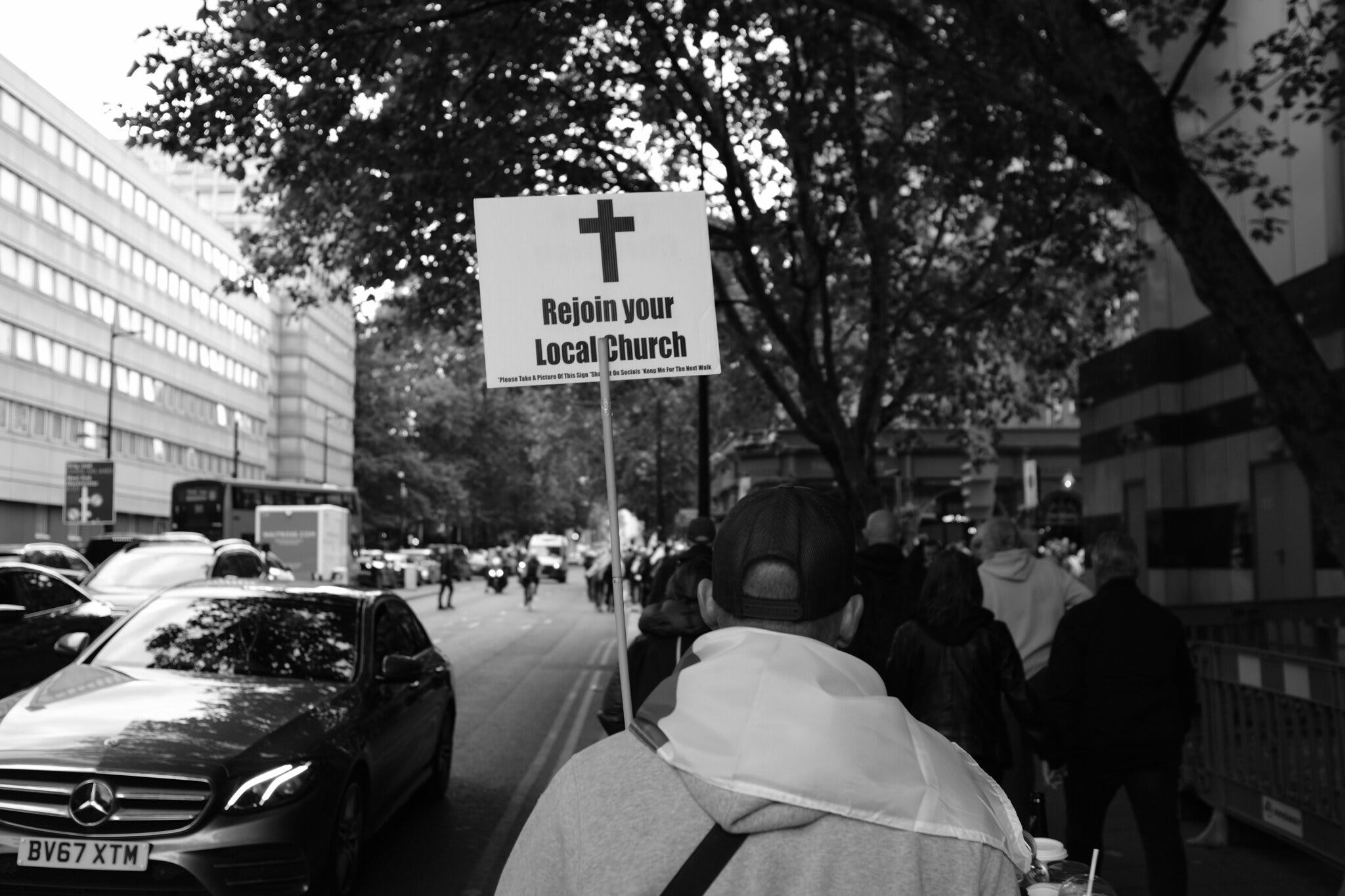
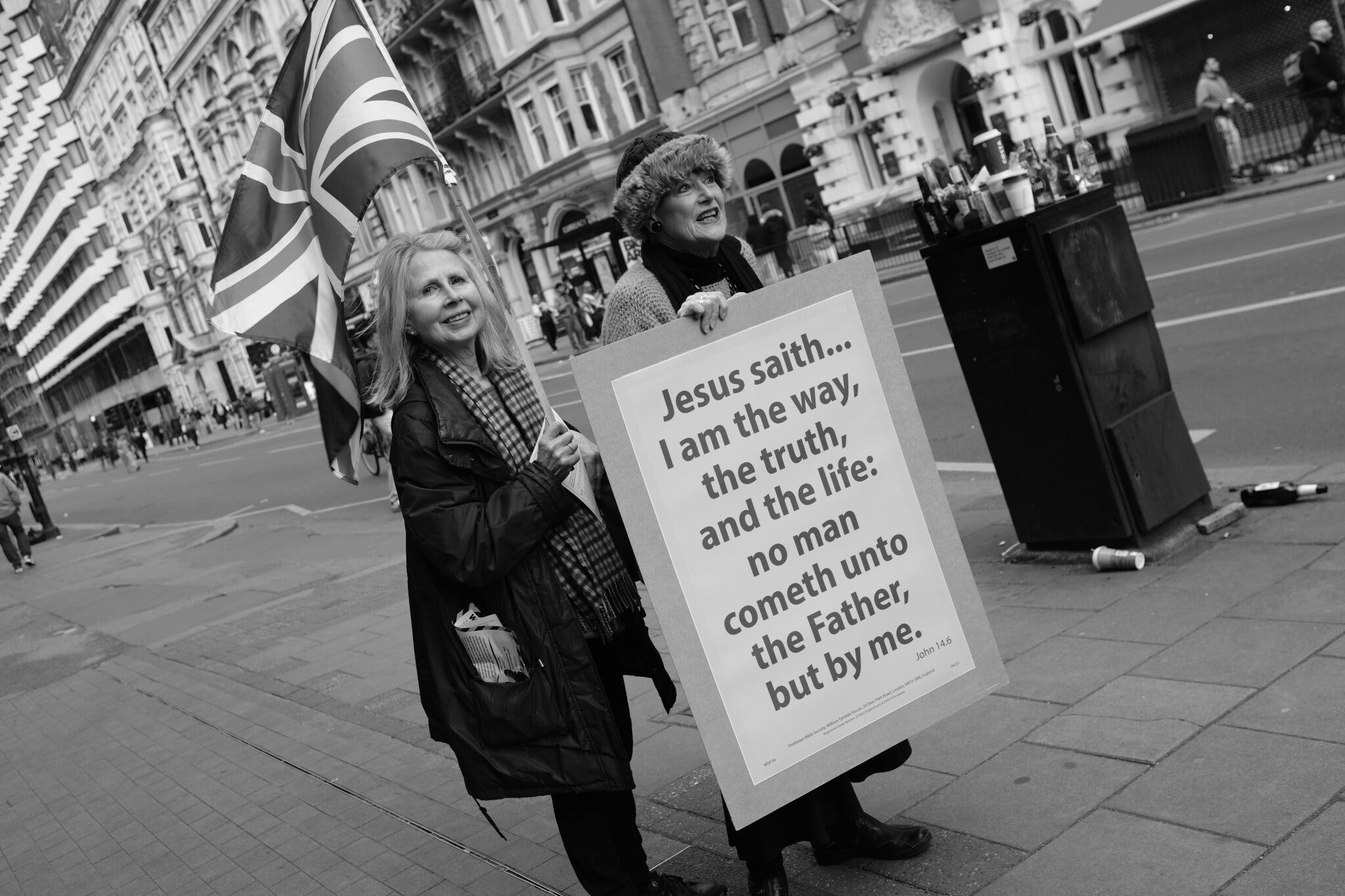
This is not a typical sight in modern Britain.
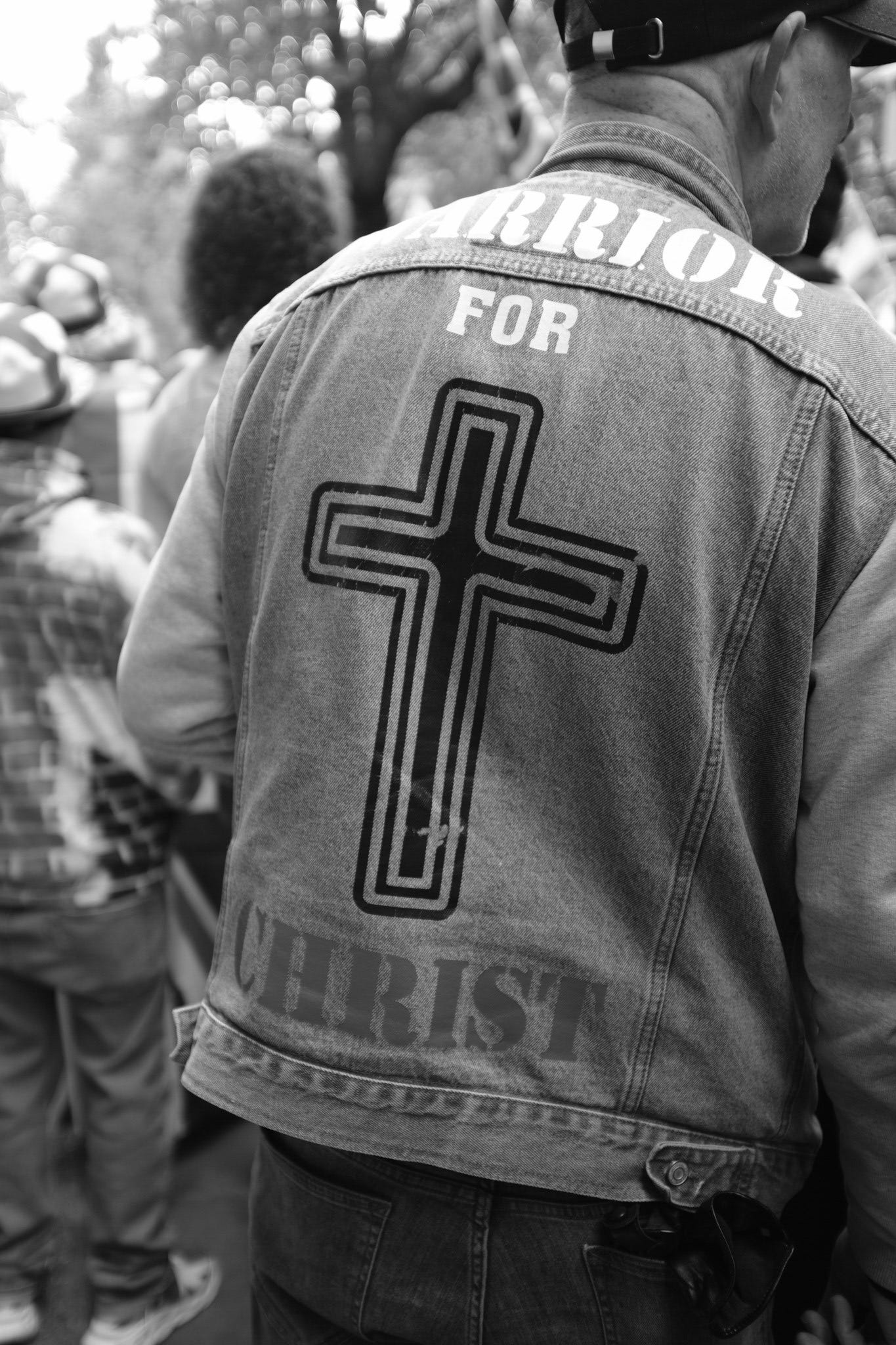
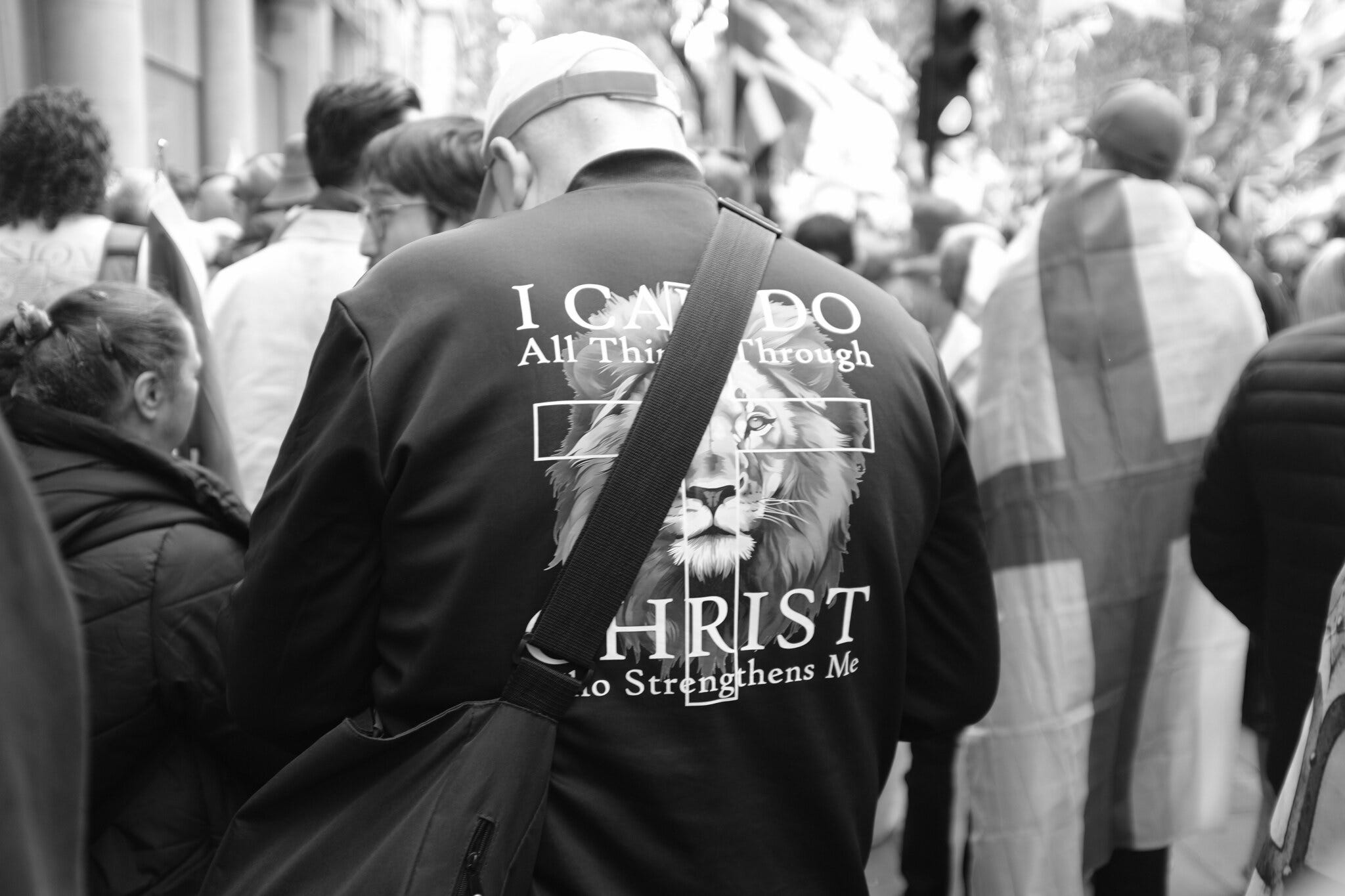
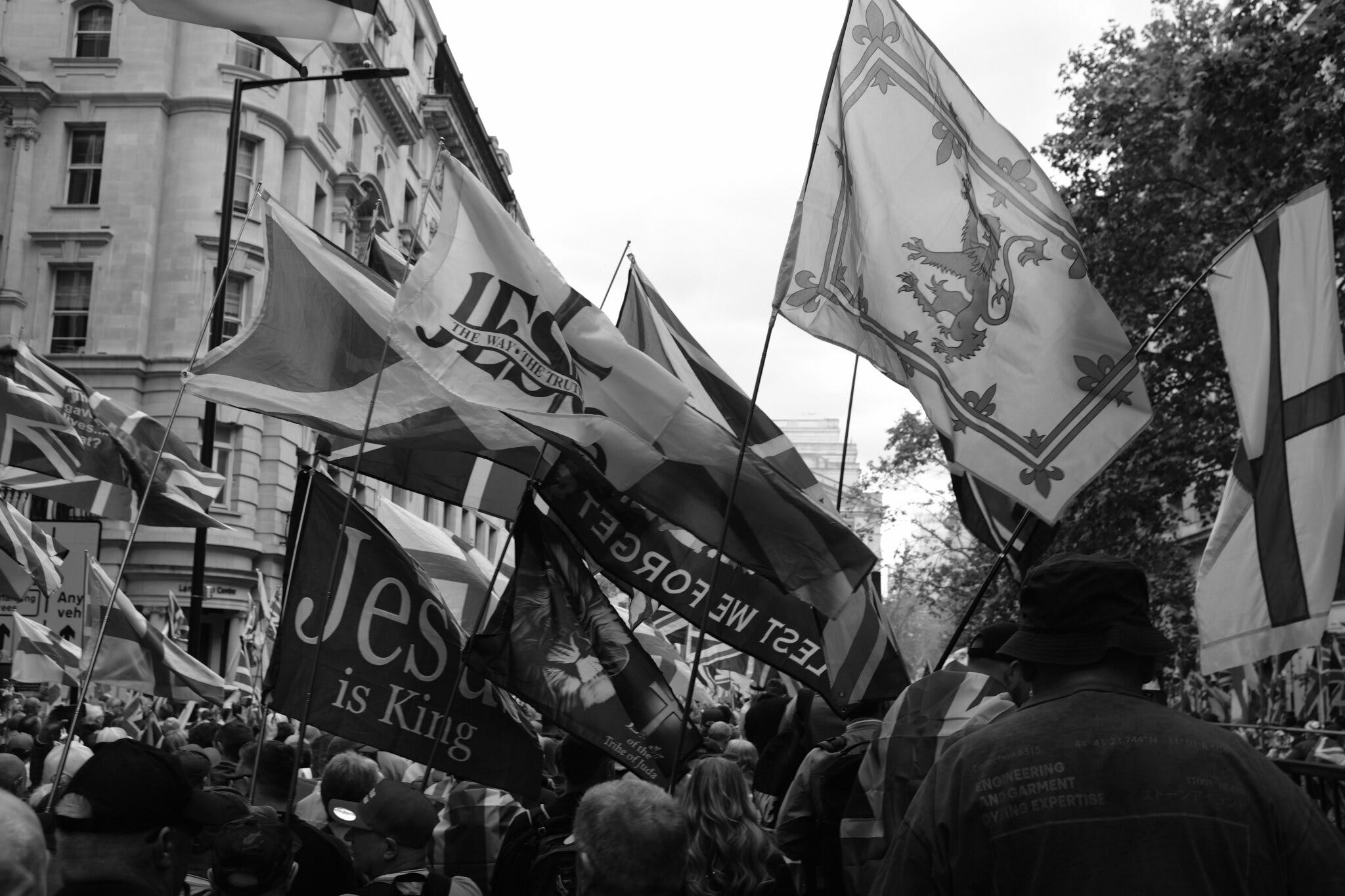
Borrowed mythologies
Meanwhile, messages certainly abounded. Leaflets, slogans, chants, symbols, warnings, prophecies — everyone seemed to be trying to explain a society that no longer makes coherent sense to them. My own instinct is that we are still only in the early stages of discovering how much corruption, manipulation, institutional failure, and concealed harm has accumulated beneath the surface of modern life.
Covid was already a profound psychological rupture — a training shock of sorts — and many people emerged from it distrustful, traumatised, and permanently alienated from official narratives. I suspect further shocks are still ahead of us, along with social and political changes that most people currently struggle even to imagine.
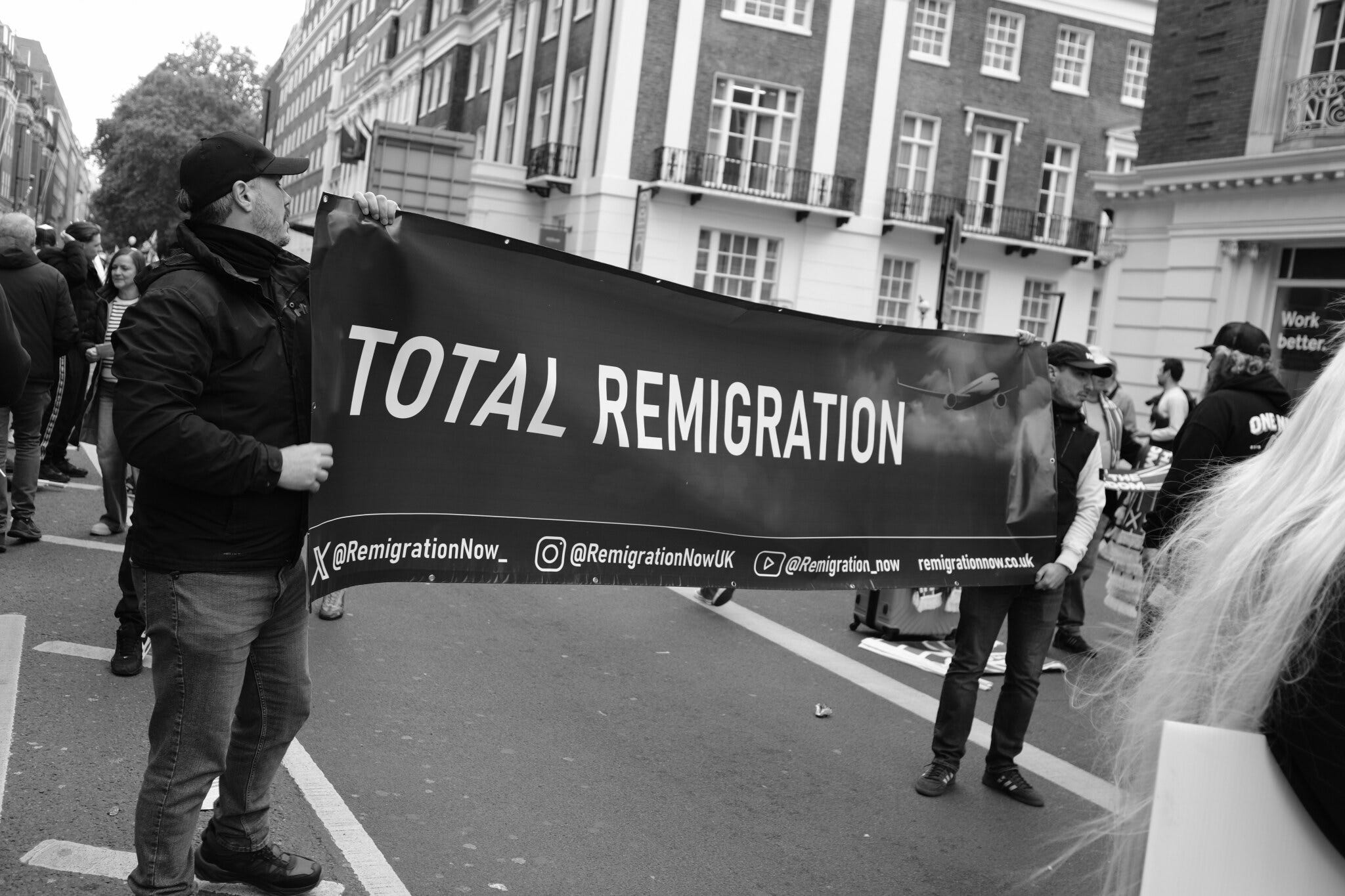
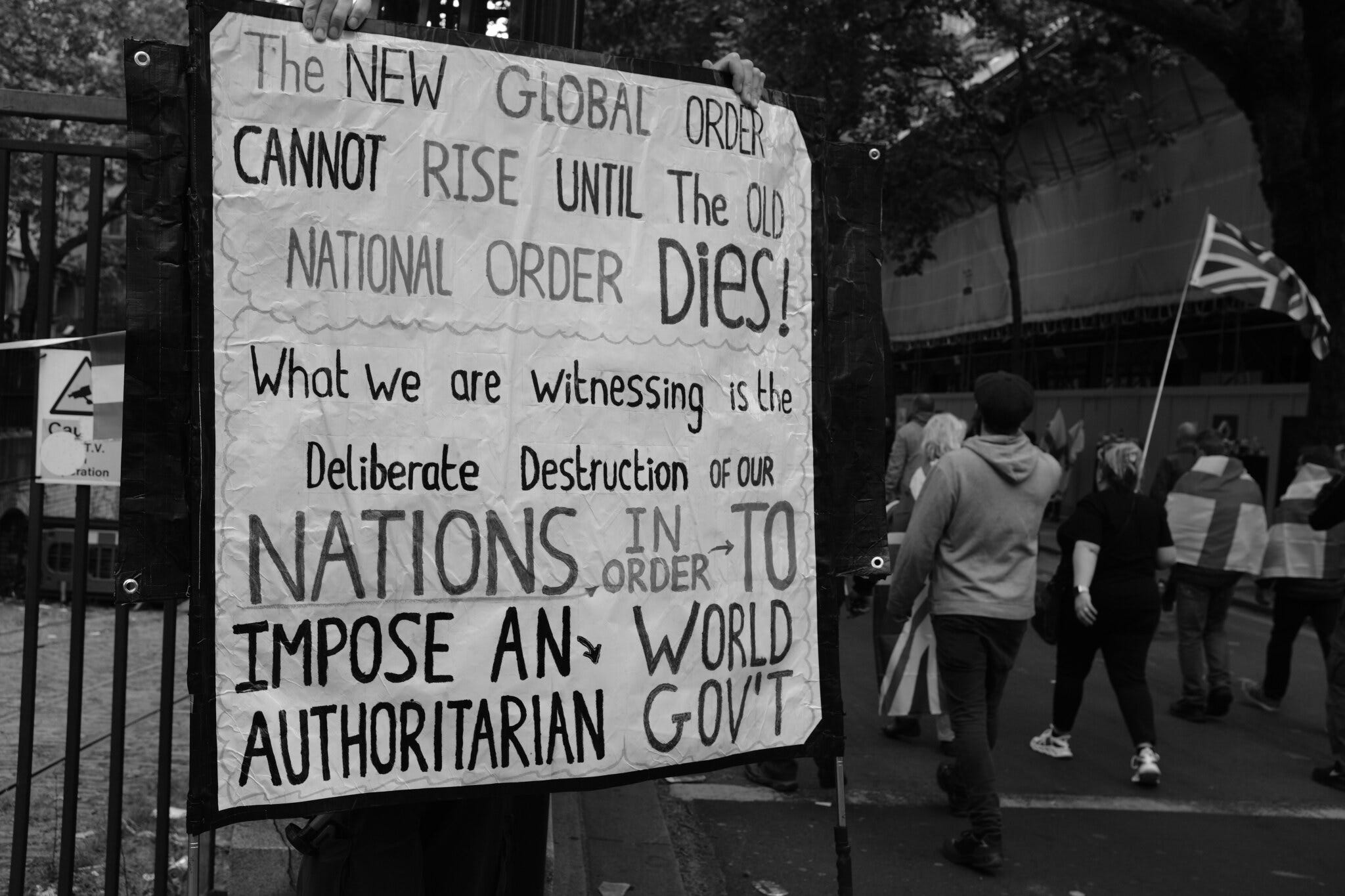
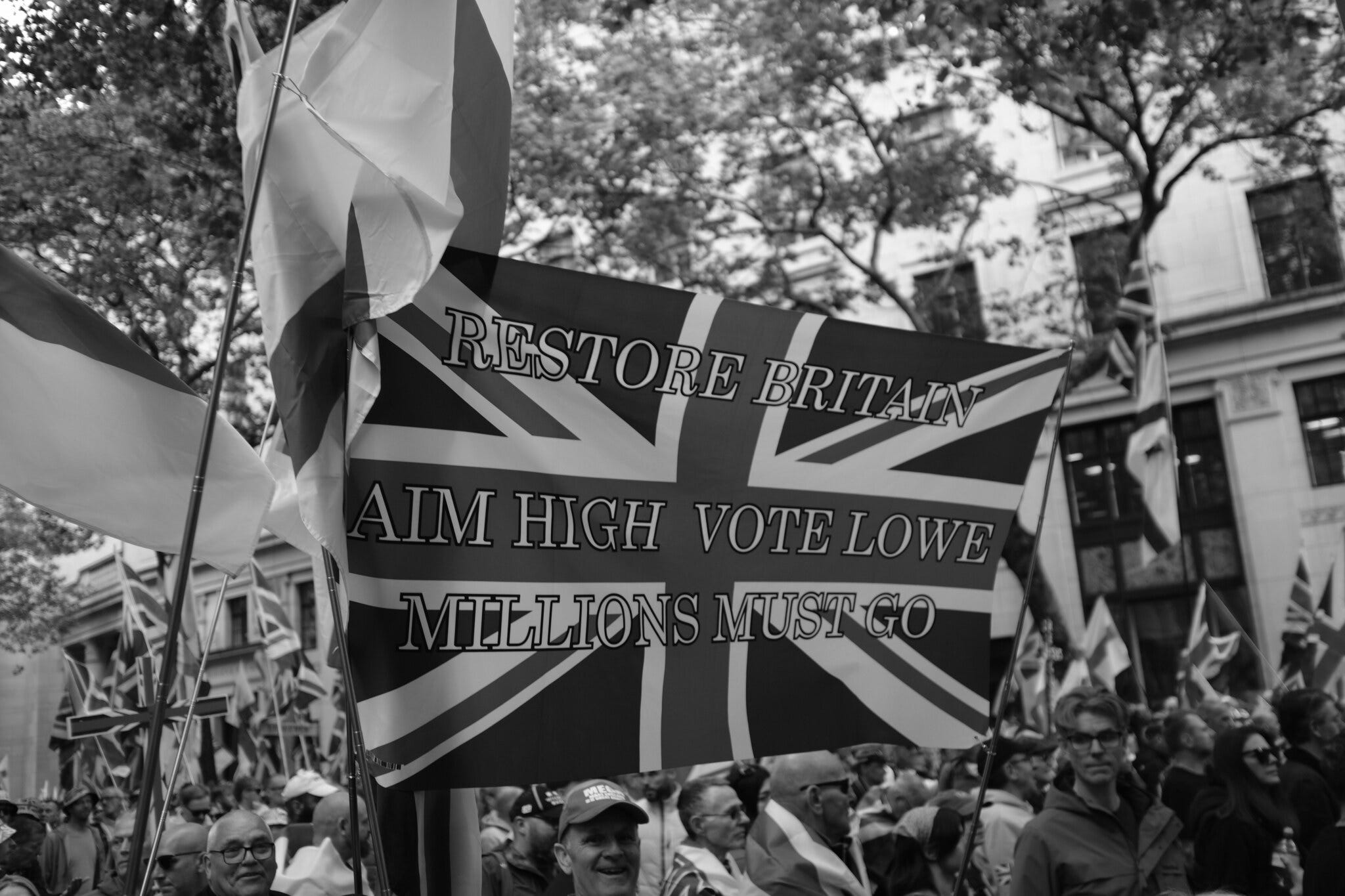
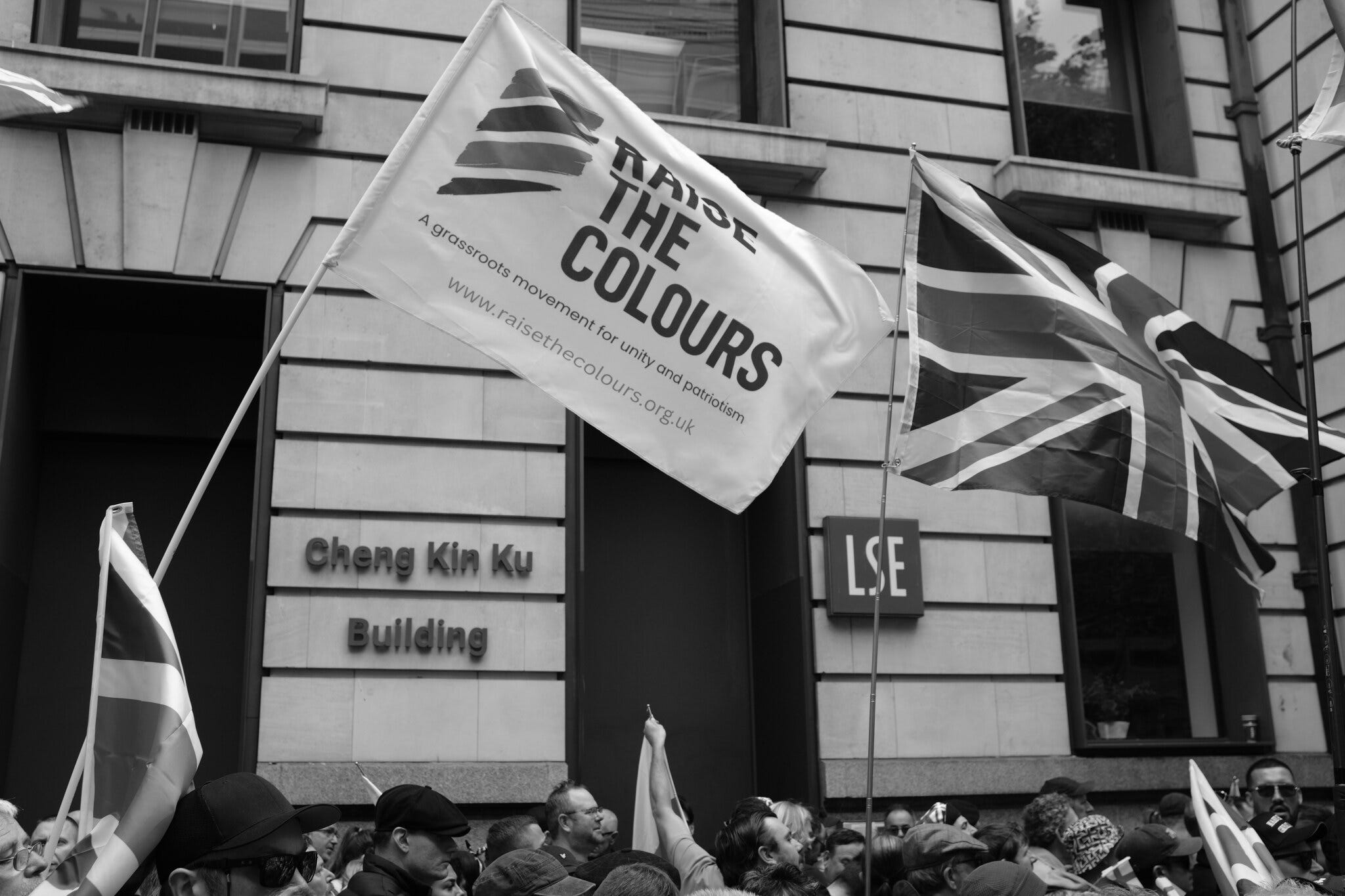
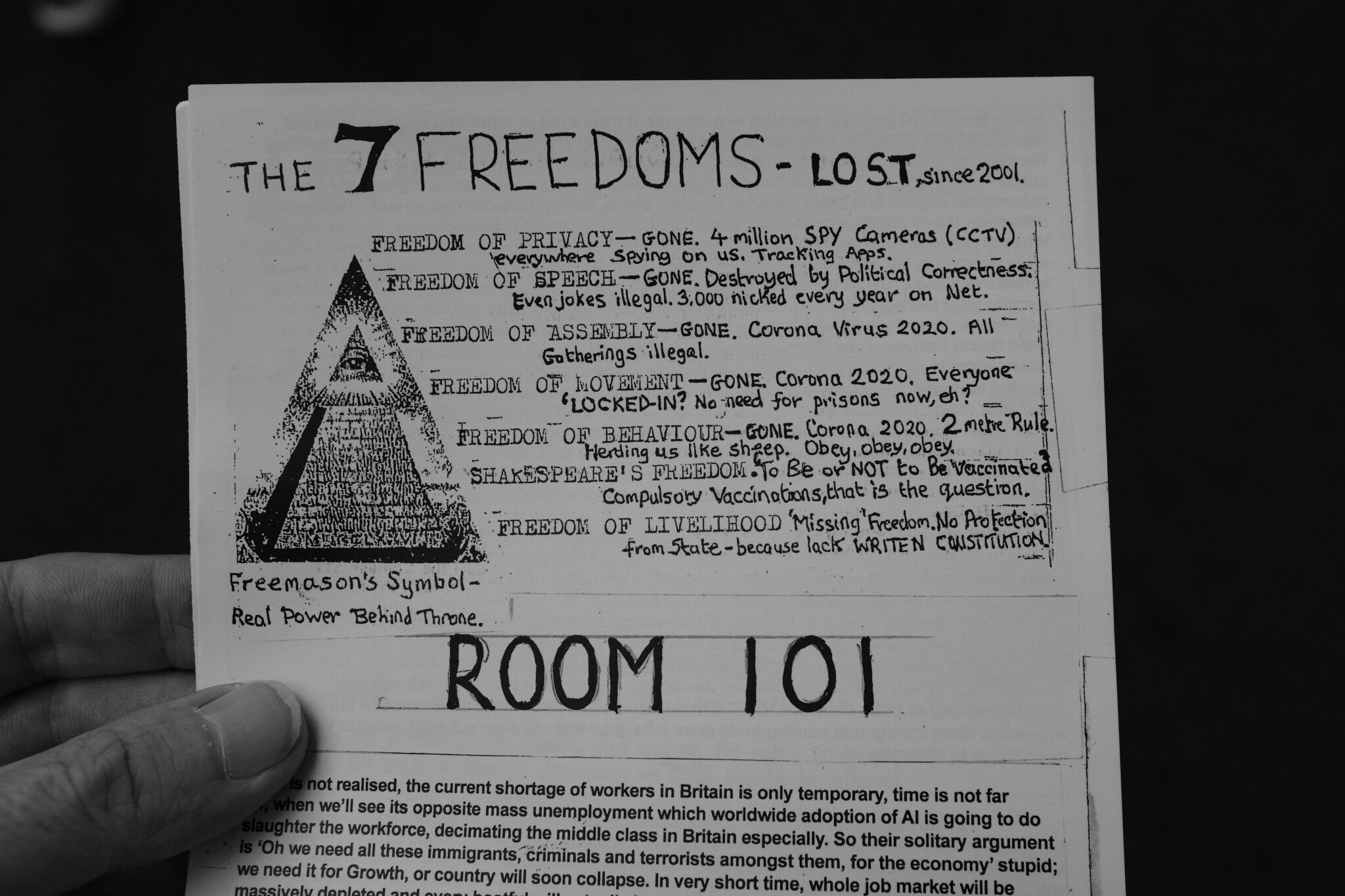
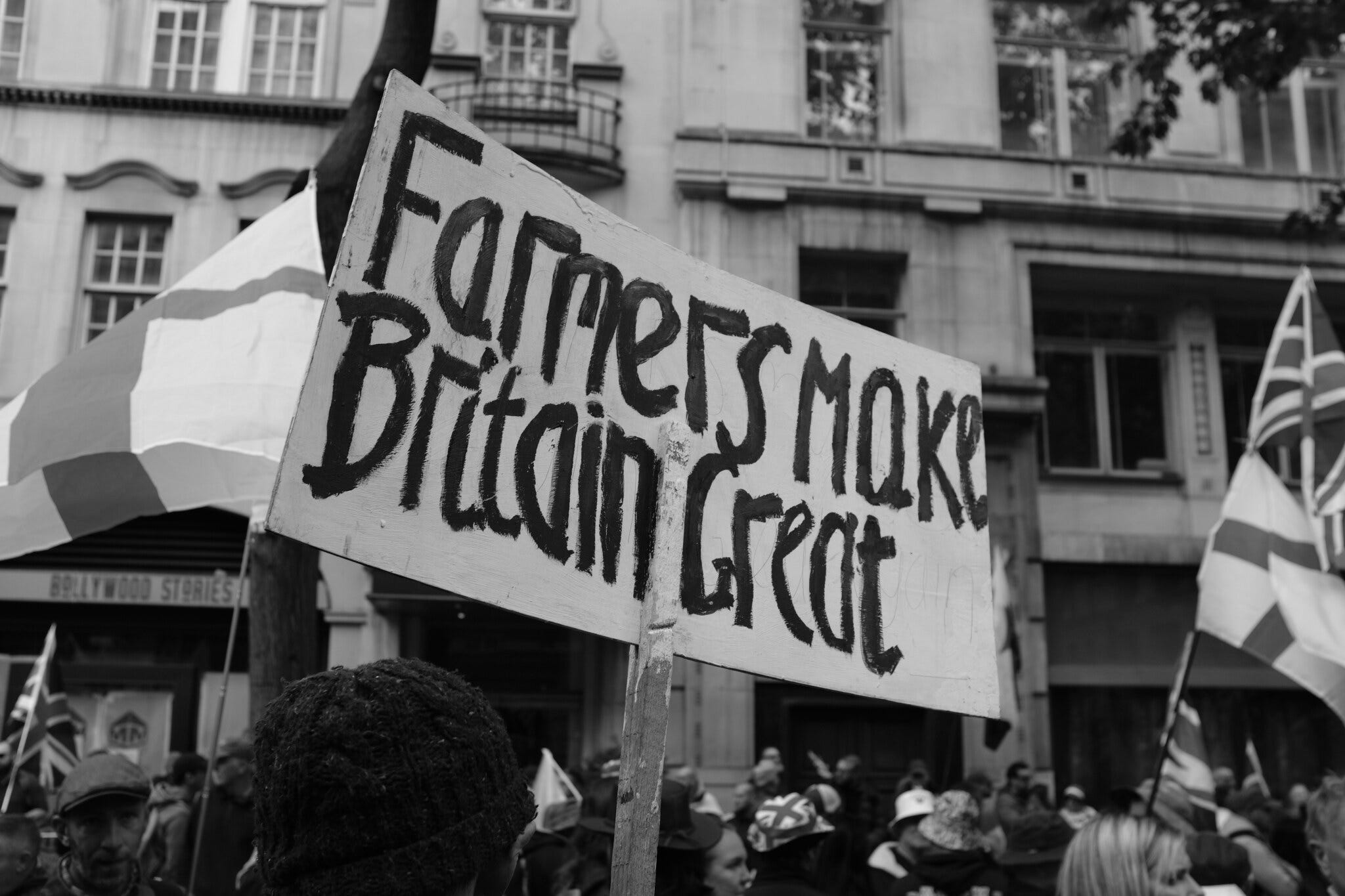
Lacking our own revolutionary symbolism, we import it. The Gadsden flag with the “don’t tread on me” snake was also in view, just beyond the range of my lens.
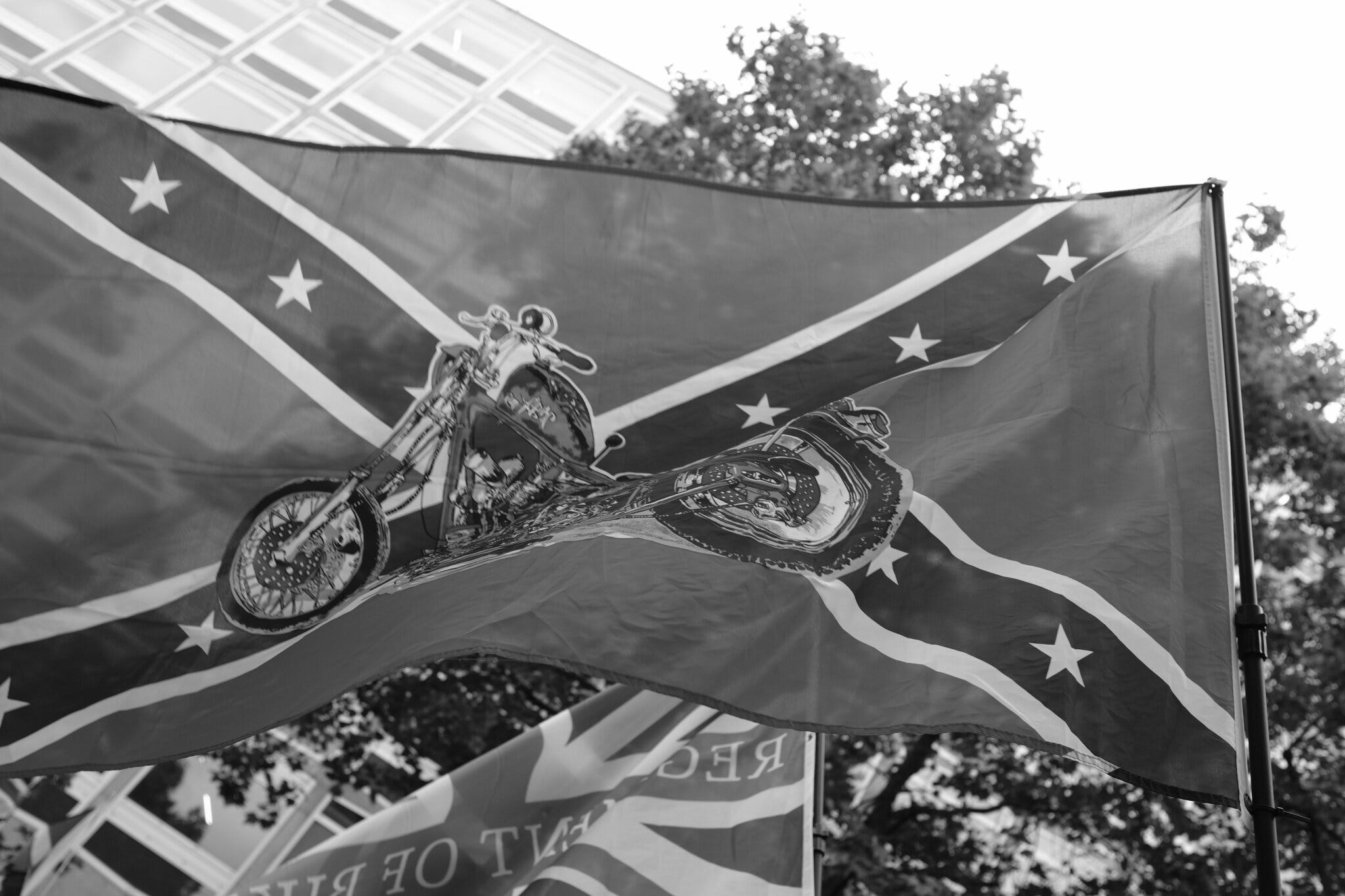
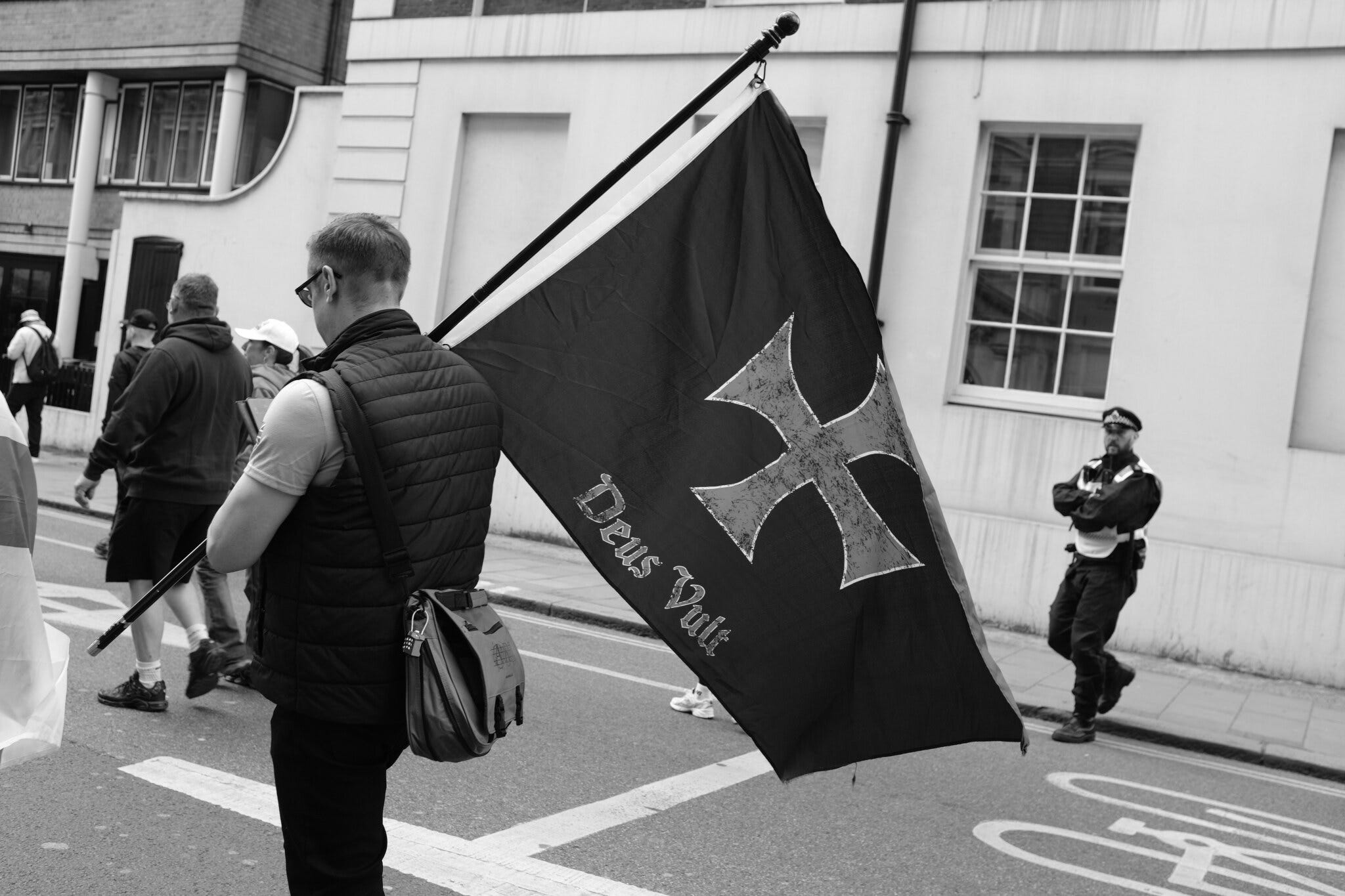
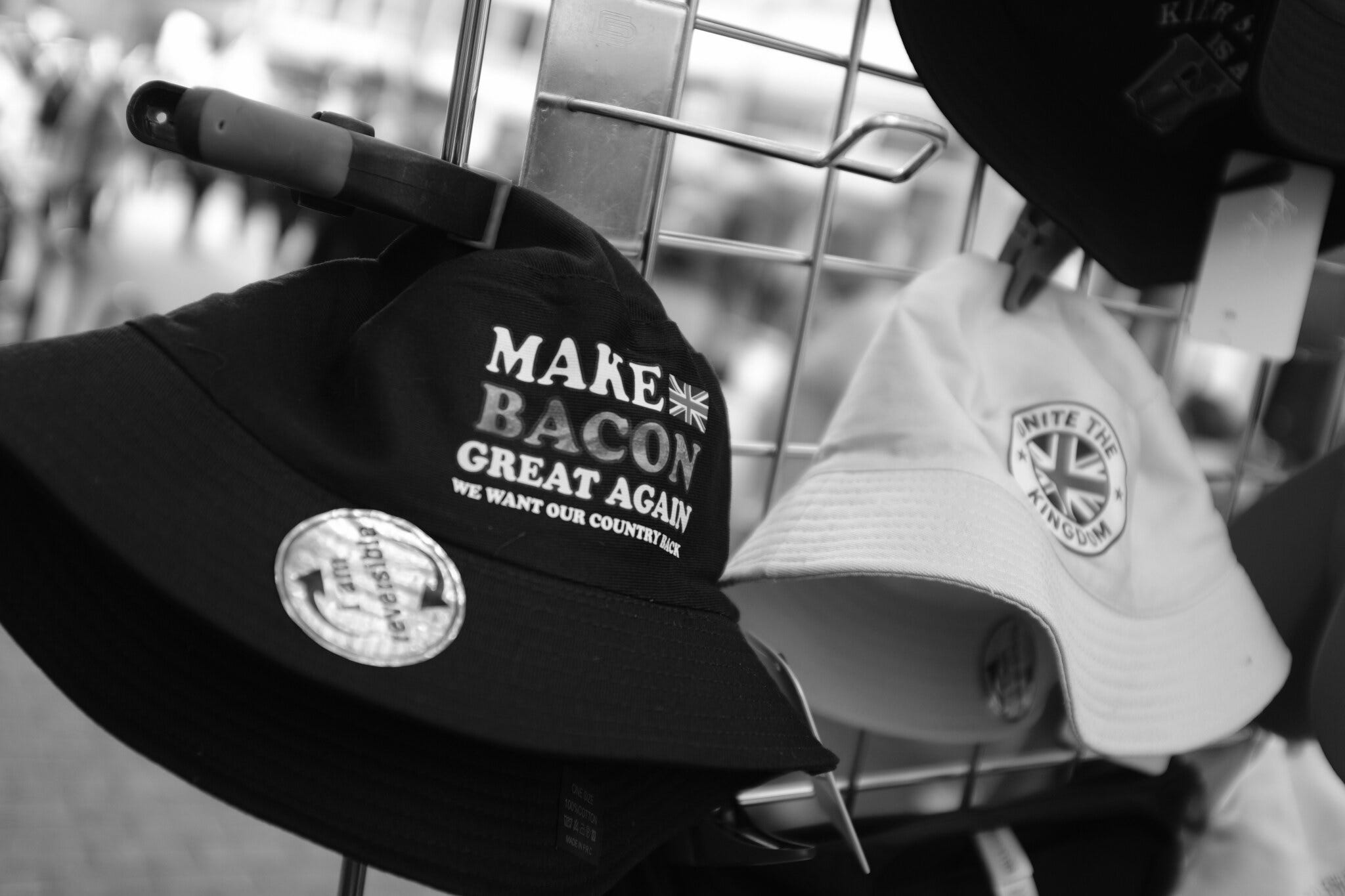
The symbolism is as much myth as matter of fact.
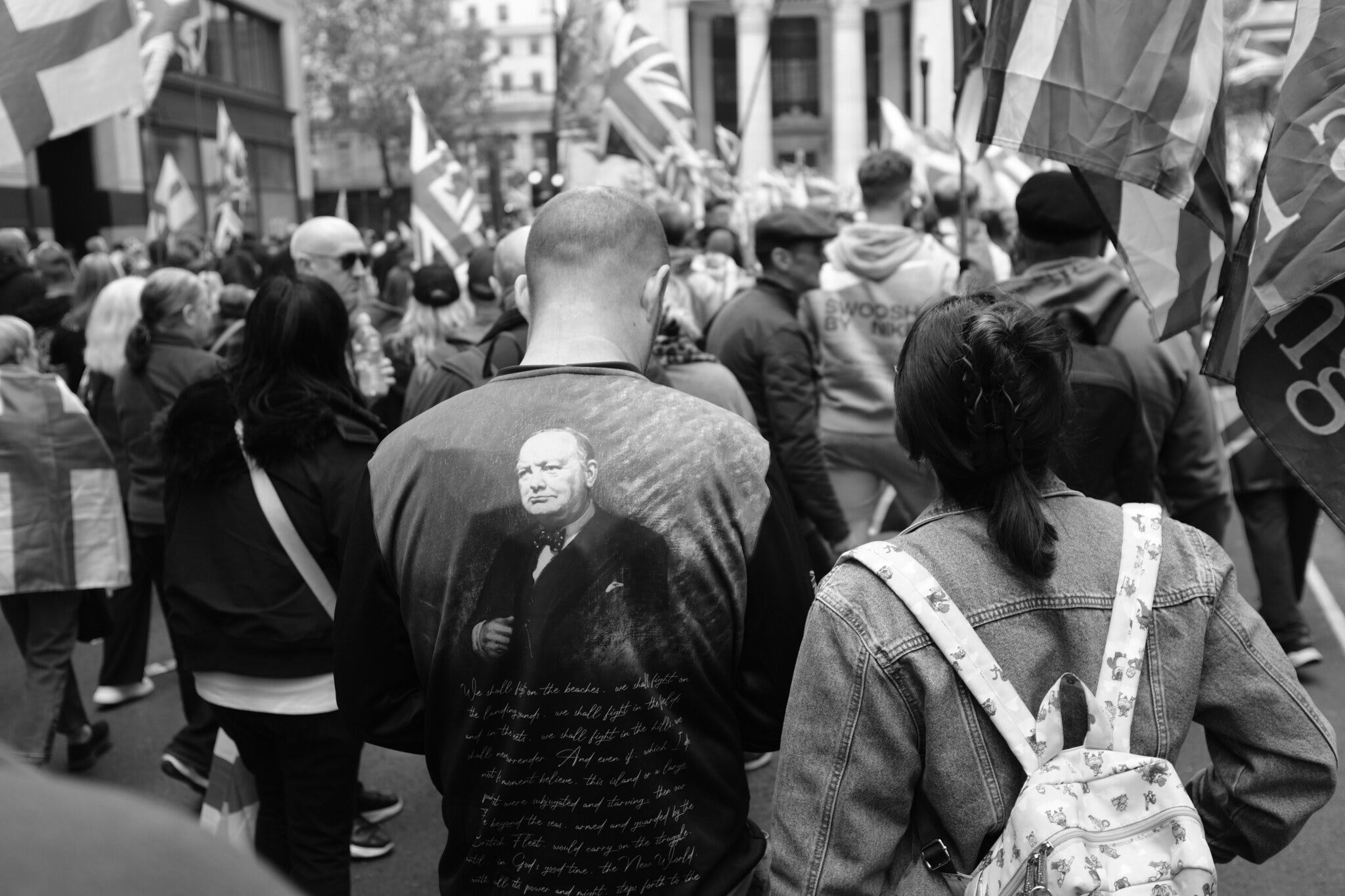
The crowd up close
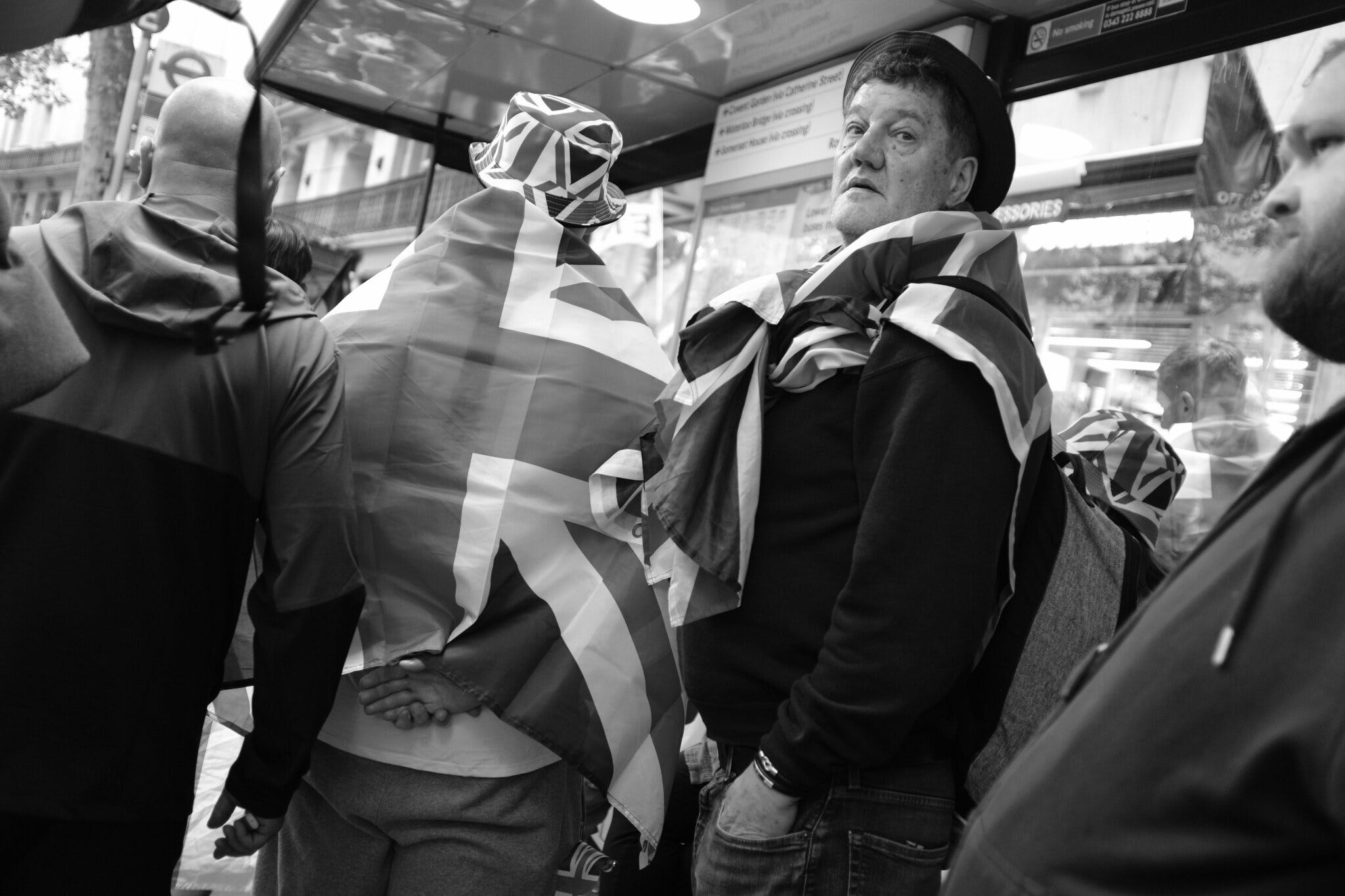
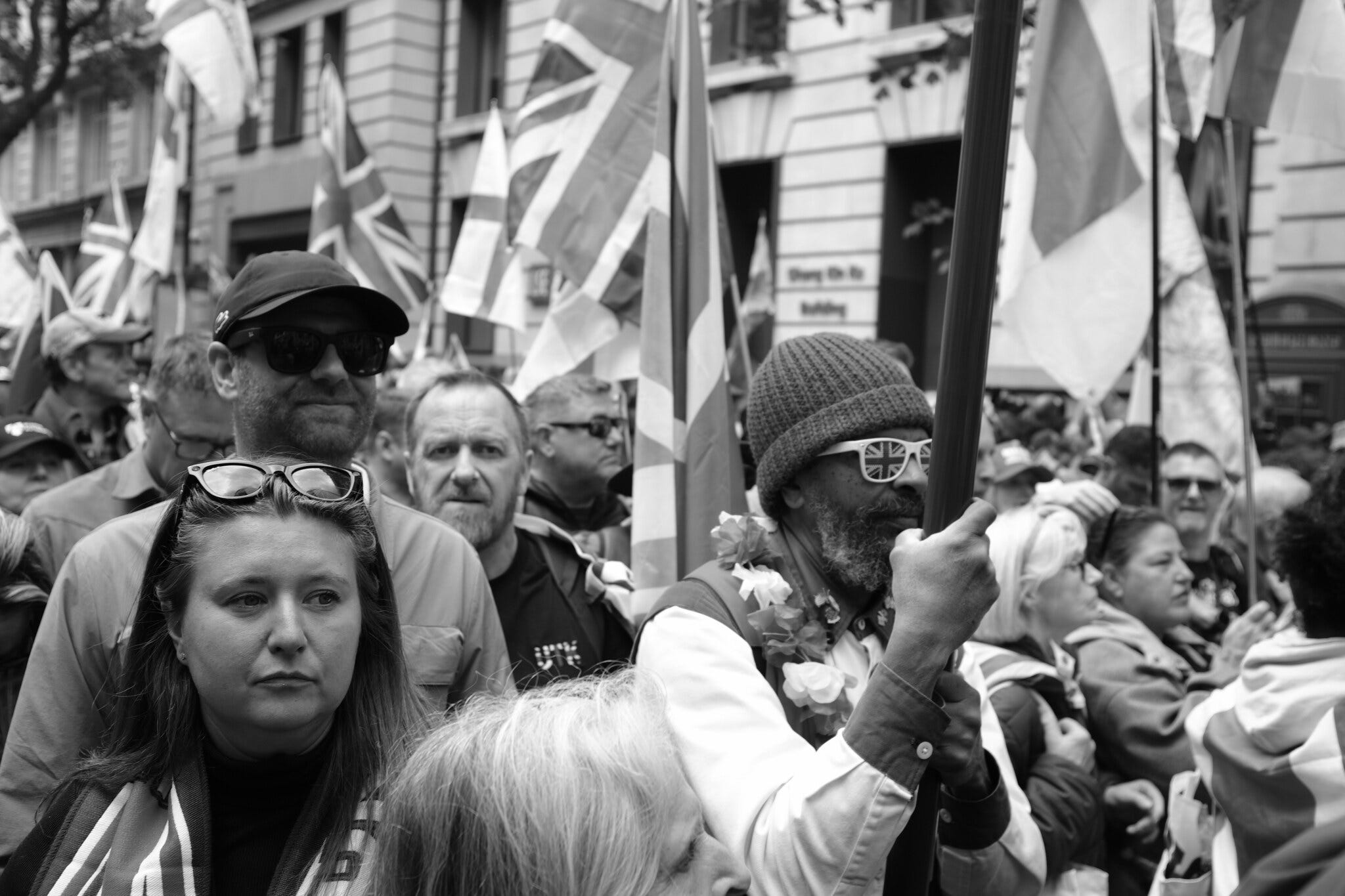
Then, there are the people. In all their forms.
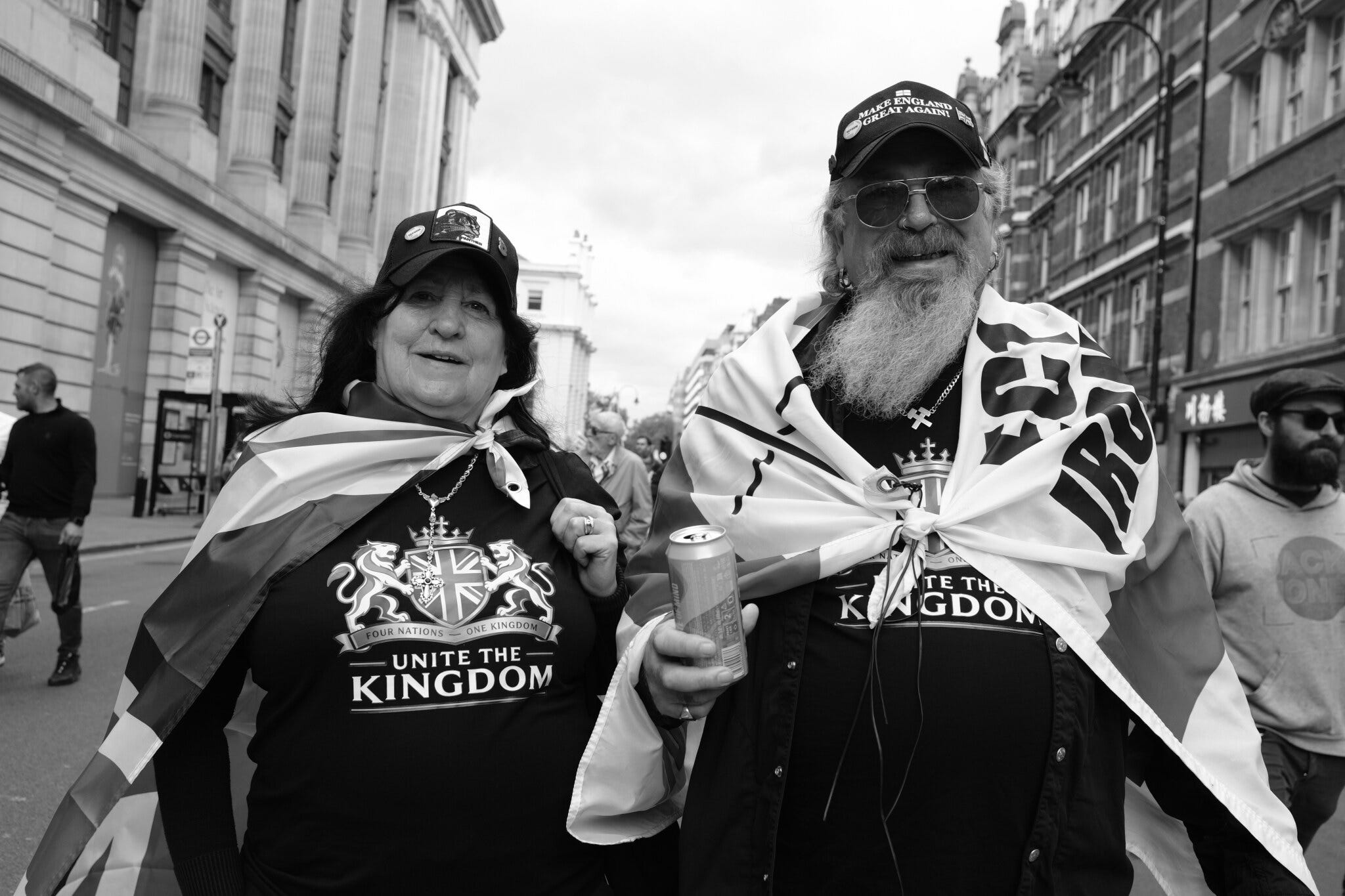
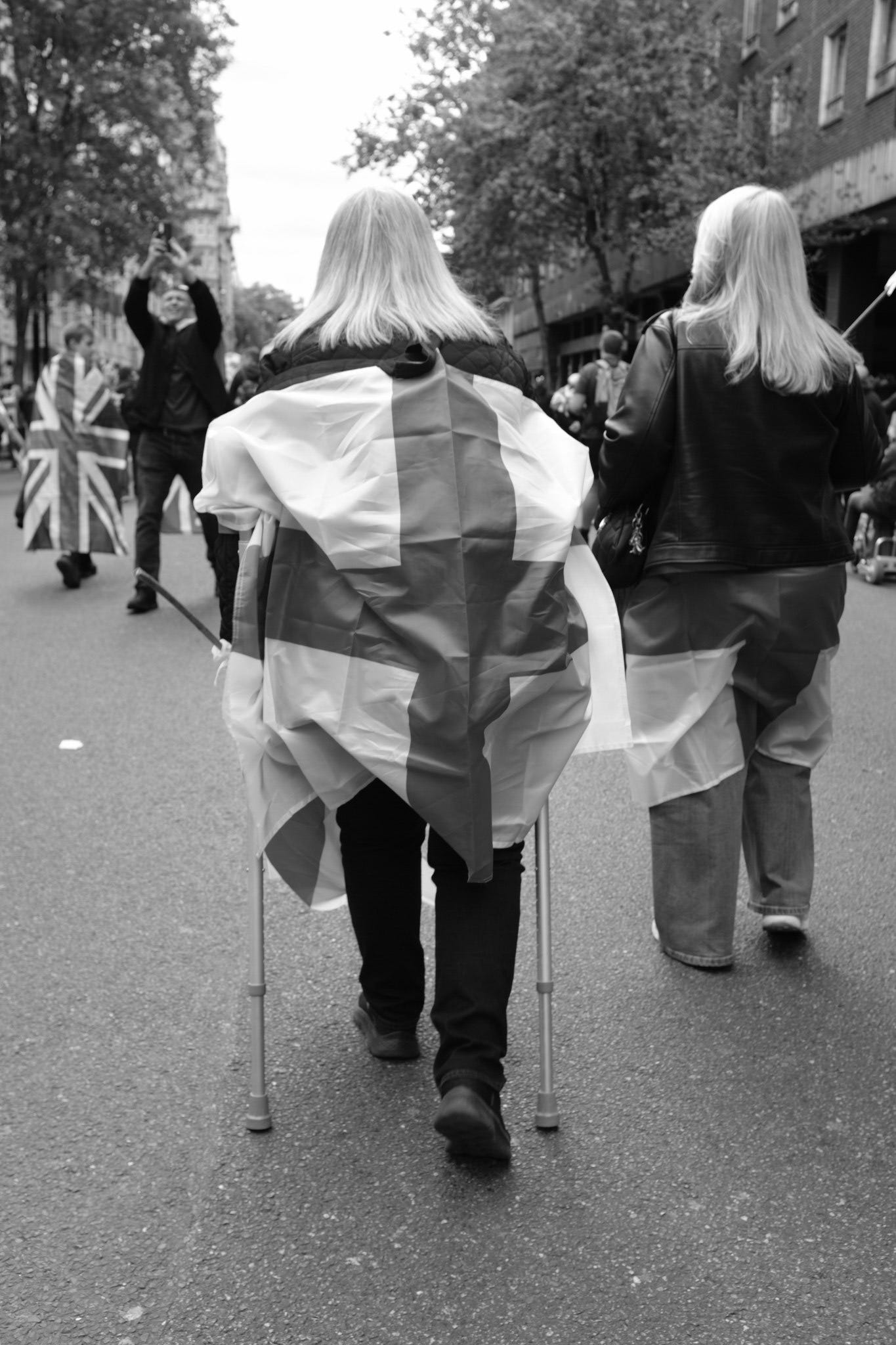
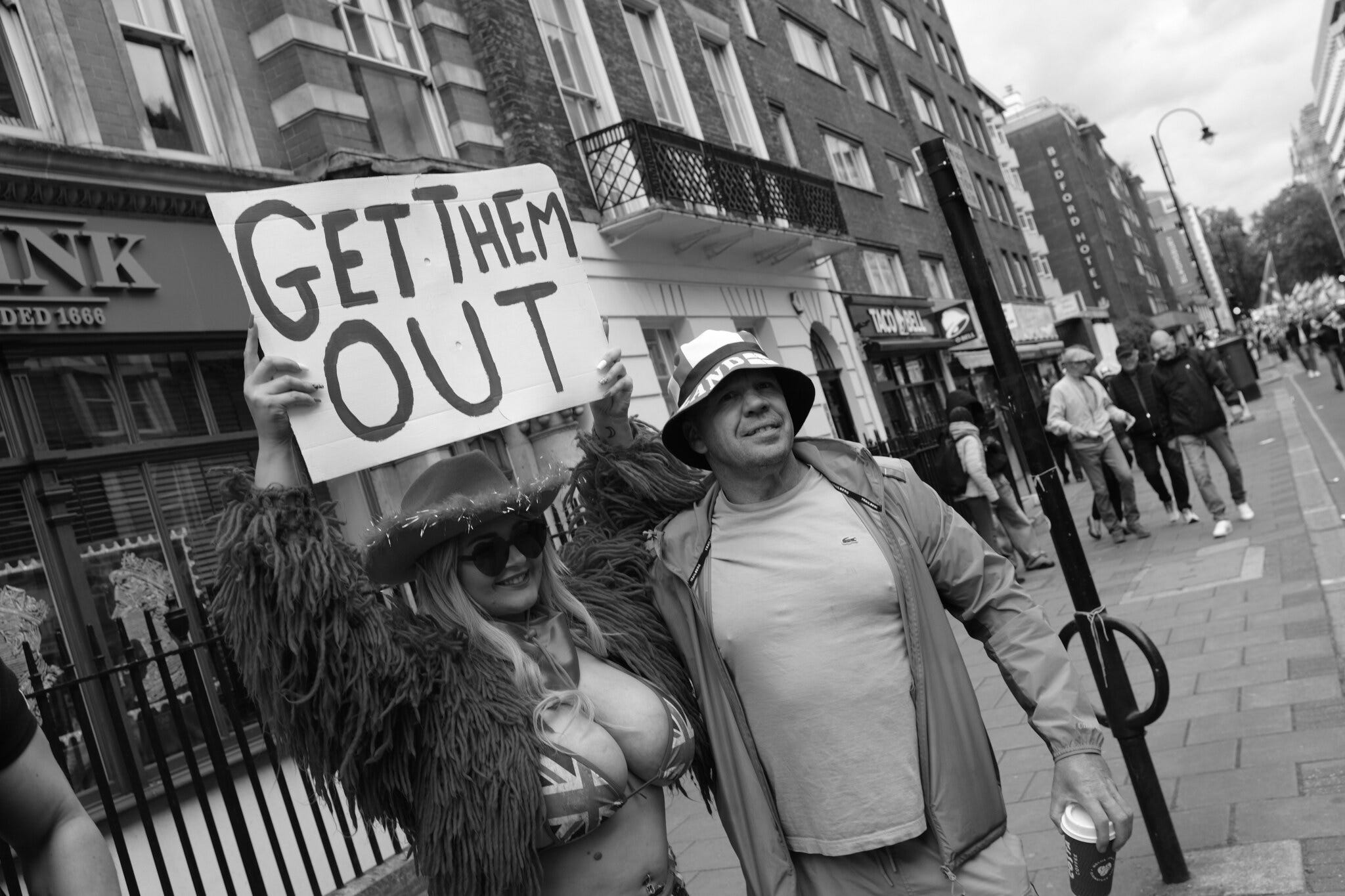
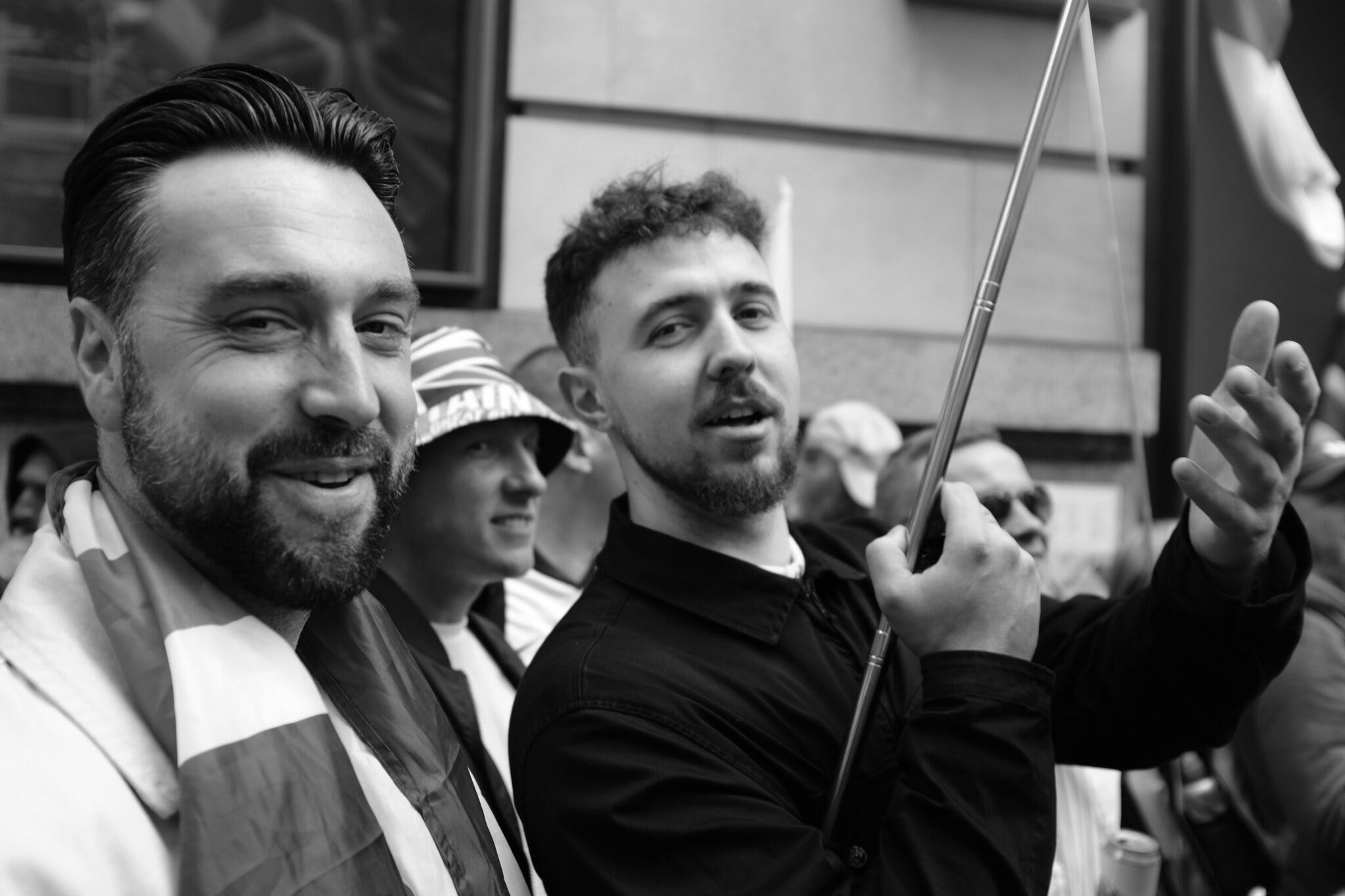
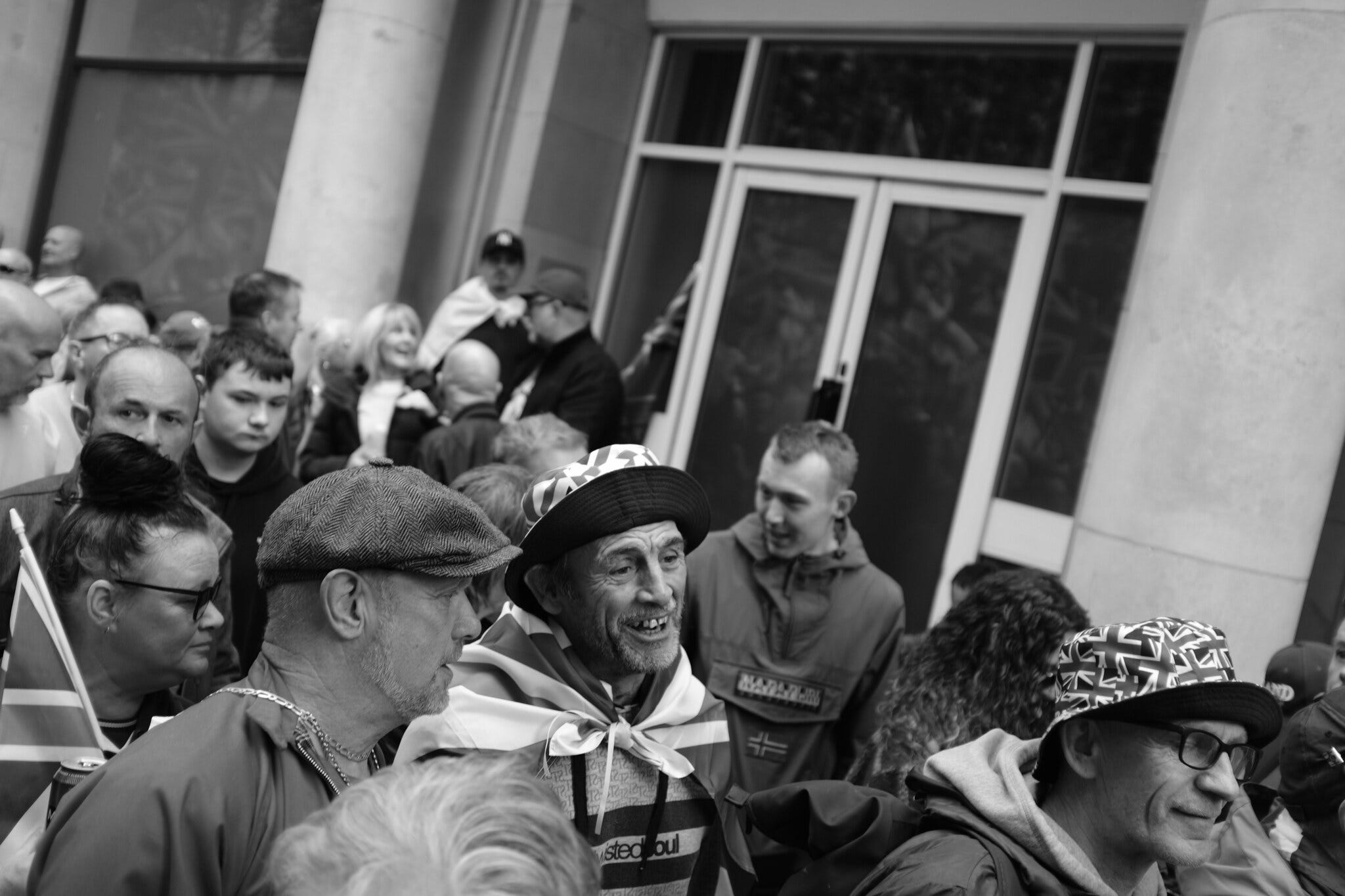
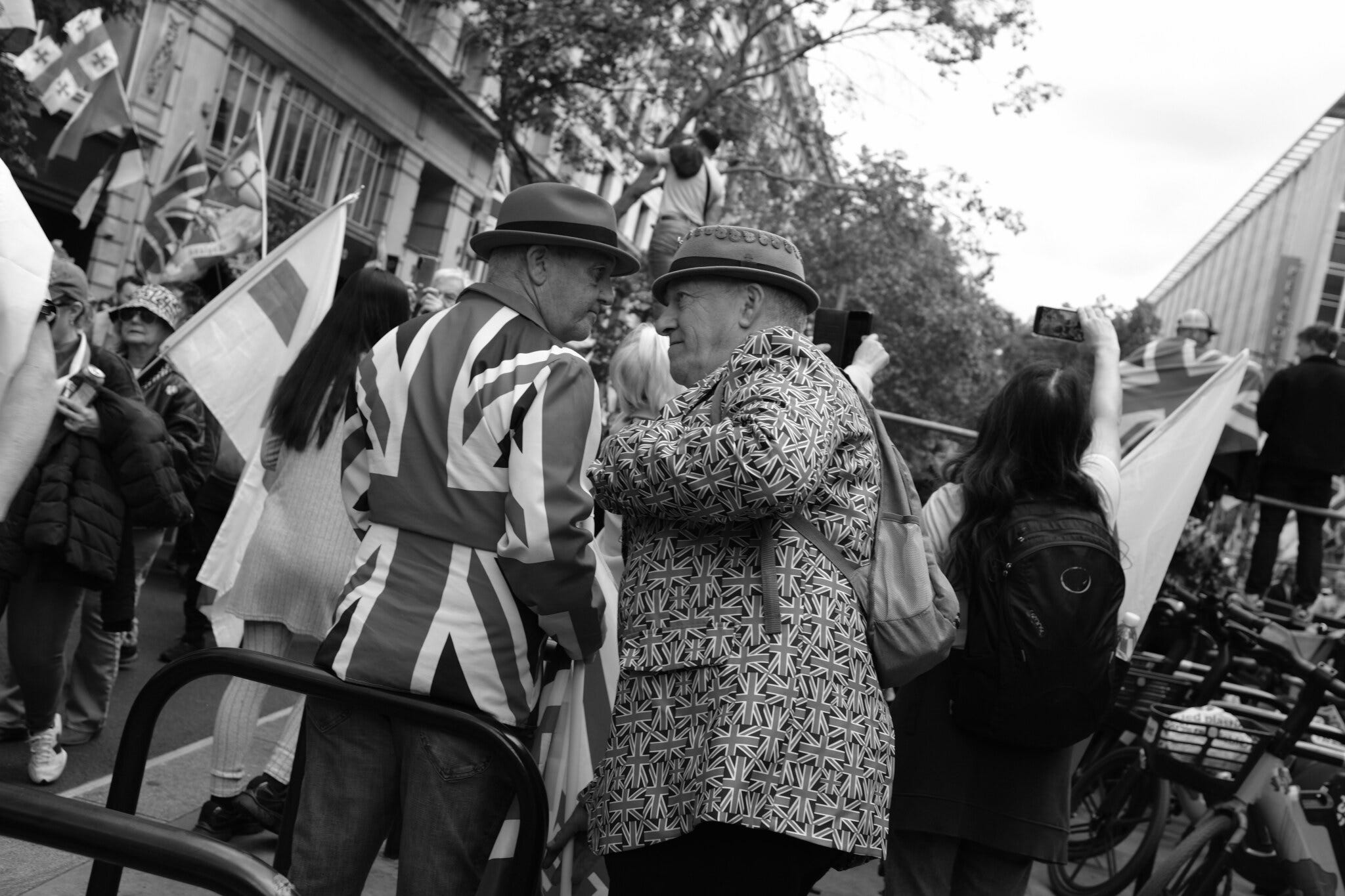
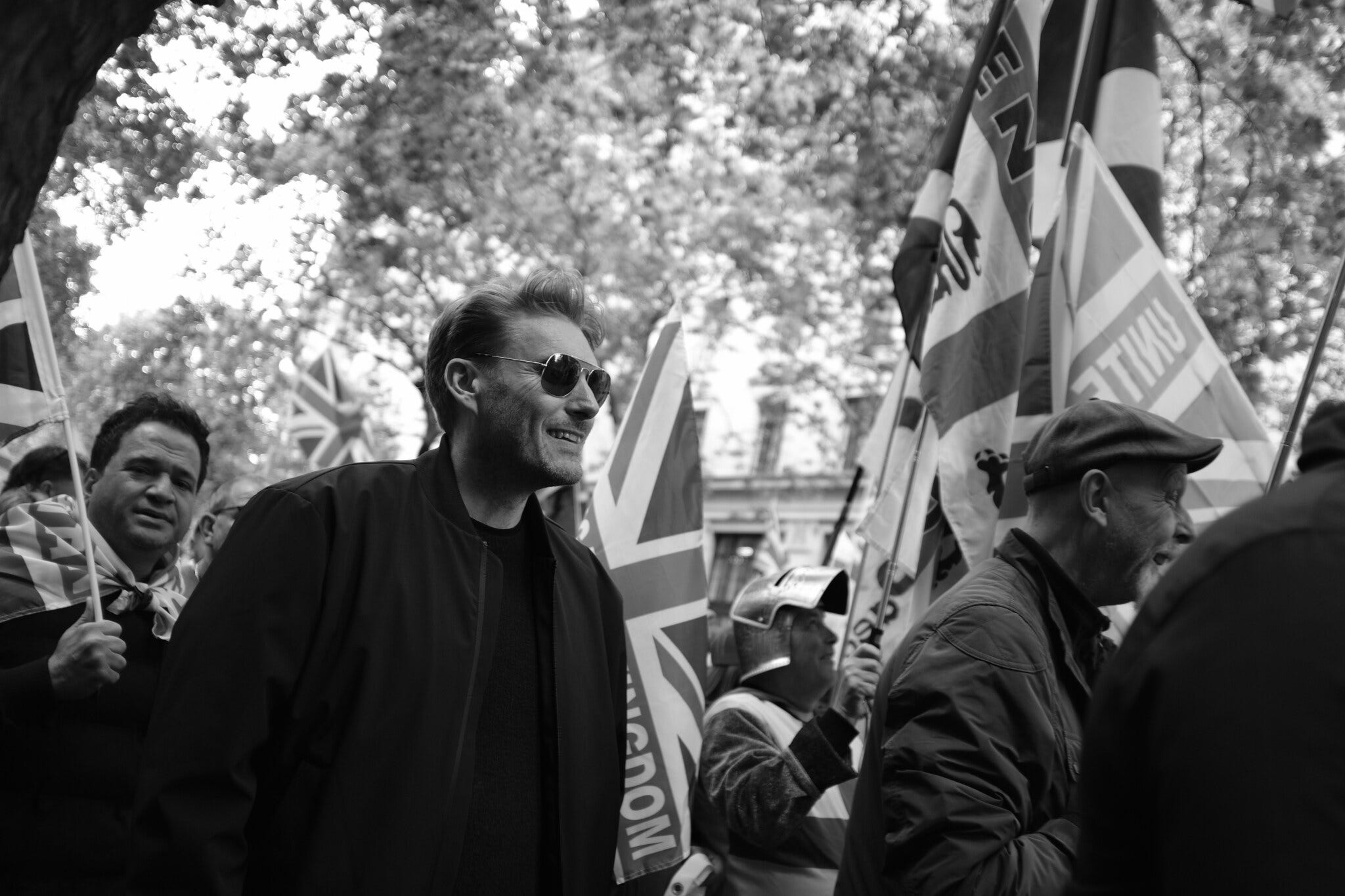
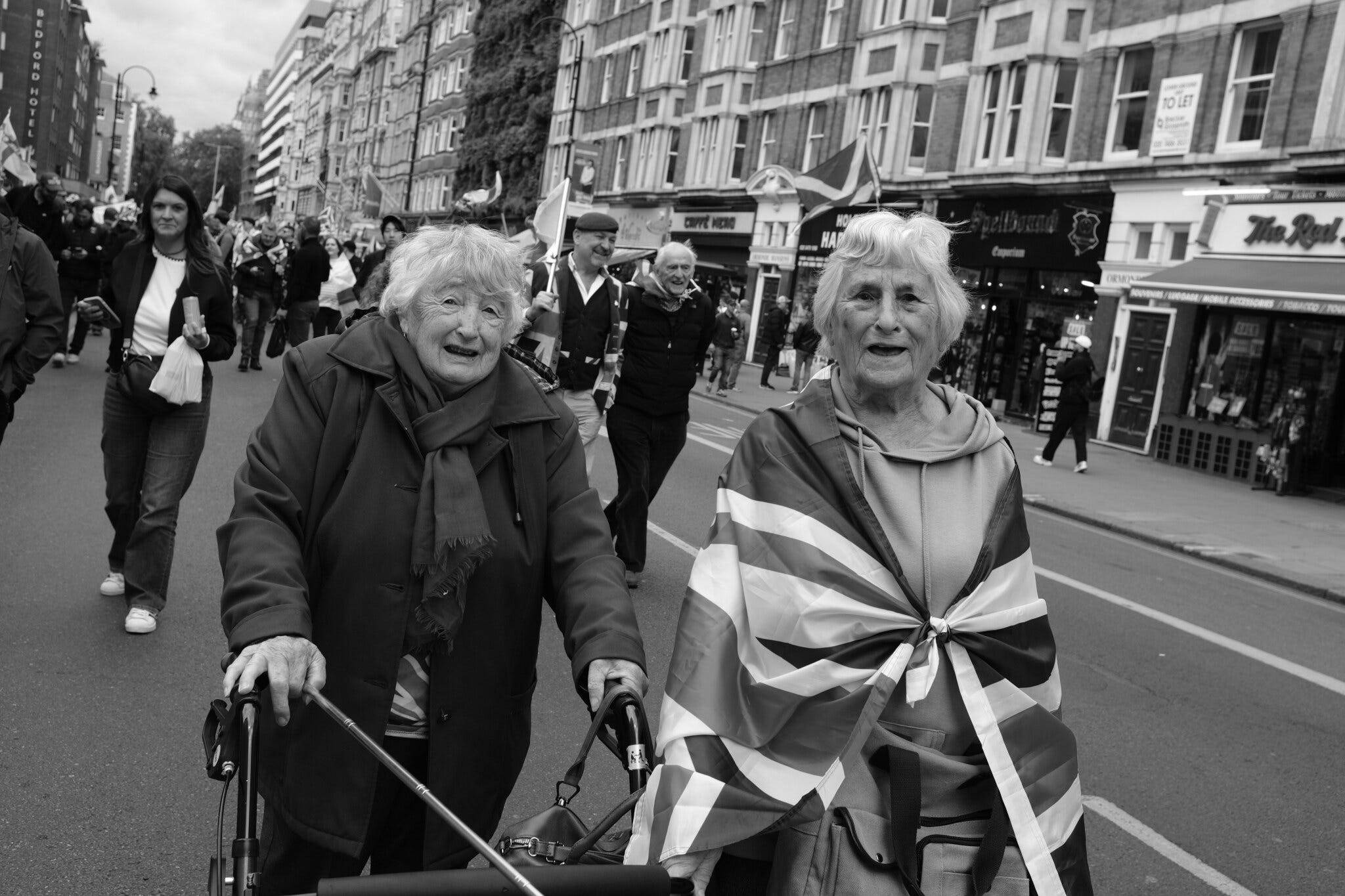
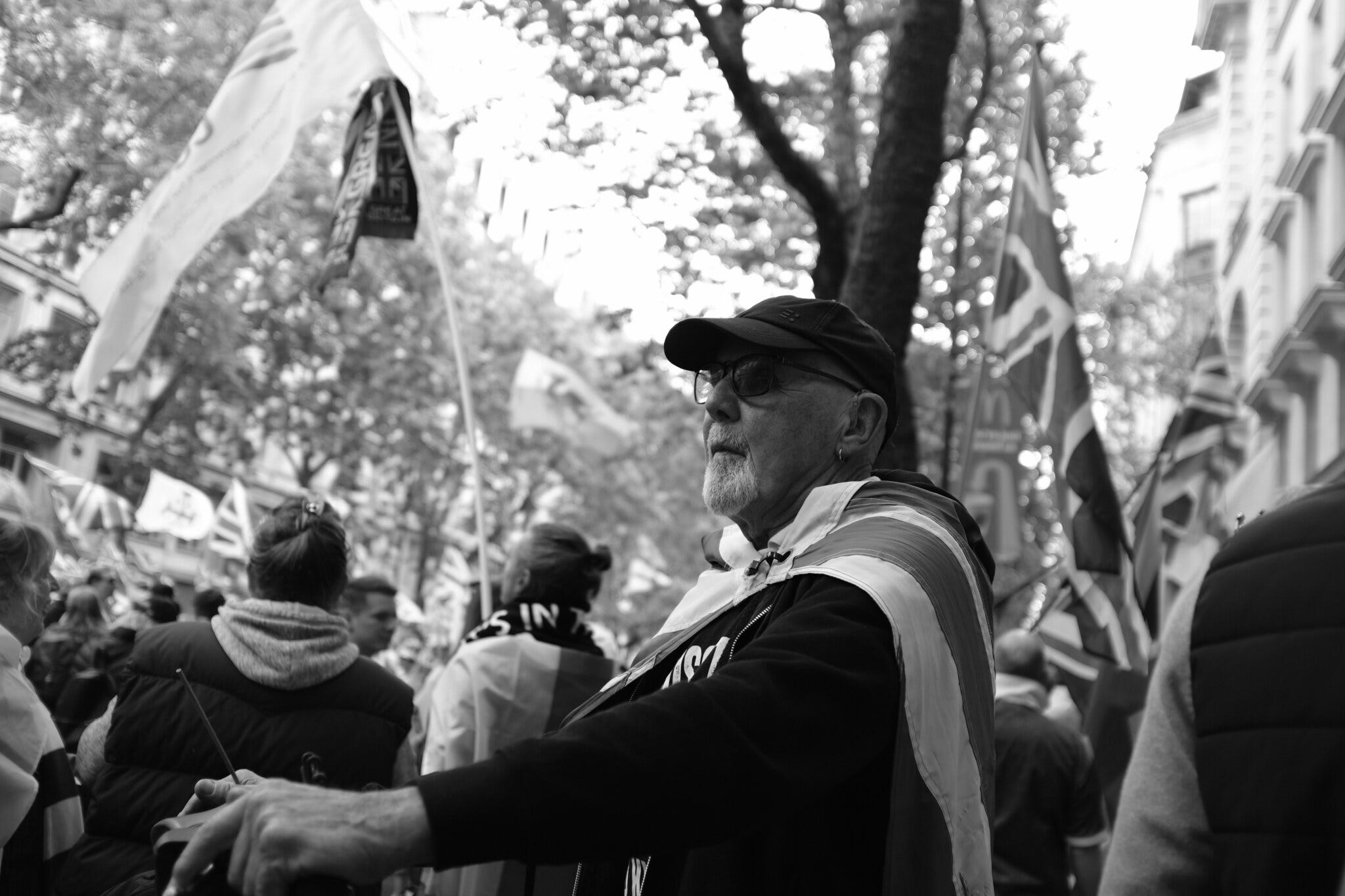
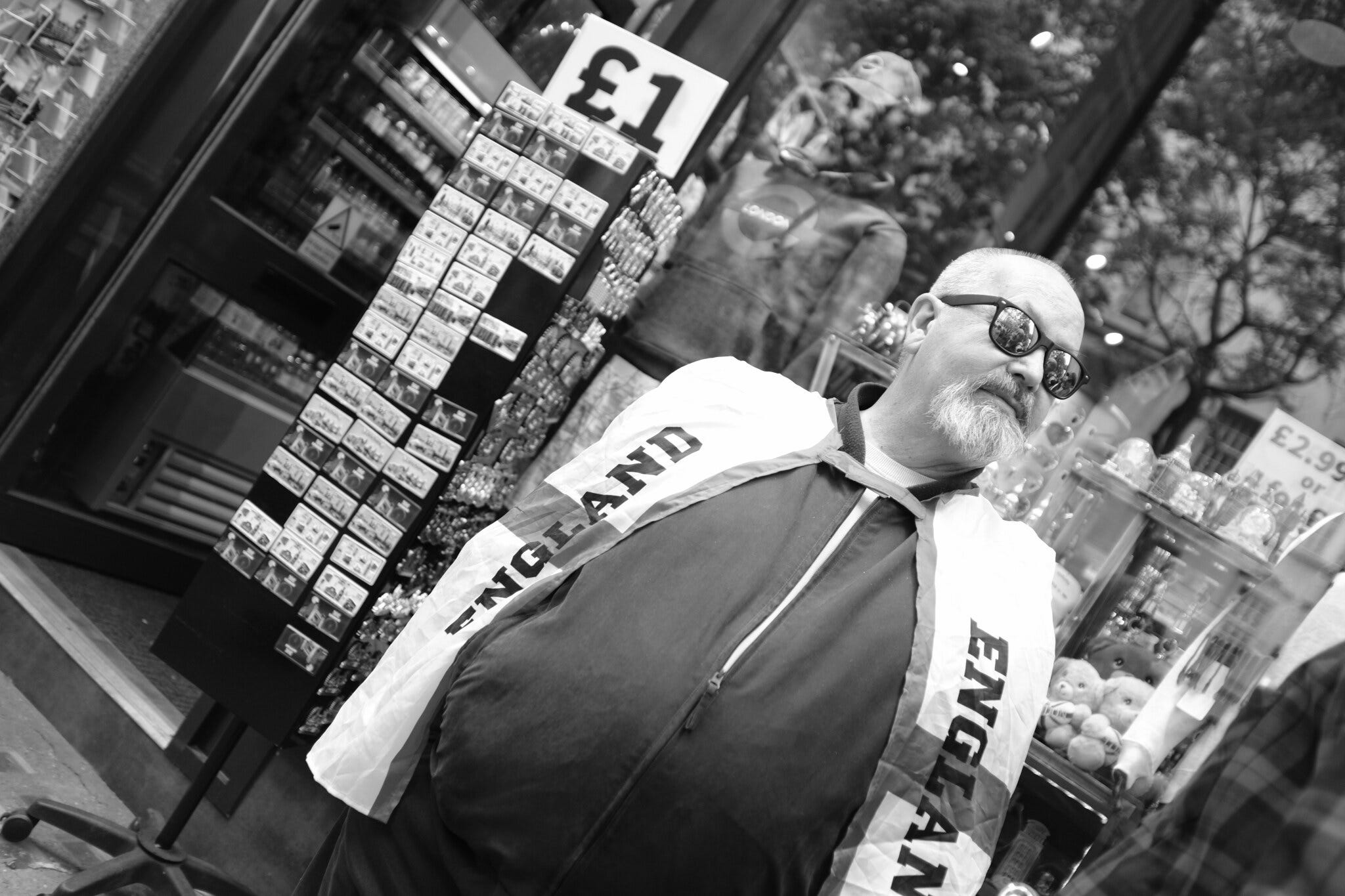
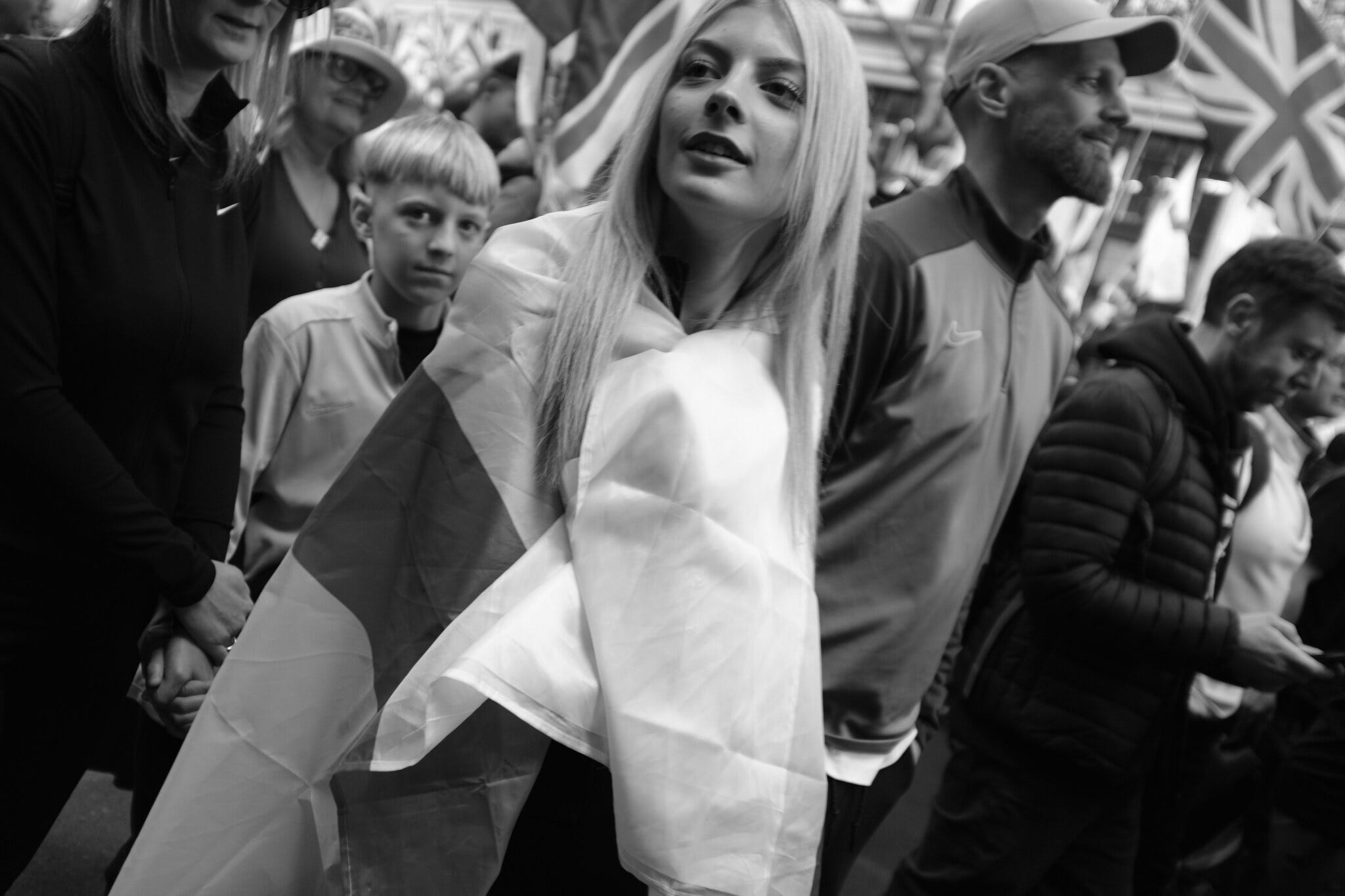
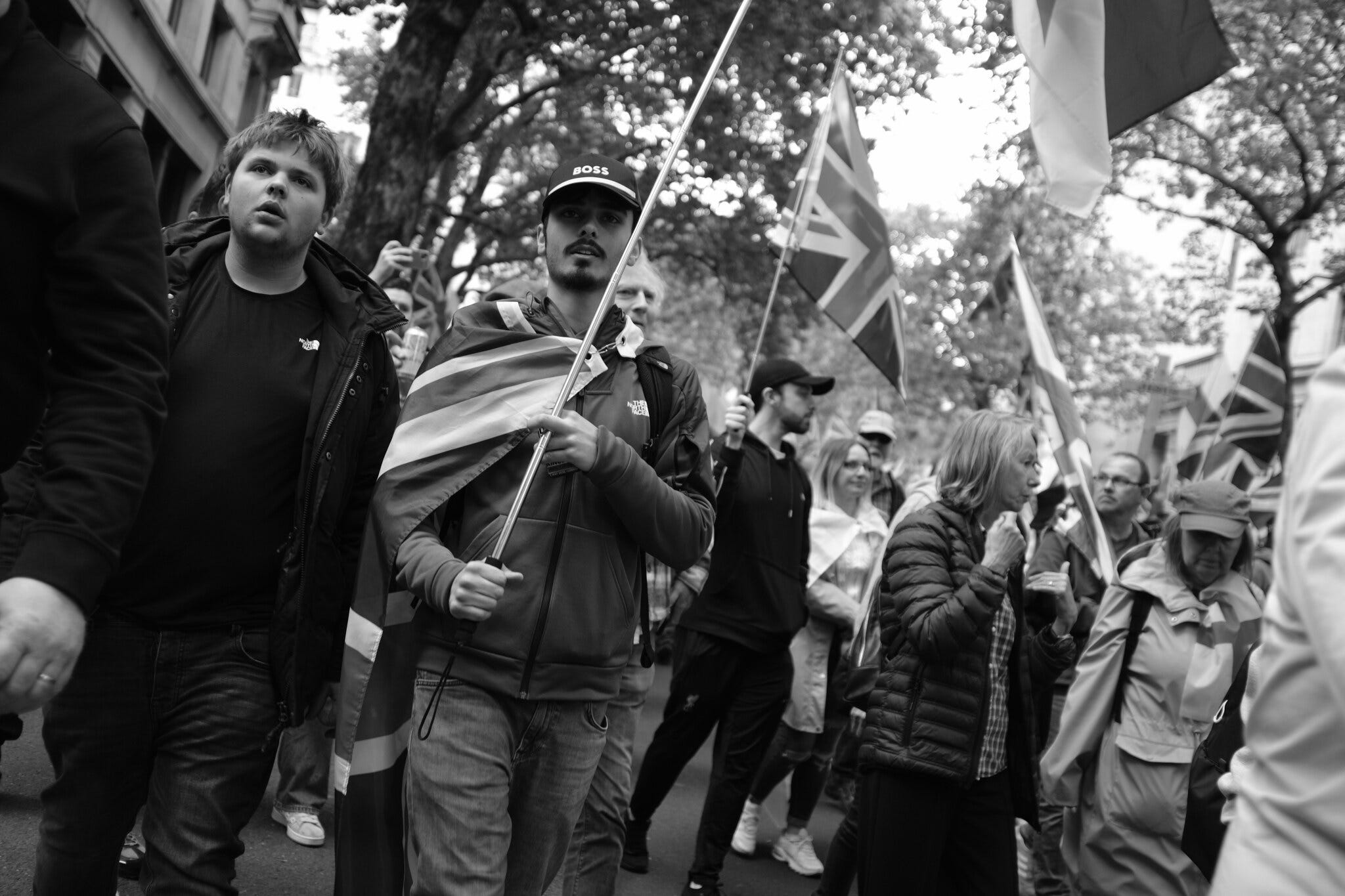
The comedown
When I finally peeled away from the crowds, I looped back around via side streets and rejoined the tail end of the march route. Then I walked back down the path the protest had taken. What remained behind was an ocean of discards — cans, bottles, wrappers, broken signage, abandoned flags, and the stale residue of a movement trying to summon transcendence through intoxication and noise.
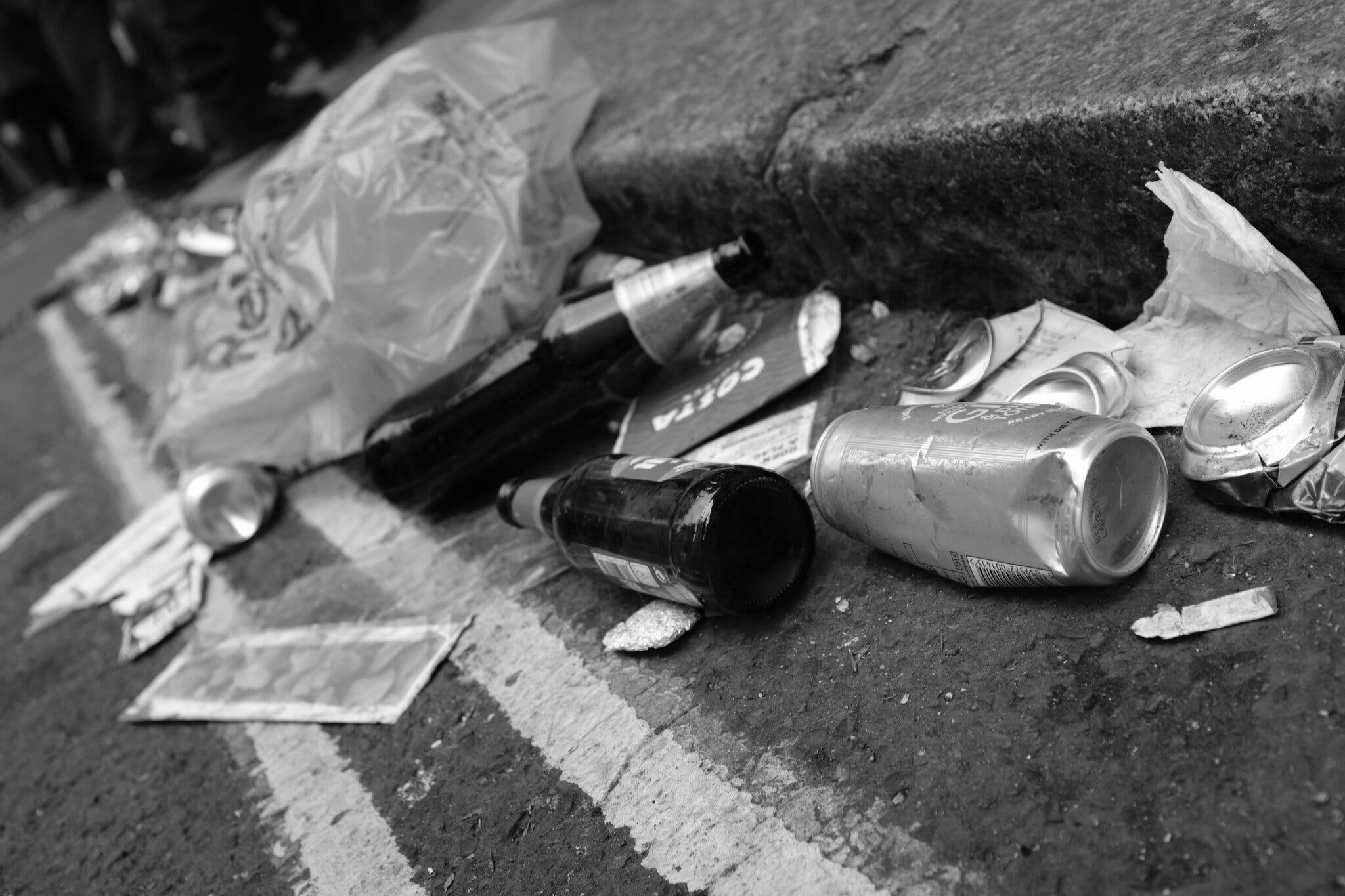
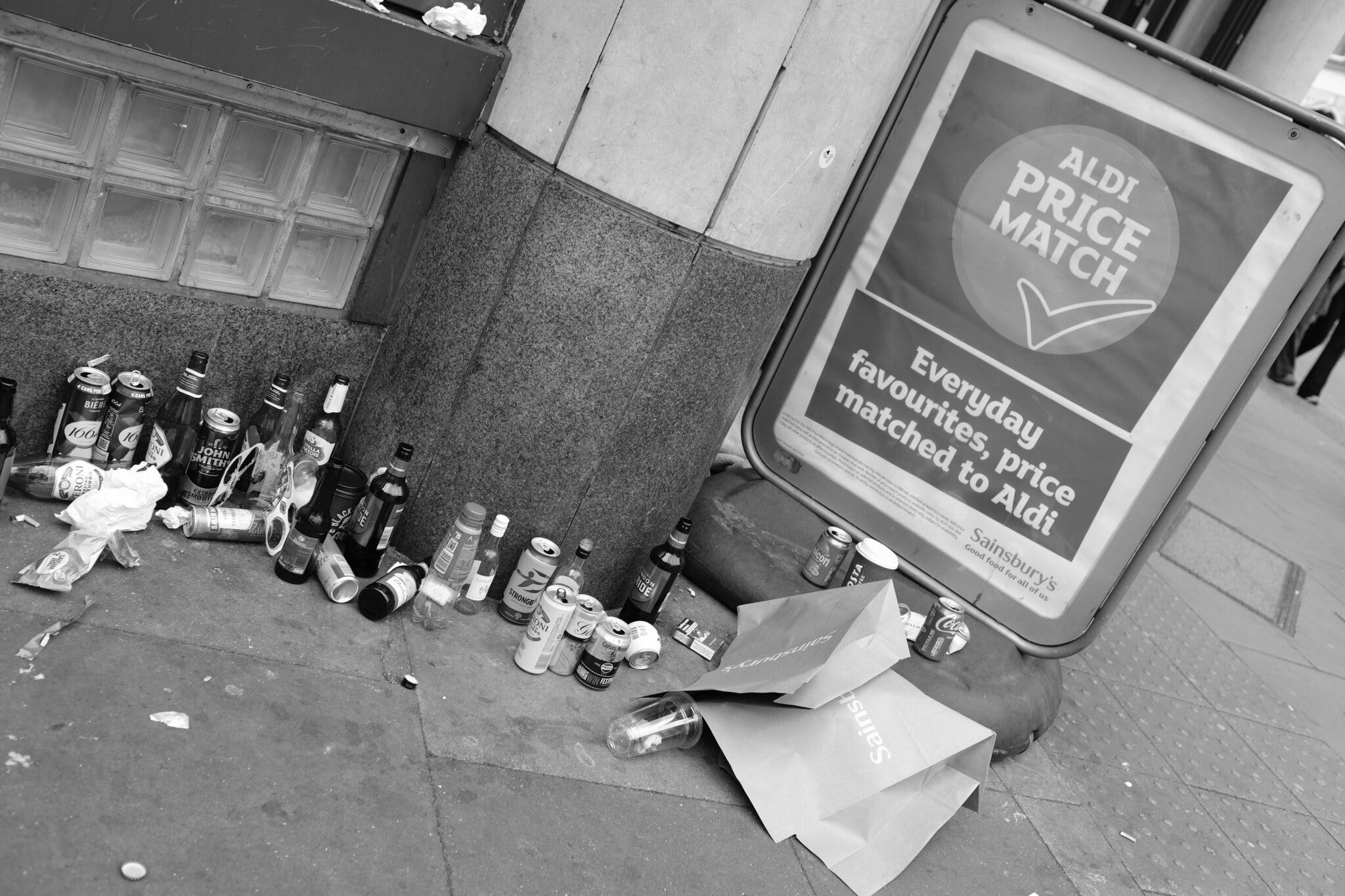
Even during the march one man casually remarked that he was getting over his “comedown” — I inferred from a Friday night on cocaine — with the assistance of more alcohol. The “alcoholics party” is not usually considered Britain’s most formidable political force.
Quietly, though, I was pleased with myself, because the real story is often found in the details others overlook.
By avoiding the slow trudge to Parliament Square to watch speeches on giant television screens, I found mine instead in the side streets, the discarded bottles, the conversations, the atmosphere, and the aftermath. This was the actual reality on the ground. And it felt markedly different from other large demonstrations and gatherings I have attended over the years.
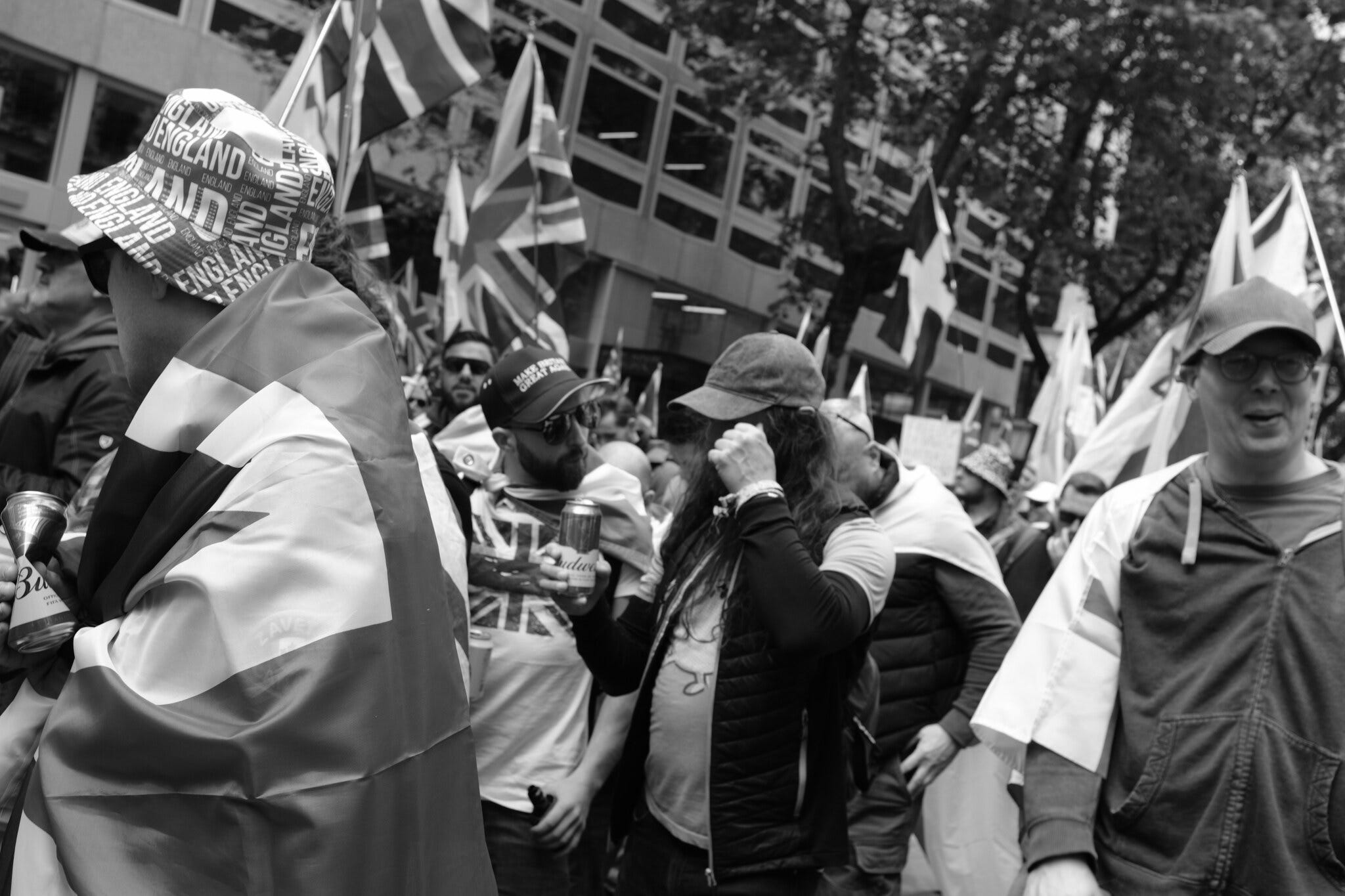
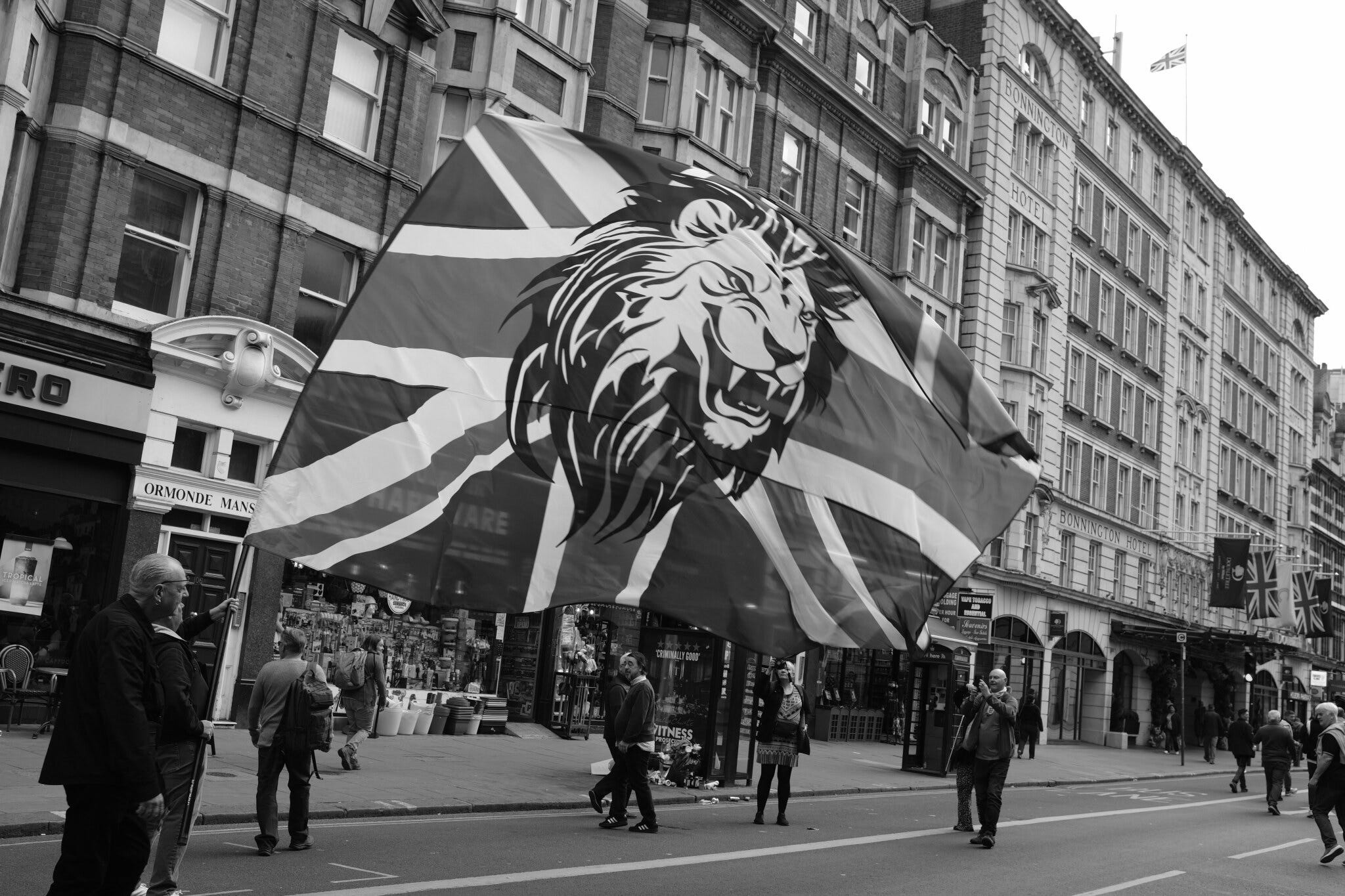
This in turn led me to “the laggards”. You might have the biggest flag — but you have missed the moment.
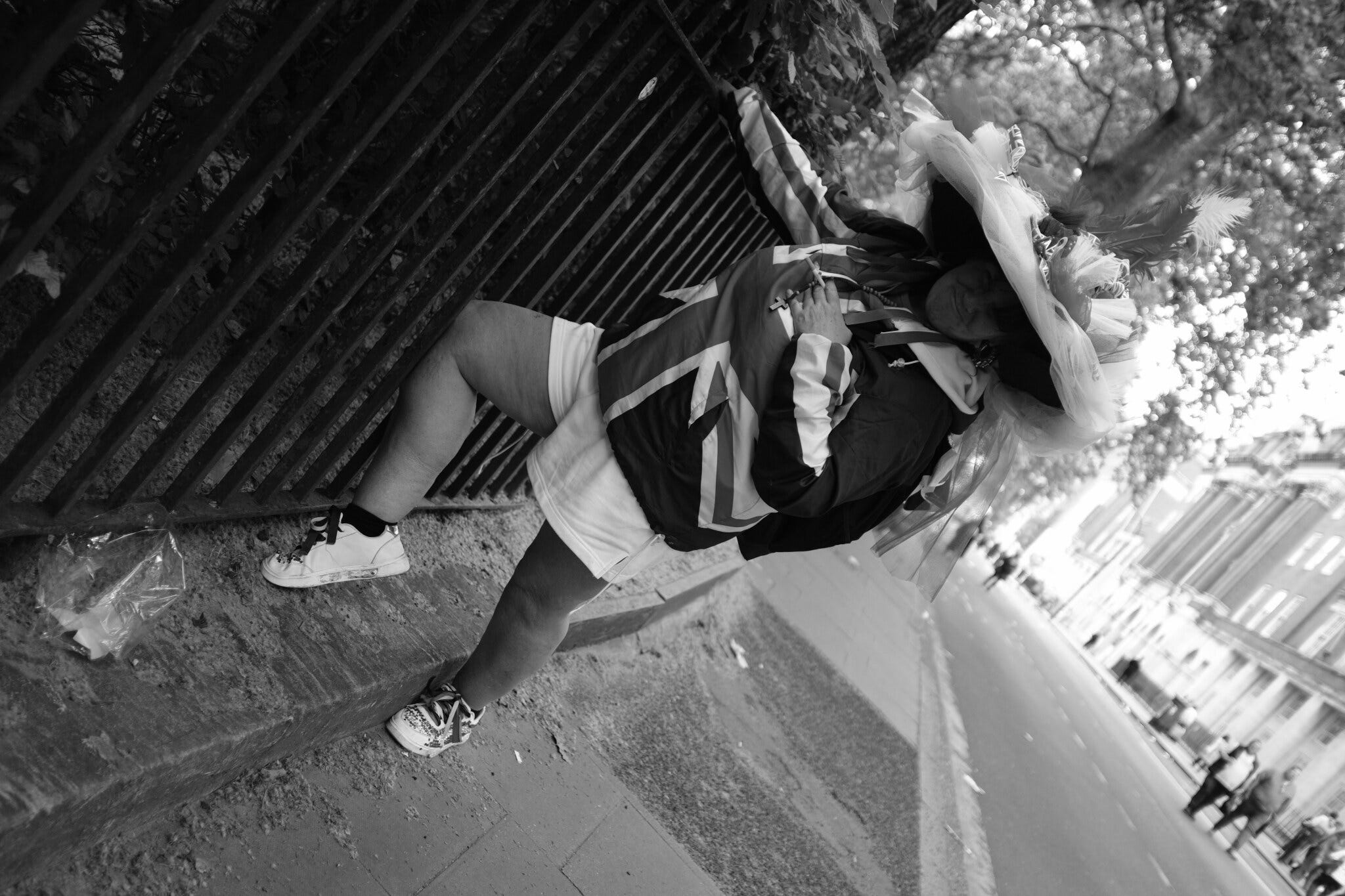
This man is too drunk to walk — the post is holding him up.
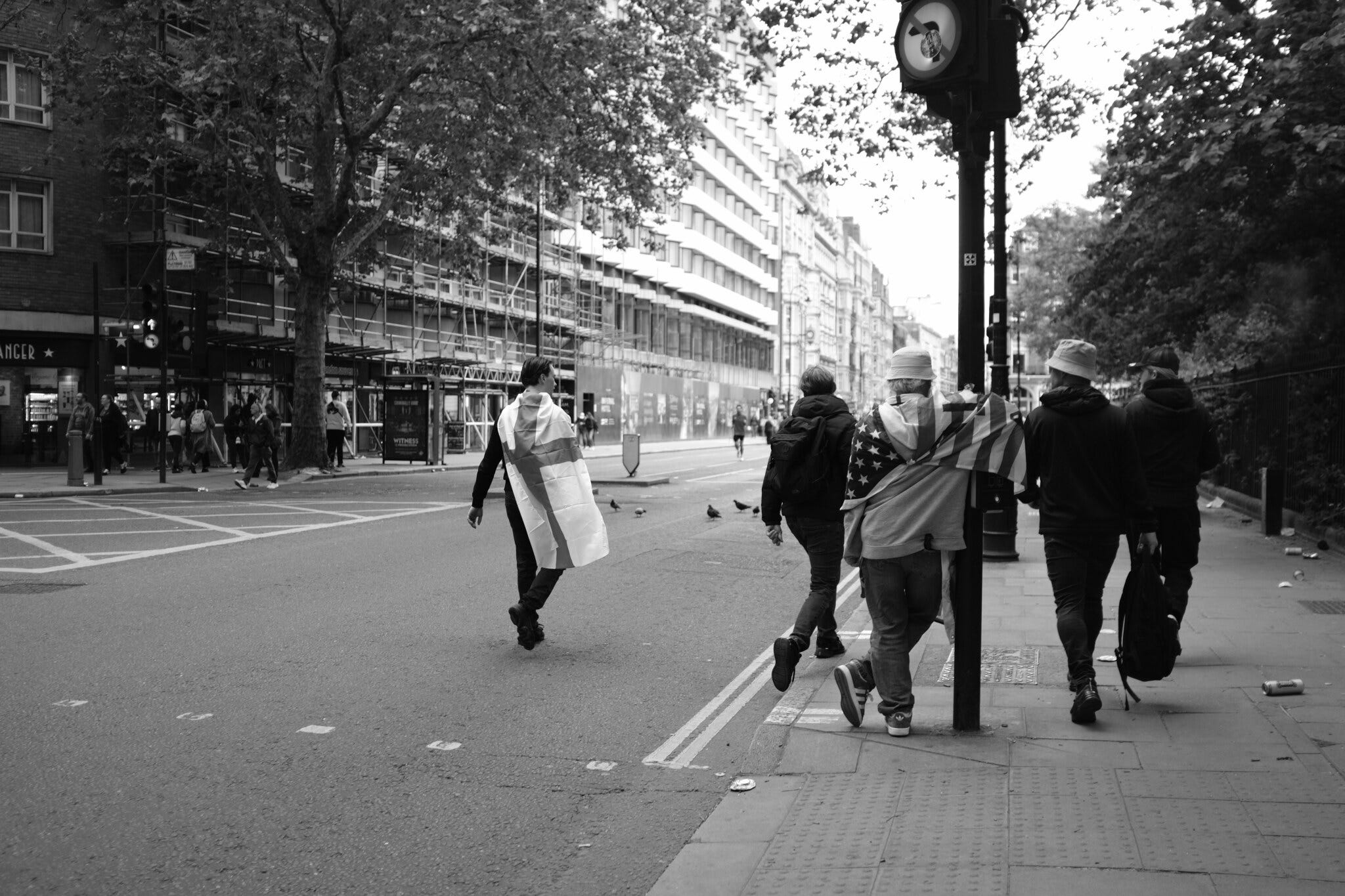
The passage back to the train station gave me time to observe details I would have missed.
There is a certain strain of cruel satirical humour that comes with the political terrain.
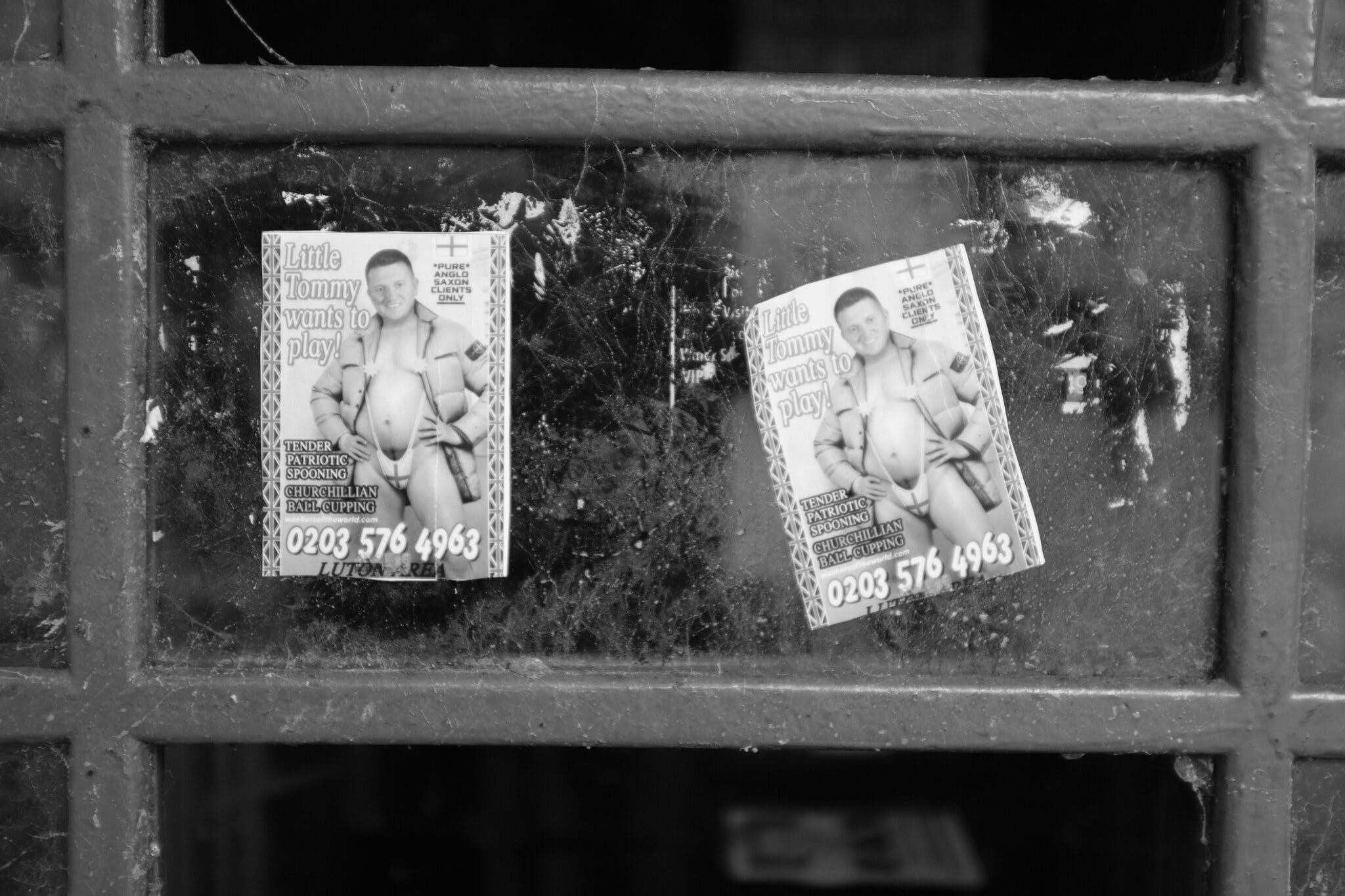
It’s reportage, not disrespect. I don’t know the man. He might find it funny for all I know. I am sure he has experienced far worse.
Feet away, there is also humanity on show.
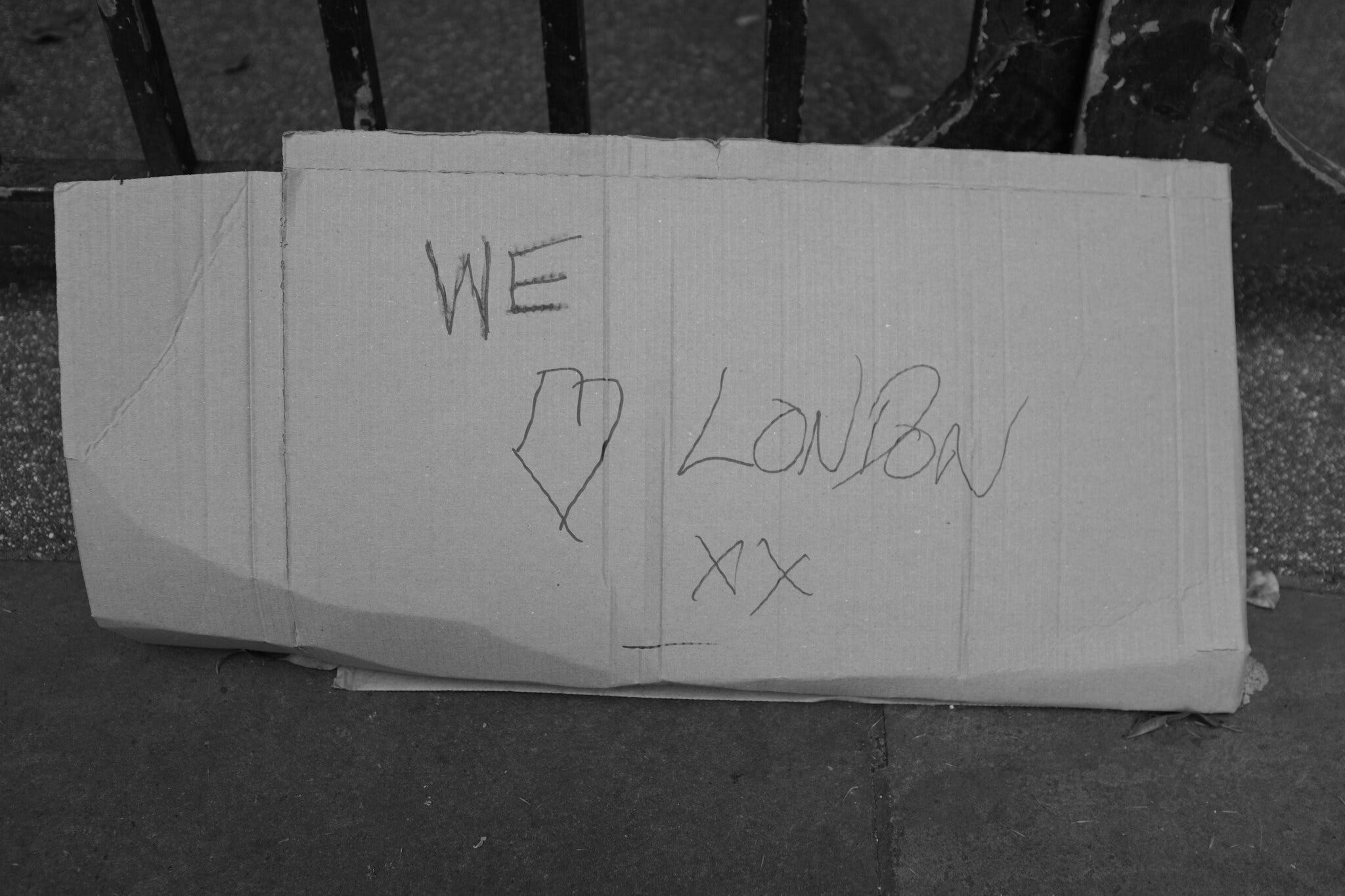
I think that was one of the Iranians.
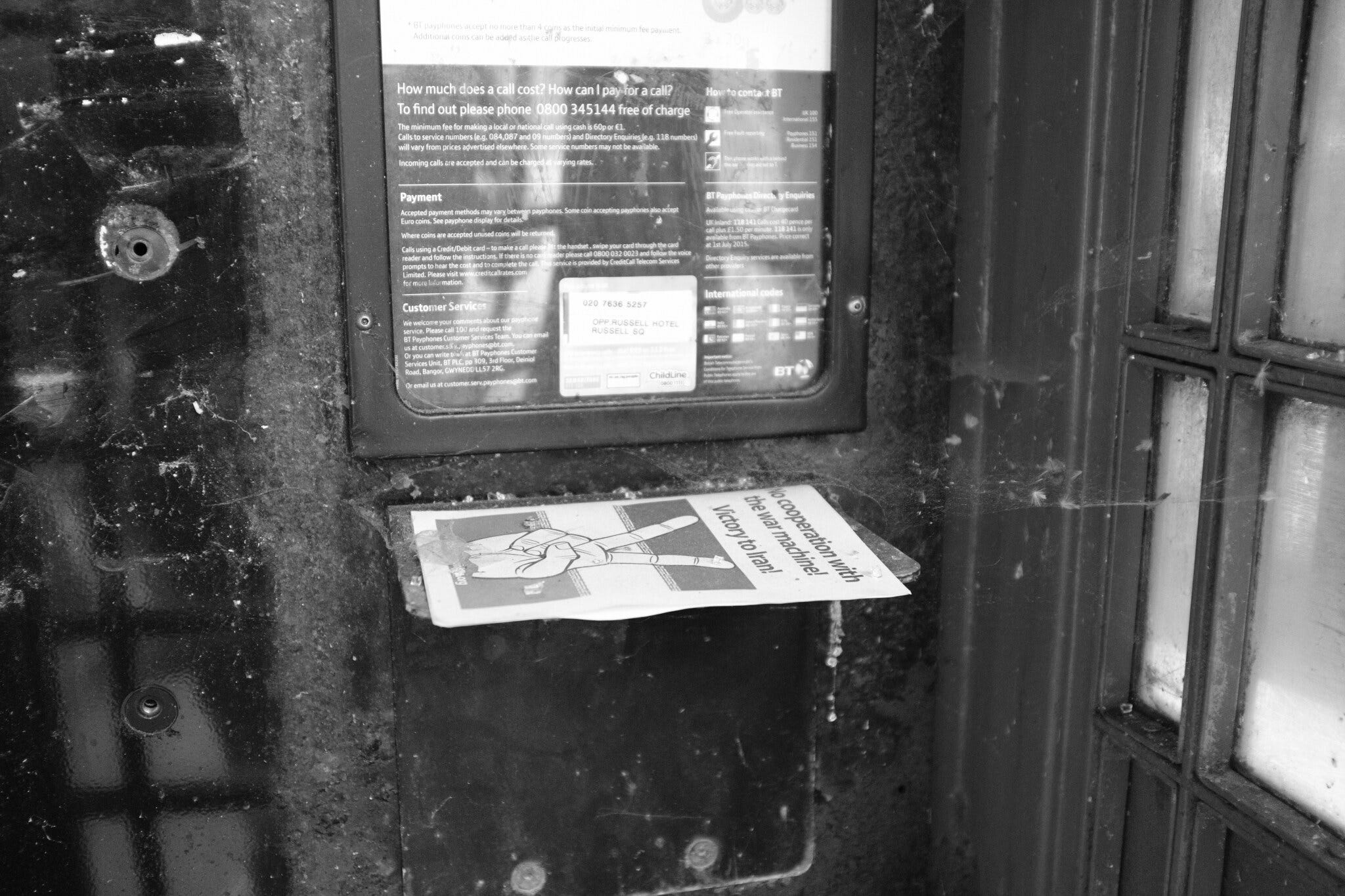
After the chanting stopped
Sometimes, the juxtapositions of the world do all the talking.
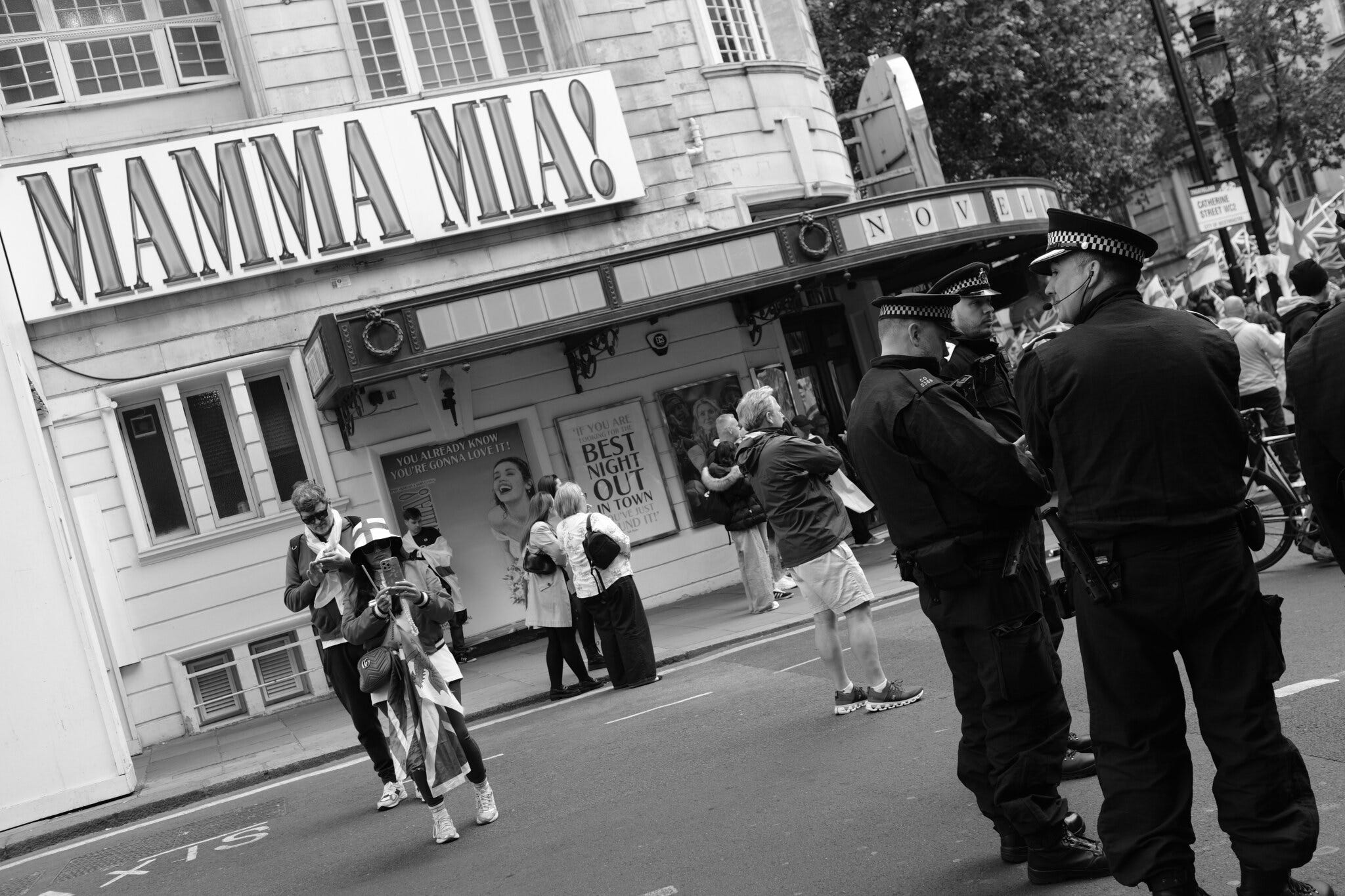
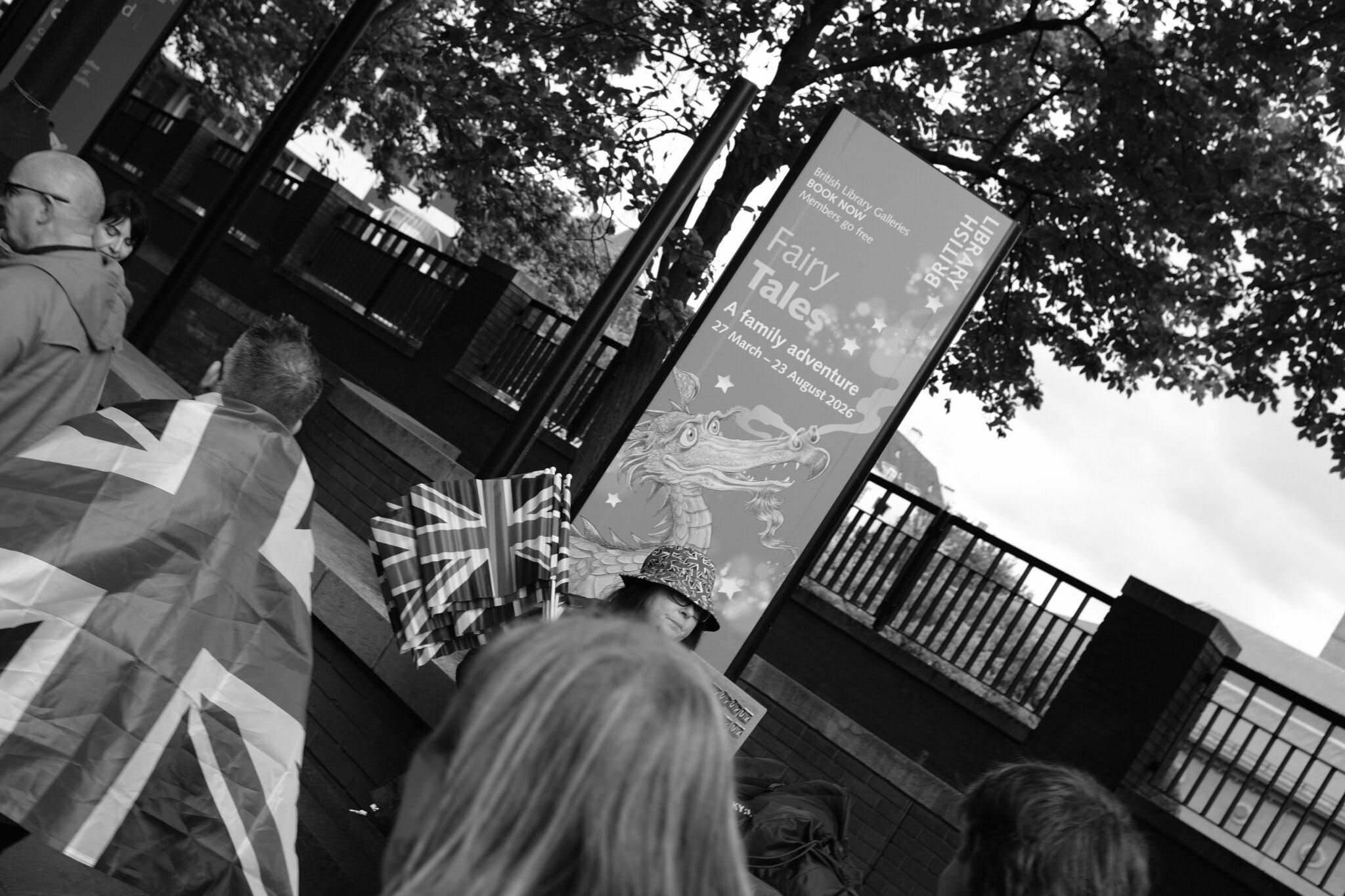
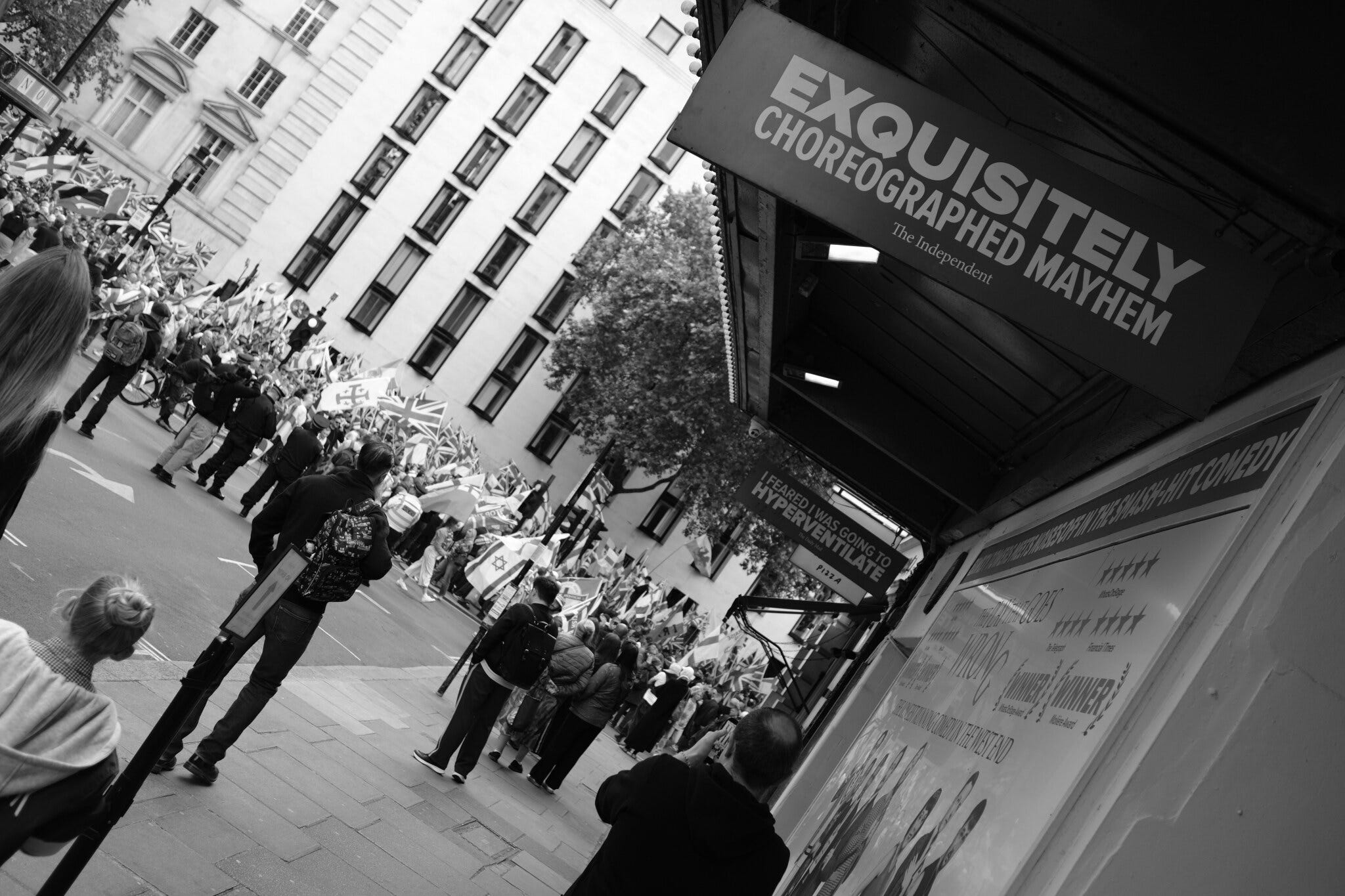
I am not sure this was “far-right”. But it was pretty “far gone”.
Masses of inebriated people stomping through London chanting “Keir Starmer is a wanker” aren’t uniting any kingdom, even if the sentiment is widely held.
While many of the protestors may correctly sense that something profound is breaking down — culturally, spiritually, economically — they often seem too fragmented themselves to respond coherently to it. The instinct is there. The grief is real. But the discipline, clarity, and inner stability required for renewal are frequently absent.
What struck me most was the strange oscillation between appeals to “spirit” and surrender to spirits. Crosses held aloft beside men barely able to stand upright. Calls for national renewal emerging through alcohol haze and chemical comedown. A society dimly aware that it has lost connection to a higher power, yet trying to recover meaning through fermented hops rather than faith and hope.
That, perhaps, is the deeper tragedy.
You cannot restore a nation while remaining conquered internally yourself.
Which leaves the real patriotic heroes of yesterday not as the men roaring slogans through central London, but the police officers quietly collecting the final drunk from the pavement, and the cleaners arriving afterwards to clear away the debris.
If you would like to support independent documentary work like this, the Buy Me A Coffee link is here.
I genuinely spent my rent money getting to London and back to capture this story. At some point I hope to produce proper books, prints, and other creative work people can buy directly. But for now, this kind of citizen journalism is funded almost entirely reader by reader.
"My own instinct is that we are still only in the early stages ..." . Indeed.