

Yesterday’s article was a timely investigation into reconstruction warfare—the restoration of reality—which stands in contrast to propagation warfare: the destruction of reality, followed by the dissemination of lies about what happened.
My argument was that the Q drops are best understood in the context of an inevitable struggle over society’s symbolic mediation layer: media, law, academia, and the institutions that shape our collective attachment to reality. The problem itself demands a particular kind of solution, even if that solution appears strange when viewed through conventional assumptions.
Then, almost immediately afterwards, the White House and Department of War went ‘full Q’. The details are not important here.
The temptation is to continue producing intellectual content about the intricacies of the drops: why their design aligns naturally with a reconstruction paradigm, and why so many of the common criticisms only make sense if one assumes a propagation paradigm instead.
It feels as though a phase change is approaching. The world seems to be on the verge of its mass awakening. If so, that awakening will occur whether I write another essay or not. There will be plenty of attention given to what really went down, and how to make sense of the information war in retrospect.
What I can do—perhaps uniquely—is document the parts of my own experience that have gone unreported. Not the Q analysis. Not the legal theories. Not the AI logic tools. Just the raw testimony of being Martin through all of this insanity.
The timing feels right. For the first time, I feel safe enough to say certain things publicly that I have kept to myself until now.
The significance of yesterday’s de facto endorsement of Q from the highest levels of government is as much emotional as it is practical. It signals the imminent end of a long season of exile: estrangement from the comfort of compliance, alienation from professional norms, distance from friends and family, and the quiet burden of carrying convictions that could not be discussed openly without risking ridicule, exclusion, or worse.
For years, I have written about information warfare, narrative conflict, institutional corruption, and the battle over reality itself. Yet behind every article was a man living through the consequences of taking those subjects seriously.
This essay is not about Q.
It is about what happened to me while everyone else was arguing about it.
Between 2017 and 2021, my public stand against corruption, and later medical genocide, cost me access to the ordinary means of making a living. I closed my LinkedIn account in 2017 because its business ethos was unacceptable to me. My telecoms career withered once I identified publicly as a Trump and Q supporter; you cannot be a “conspiracy theorist” and remain sufficiently respectable to function professionally in a liberal-dominated industry. My last consulting invoice went out in 2019.
I had invested a decade helping novel ideas become products without seeing much economic return. I was on the cusp of setting up the world’s first commercial quality-assured broadband service.
Instead, I met reputational assassination by the national and international press, libel by NGOs fronting for radical leftism, and repeated deplatforming from the very systems needed to earn a living. I consider myself a victim of transnational crime. This was not legitimate commentary, nor ordinary moderation of abusive content. The intention was to destroy my connections to the things that make public dissident life viable: economic resources, practical allies, and emotional support.
The effect was often the opposite: more funds, more friends, and more fun.
Then a long season of waiting began. Waiting for geopolitical resolution. Waiting for economic justice.
The events of January 6th were one watershed, but not the only waymark. The Covid era was self-evidently war, not healthcare, to many of us. I hardly need explain the distress of not knowing whether society would unravel, how it would unravel, or what bodily horrors might be inflicted by bioweapons and coerced medical interventions.
I drifted away from old and very dear friends, people with whom I shared deep bonds forged in university days and endless walks in the mountains. They cannot know what I have seen. It is illegible to them. I grieve that loss.
My work meandered into adjacent questions of human dignity and personal sovereignty: opposition to TV Licensing as part of the legacy media propaganda empire; Council Tax as a form of modern debt slavery attached to the simple act of seeking shelter; and the growing impositions on motorists through the monetisation of freedom of movement.
I am a sensitive soul at heart. The endless conflict with authority, coming after years of upheaval, has left a legacy of chronic anxiety and occasional incapacity. Some days I am fine. Some days I am not.
Meanwhile, my modest income declined. Many of the subjects I covered were more relevant to a UK audience, while roughly three-quarters of my readership was American. My work is funded largely through voluntary donations rather than sales, and those donations have fallen substantially from their peak around 2022–23. At the same time, I had taken on new obligations, including helping protect a friend from potential forced medication under the Covid regime. Moving out of an off-grid arrangement in London also exposed me to rapidly rising living costs.
I last filed a tax return around 2020; I cannot remember the exact date. Once Covid arrived, I checked out of compliance. The protection racket was over. I do not fund governments that falsely imprison their populations, maim and terrorise children, and poison the elderly. That has always been a quiet red line for me. I have been prepared, if necessary, to face prison rather than comply. I simply do not advertise the fact or invite reprisals.
An HMRC demand for £5,761 in late-filing penalties sits in front of me. It is unpayable. I do not engage. I have no means to pay the unpaid back-taxes without becoming homeless.
I have not paid Council Tax since around 2022. Again, the details escape me. I do not have the funds, nor am I inclined to reward institutions that participated in crimes against humanity. For one man to demand that another fund his pension through threats of property seizure and imprisonment, while the latter has no pension of his own, is morally abhorrent. That such parasitism has become normalised does not make it acceptable. I expect many councils to collapse as their role in these crimes is exposed.
I always knew that the day the full truth came out, it would be over for the existing system.
Meanwhile, I face another £3,688.98 in costs arising from my unsuccessful Part 8 claim. I negotiated six months to clear the debt. The first payment falls due in a week, and I may have to sell my van to meet part of it. I am reluctant to turn to my readers yet again, particularly when this expense should never have been necessary.
That said, I took this on voluntarily. I also have regard for the Government Legal Department. Paying up acknowledges their professional contribution and genuine effort.
The state has been unable to identify a determinate legal object called “the court”, nor explain how the record in my individual case resolves to it. I was denied access to the conventional routes of appeal. Yet the struggle yielded something of lasting value: a detailed record of how abstraction is used as an instrument of domination in modern administrative systems.
The insights and technologies that emerged from that struggle have been life-changing. For the first time in years, I can see a positive path ahead stretching far into the future.
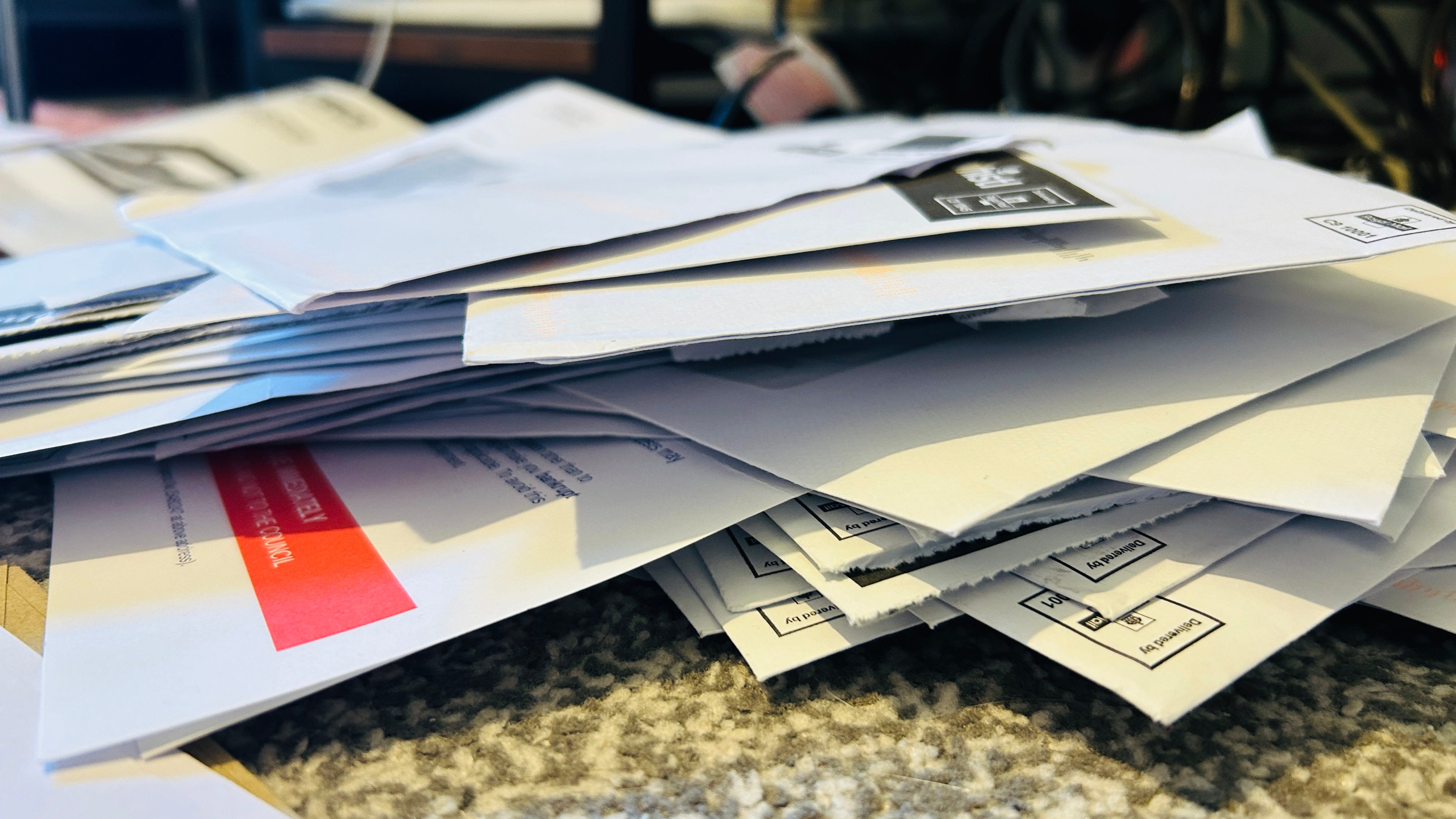
In my study there is a pile of paperwork for unpaid penalty notices for clean air zones and tunnel tolls in London, Oxford, Bradford, Sheffield, and Newcastle. The state had its opportunity to regulate car emissions when the vehicle was manufactured, and again for its annual safety inspection. Grossly iniquitous charges because I drive a small van, or cannot afford the very latest car models, are another hardship and harm that hurts all the more after the wrongs inflicted under Covid and before.
If the state steals—in Biblical terms—my transport from me, so be it.
I expect I will outlast the state in its current format.
I often joke that I am a Strict Orthodox Hedonist, and that my concept of poverty may not be calibrated to the standards of others. I openly admit to being an imperfect steward. Yet there is a peace that comes from having stood up for something worthwhile, and unexpected blessings that accompany modest living.
Driving a non-turbo diesel 59bhp Ford Escort van covered in rust means I am one of the few people on British roads literally travelling as fast as my carriage permits. If you attempted the same feat in an Aston Martin, you would soon be in jail—or dead.
I have a document containing all the offers people have made over the years for me to come and stay with them. It is eighteen pages long, and I have not kept it up to date. I know I made a lasting impact when times were difficult.
People have my photographic art on their walls, and its significance extends beyond mere prettiness. It represents resistance to tyranny through acts of beauty.
Part of me dreads the possibility of public attention and recognition in a post-awakened, “Q-validated” world. Another part rather looks forward to becoming the Professor of Mischief—a position that has never carried a salary, and never can.
Yesterday’s events were the first time I felt, “This exile is ending” as a practical reality rather than an inferred belief.
I remember telling myself, over and over again in 2018 and 2019, “Just stagger through another few days.”
Surely it would all be over after the 2020 election.
Or the end of Covid.
Or the seventh anniversary of the first Q drop.
Or some other self-imposed deadline.
None of them arrived as hoped.
The scope of the problem expanded as quickly as, if not faster than, the visible signs of resolution. What began as a question of political corruption—“arrest Hillary”—grew into something much larger.
The issue was no longer who governed us.
It became whether our civilisation, and perhaps our species, would survive at all.
And here we are — you as much as me — still alive, still fighting, and still hoping for a freer and more peaceful world.
Because there is a day when the waiting for transformation is over — forever.
Profound respect for you, Martin. Thank you for your service
Nearly there Martin, nearly there!
My wife did reconfirm her opinion of me as 'mad' the other day and then said "nothing that you said would happen over the last 6 years has happened"! To which I replied: "well you wouldn't notice anything unless you know where to look as I do, so would you like me to show you"?
Slilence.
Surpisingly perhaps, we're still married though and this whole 'show' must bust out into the public arena soon, so we must have patience, patience and more patience for our new world and just do what we can to get by in the meantime - as ever.
Much love to you Martin. Great job, as ever.